For a long time, I believed a strong password was enough. If it was long, unique, and “hard to guess,” I felt protected. What I didn’t understand back then is this:
Passwords don’t fail people do.
And attackers know that.
After experiencing social engineering firsthand, I learned a painful but important lesson: once an attacker convinces you to hand over access, your password becomes irrelevant. That’s where Two-Factor Authentication (2FA) and Multi-Factor Authentication (MFA) step in not as an inconvenience, but as protection for very human moments.
What 2FA and MFA Really Are…..
Two-Factor Authentication (2FA) means proving your identity in two different ways.
Multi-Factor Authentication (MFA) simply adds even more layers.
These layers usually fall into three categories:
- Something you know – a password or PIN
- Something you have – a phone, authenticator app, or security key
- Something you are – fingerprints, face ID, biometrics
When more than one of these is required, stealing just one is no longer enough.
Why Passwords Alone Are Not Enough
Social engineering doesn’t crack passwords it bypasses them.
Attackers rely on:
- urgency
- authority
- fear
- opportunity
Once they convince you to share a code or approve access, the system believes the request is legitimate.
I have lived this.
That is why 2FA and MFA exist, not because users are careless, but because humans are human. We get distracted. We get hopeful. We trust. We move fast.
Security has to account for that reality.
2FA as a Human Safety Net
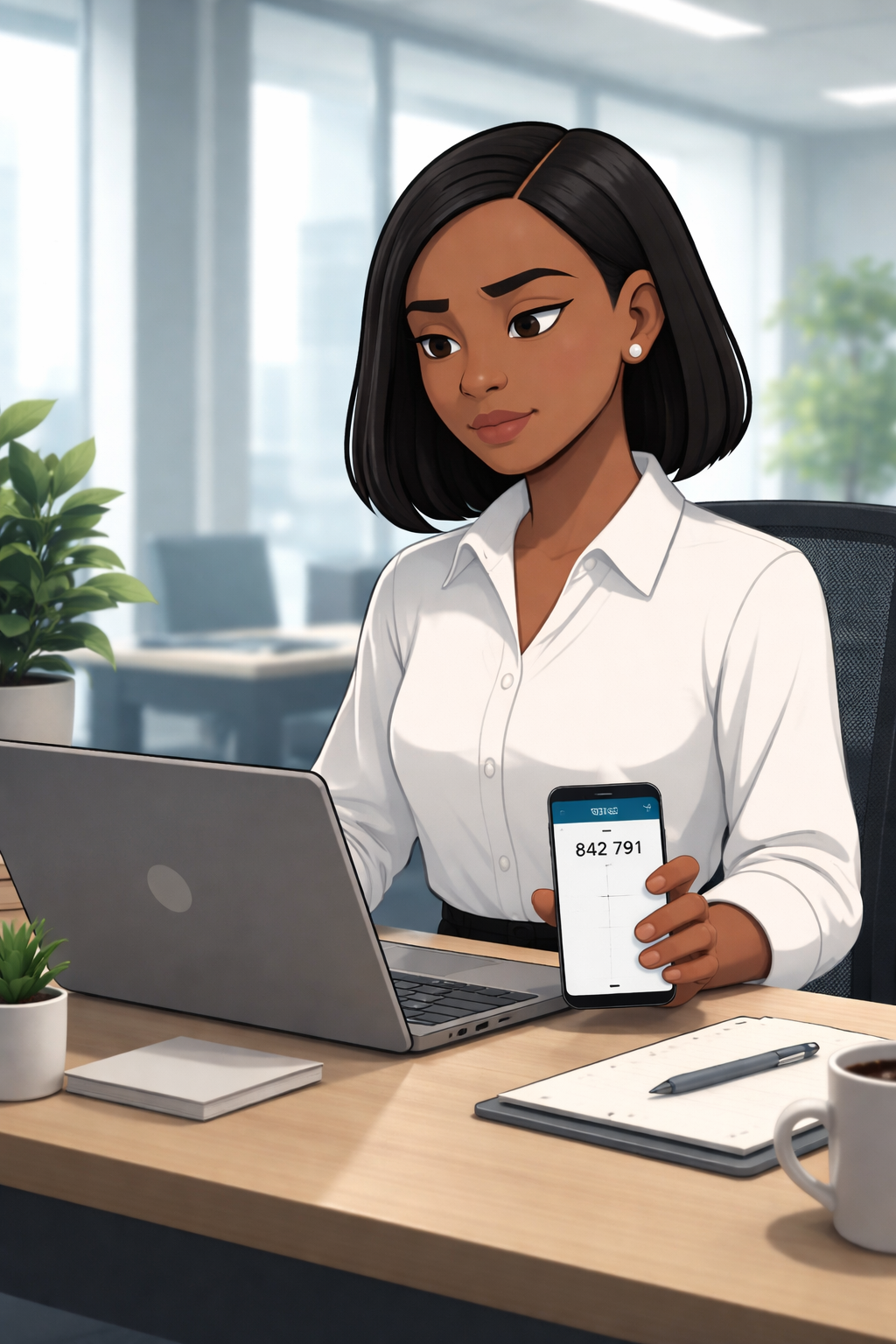
One of the most important apps on my phone today is my authenticator app.
Without it, even I cannot log into some of my own accounts.
And that’s a good thing.
Till today, I still receive authentication prompts, emails or messages asking me to verify my identity because someone, somewhere, is trying to log in. Those alerts are reminders that threats don’t stop just because time has passed.
2FA acts like a second voice asking:
“Are you sure this is really you?”
Even if an attacker gets your password:
- they still need your phone
- or your authenticator app
- or your biometric approval
That pause, that interruption is often enough to stop an attack in its tracks.
Security Is Everyone’s Responsibility
Security isn’t just for tech professionals or cybersecurity teams.
It is a shared responsibility.
Being secure doesn’t mean being paranoid but it does mean being intentional.
It means slowing down.
Verifying before trusting.
And understanding that convenience should never come at the cost of control.
Don’t be too trusting.
Trust, but always verify.
In my next post, I’ll go deeper into social engineering, using my personal experiences to show how attackers think and how easily trust can be manipulated when we’re not paying attention.
Because understanding the human side of security is where real protection begins.