
You book a flight online in just a few minutes. You enter your name, date of birth, passport details, email address, phone number, and payment information. You choose your seat, order a special meal, and complete your booking. Then you receive your boarding pass and start looking forward to your trip. But have you ever stopped to wonder what happens to all that information once you click Book Now? Where does it go? Who can see it? And who actually owns your travel data? The answer is more interesting than you might think. What Is Travel Data? Travel data is simply the information you share before, during, and after your journey. This includes: Every time you travel, you create what experts often call a digital travel footprint. Just as footprints in the sand show where you have walked, your travel data tells the story of your journey. Who Collects Your Travel Data? Many people assume only the airline sees their information. In reality, several organizations may need access to different parts of your travel data. These can include: Each organization only uses the information necessary to perform its role. For example, the baggage handling system doesn’t need your payment details, but it does need information that helps ensure your suitcase reaches the correct destination. What Happens After You Book a Flight? Let’s follow Sarah, who books a flight from Lagos to London. When Sarah completes her booking, several things happen almost instantly. Her payment is verified. The airline reserves her seat. Her booking is added to the airline’s reservation system. If she is travelling internationally, some of her information may be shared with border authorities before her flight, depending on the country’s travel requirements. When she checks in online, more information is added to her travel record. At the airport, every step creates new data. When she checks her luggage, the baggage tag links her suitcase to her flight. When security scans her boarding pass, another record is created. When she boards the aircraft, the airline confirms she is safely on board. Although these actions only take seconds, they help airlines and airports manage thousands of passengers safely every day. How AI Uses Travel Data Artificial intelligence is becoming an important part of modern aviation. It doesn’t just collect information. It looks for patterns that help airlines improve the passenger experience. For example, AI can help airlines: Imagine you always choose an aisle seat. Over time, AI may learn your preference and automatically suggest one during your next booking. Or imagine your flight is delayed. Instead of waiting in a long queue, AI could help find another available flight and notify you before you even reach the customer service desk. Does AI Read Everything About You? Not exactly. AI works with the information it has permission to use. Airlines also have legal responsibilities to protect passenger information and comply with privacy laws in many countries. Responsible AI systems should only access the data they need to complete a task. For example, an AI system helping you choose a seat doesn’t need access to your payment card details. Using only the necessary information helps reduce privacy risks. So, Who Owns Your Travel Data? This is one of the most common questions people ask. The answer isn’t always straightforward. Although your personal information belongs to you, the data created during your journey may be stored by different organizations that are responsible for providing travel services and meeting legal requirements. For example: These organizations don’t “own” your identity, but they may legally store and process certain information to deliver their services and meet regulatory obligations. How Is Your Travel Data Protected? Airlines invest heavily in cybersecurity because they manage millions of passenger records every year. To help protect your information, they use measures such as: Even with these protections, no system is completely immune to cyber threats. That is why cybersecurity has become one of the aviation industry’s highest priorities. How You Can Protect Your Own Travel Data While airlines play a major role in protecting passenger information, travelers can also take simple steps to stay safer online. You can: A few small habits can go a long way toward protecting your personal information. Why Data Governance Matters Behind every smooth journey is a huge amount of data. Data governance is simply the process of making sure that information is accurate, secure, used responsibly, and only accessed by the right people. Good data governance helps ensure that: Without good data governance, even the smartest AI systems cannot operate responsibly. On A Final Note Booking a flight is about much more than choosing a destination. Behind every reservation is a complex network of systems working together to move information securely between airlines, airports, payment providers, and government agencies. Artificial intelligence is making travel more efficient by helping airlines predict delays, improve customer service, detect fraud, and personalize the travel experience. However, these benefits depend on something just as important as AI itself: responsible data management. The next time you book a flight, remember that your travel data is helping your journey run smoothly. Understanding how that information is collected, protected, and used can help you make informed decisions and travel with greater confidence. Continue Reading Where Does AI Get Your Data? Understanding AI Training Data and Why It Matters Discover how AI systems learn from data, where that information comes from, and why high quality data is essential for building reliable and trustworthy AI. Read More → Where Does AI Get Your Data? Understanding AI Training Data and Why It Matters The Hidden Cost of Free AI Tools: What Happens to Your Data? Free AI tools can be incredibly useful, but have you ever wondered what you’re giving away in return? Learn how your data may be collected and what you can do to protect your privacy. Read More → The Hidden Cost of Free AI Tools: What Happens to Your Data?
How AI Agents Are Transforming Airline Ticketing Departments: Your Future Travel Assistant Is Almost Here
Have you ever called an airline to change your flight, only to spend what feels like forever on hold? Or perhaps you have arrived at the airport to discover your flight has been delayed, leaving you scrambling to find another option. These situations can be frustrating, but they may not stay that way for much longer. A new type of artificial intelligence called an AI agent is beginning to change how airlines assist passengers. Unlike the chatbots many of us have used before, AI agents are designed to do much more than answer questions. They can take action, solve problems, and help travelers from the moment they book a ticket until they reach their destination. Let’s explore how this technology could transform airline ticketing departments and make air travel smoother for everyone. First, What Is an AI Agent? Think of an AI chatbot as a helpful receptionist. You ask, Can I change my flight? The chatbot replies, Yes, you can change your flight by visiting the Manage Booking page. That’s useful, but the work is still left to you. Now imagine speaking to an AI agent. You say, I need to travel a day earlier. The AI agent searches available flights, compares prices, checks your ticket rules, calculates any fare difference, suggests the best options, processes your payment if needed, updates your booking, and emails your new itinerary. Instead of simply answering your question, it completes the task. That’s the biggest difference. Booking a Flight Could Become Much Easier Imagine you are planning a family holiday to Seychelles. Today, you might have to: An AI agent could simplify the entire experience. You simply say, Find the cheapest morning flight from Lagos to Seychelles next month for two adults and one child. We prefer extra legroom and one checked bag each. Within seconds, it presents the best options, explains why it recommends them, books your seats once you approve, and sends your confirmation. It’s like having a personal travel consultant available 24 hours a day. Changing Flights Without the Stress Life doesn’t always go according to plan. Maybe your meeting has been postponed. Perhaps a family emergency means you need to travel sooner. Instead of calling customer service and waiting for an available agent, an AI agent could handle everything. It checks your ticket conditions, searches for alternative flights, explains any additional costs, processes the change, and updates your itinerary. What once took thirty minutes could take just a few minutes. Helping During Flight Disruptions Weather, technical issues, and air traffic congestion can all lead to delays and cancellations. Traditionally, passengers join long queues at the airport while airline staff work as quickly as possible to help everyone. An AI agent could reduce much of that stress. Imagine receiving this message on your phone: “Your flight has been cancelled because of severe weather. We have already reserved a seat for you on the next available flight departing tomorrow morning. Your checked baggage will be transferred automatically, and your new boarding pass is ready.” Instead of standing in line wondering what happens next, your solution arrives before you even reach the customer service desk. Making Travel More Personal Everyone travels differently. Some passengers always request an aisle seat. Others prefer vegetarian meals or travel with extra luggage. An AI agent can learn these preferences over time. The next time you book a flight, it could automatically suggest your preferred seat, remind you about visa requirements, recommend travel insurance, and even alert you if your passport is close to expiring. The experience becomes more personal without requiring you to repeat the same information every time. Breaking Language Barriers Airlines serve passengers from all over the world. Not everyone speaks the same language. An AI agent could communicate naturally in multiple languages, helping travelers book flights, understand ticket rules, or receive important updates in their preferred language. This makes travel more accessible and less stressful, especially for international passengers. Will Human Ticketing Staff Still Be Needed? Yes, and for good reason. Technology is excellent at handling routine tasks, but some situations require human understanding and judgment. Imagine you have missed your flight because you were attending a loved one’s funeral. Or perhaps your child has become seriously ill while travelling. These are situations where compassion matters just as much as efficiency. Human agents can listen, understand unique circumstances, and make decisions that go beyond what technology can do. Rather than replacing people, AI agents are more likely to handle repetitive tasks so airline staff can focus on helping passengers who need personal attention. Are There Any Challenges? Like any new technology, AI agents are not perfect. Airlines will need to ensure these systems protect passenger data and operate securely. They must also make sure AI decisions are fair, transparent, and easy to correct if something goes wrong. Passengers should always have the option of speaking with a real person when necessary. The goal is not to remove the human touch from travel. It is to make everyday travel tasks faster and more convenient. What This Means for Your Next Trip The next time you book a flight, you may still interact with a traditional chatbot. But in the near future, you could be assisted by an AI agent that can: Instead of simply answering your questions, it could actively help you throughout your journey. On A Final Note For years, airline ticketing departments have relied on people and simple chatbots to assist passengers. AI agents represent the next step in that evolution. They won’t replace the warmth, empathy, and experience of human airline staff, but they can take care of many of the repetitive tasks that often make travel stressful. For travelers, that could mean shorter waiting times, quicker solutions, and a smoother journey from booking to boarding. The next time you hear the term AI agent, don’t think of it as just another chatbot. Think of it as a digital travel assistant that is always ready to help, making your journey easier

Will AI Replace Flight Attendants? The Future of Cabin Crew in the Age of AI
Beatrice had just finished serving coffee when a passenger smiled and asked a question she had started hearing more often. With all this Artificial Intelligence, do you think airlines will still need flight attendants in the future? She smiled. It was not the first time someone had asked. In fact, since AI became part of everyday conversations, many people have imagined a future where robots welcome passengers, serve meals, answer questions, and perhaps even replace cabin crew altogether. As someone who has worked in aviation for years and is now learning AI Governance, I understand why people ask this question. AI is transforming industries around the world. Airlines are adopting AI for customer service, flight scheduling, maintenance planning, baggage handling, and operational efficiency. But does that mean flight attendants will disappear? I don’t believe so. Not because AI isn’t intelligent. But because being a flight attendant is about something AI does not possess. Emotion. AI Is Already Changing Aviation There is no denying that AI is becoming part of airline operations. Today, airlines use AI to: These technologies help airlines become more efficient behind the scenes. Passengers may not even realise AI is involved. But AI’s role is growing. Does That Mean Cabin Crew Are Next? Not necessarily. Many people assume that because AI performs tasks quickly, it can perform every job. That assumption overlooks what the role of a flight attendant truly involves. Serving meals is only a small part of the job. The real responsibility begins when things don’t go according to plan. The Engine of a Flight Attendant Is Emotion After years of flying, one lesson stands out to me. The engine of the flight attendant profession is not technology. It is emotion. Every flight brings together people from different countries, cultures, languages, religions, and personal experiences. Some passengers are excited about a holiday. Others are travelling for work. Some are flying to celebrate a wedding. Others are travelling to say goodbye to a loved one. Some are nervous first time flyers. Others have hidden disabilities or anxieties that no computer can immediately recognise. As cabin crew, we learn to read emotions that are never spoken aloud. Sometimes a smile hides fear. Sometimes silence hides grief. Sometimes frustration has nothing to do with the flight itself. No amount of data can fully capture those human moments. Can AI Understand Every Culture? One of aviation’s greatest strengths is diversity. Every destination has its own culture. Its own customs. Its own expectations. Passengers board aircraft carrying different beliefs, traditions, and ways of communicating. AI relies on data. It learns from patterns. But human interaction is rarely predictable. A passenger from one culture may appreciate direct communication. Another may value patience and subtlety. Some cultures expect eye contact. Others may interpret it differently. Some passengers appreciate humour. Others may find the same joke inappropriate. These situations require emotional intelligence, cultural awareness, and empathy. They require human judgement. When Safety Depends on Human Decisions Imagine unexpected severe turbulence. Or a medical emergency. Or smoke in the cabin. Would passengers feel reassured by a robotic voice repeating instructions? Or by calm, confident professionals moving quickly, making eye contact, providing reassurance, and adapting to an evolving situation? Flight attendants are trained to make decisions under pressure. They communicate. Lead. Comfort. Protect. These are deeply human skills. AI can provide information. But it cannot genuinely comfort a frightened child or reassure a passenger during an emergency. AI Will Become a Powerful Assistant This doesn’t mean AI has no place in the cabin. Quite the opposite. I believe AI will become one of the most valuable tools available to flight attendants. Imagine AI helping cabin crew by: In this future, AI supports cabin crew. It does not replace them. The Role of AI Governance As airlines continue adopting AI, another question becomes important. How do we ensure AI is used responsibly? This is where AI Governance enters the conversation. AI Governance helps airlines establish rules that ensure AI systems are: For example, if an AI system recommends personalised services based on passenger data, airlines must ensure that information is collected and used responsibly. If an AI assistant provides travel information, there should always be a process for human intervention if the information is incomplete or incorrect. AI Governance ensures technology serves people, not the other way around. The Future of Cabin Crew The future of cabin crew is unlikely to be humans competing against AI. Instead, it will be humans working alongside AI. Technology will automate repetitive tasks. It will process data faster than any person. It will provide valuable insights. But it will never replace empathy. It will never replace compassion. It will never replace genuine human connection. Those qualities cannot simply be downloaded into an algorithm. My Perspective as a Flight Attendant Having spent years working in aviation, I have learned something that every experienced cabin crew member understands. Passengers rarely remember the meal they were served. But they remember how they were treated. They remember the crew member who reassured them during turbulence. The smile that eased their anxiety. The kindness shown during a difficult journey. The calm voice during an emergency. Those moments are not created by technology. They are created by people. Artificial Intelligence can analyse data. It cannot genuinely care. On A Final Note Artificial Intelligence will continue transforming aviation in remarkable ways. It will make airline operations smarter, faster, and more efficient. It will help airlines analyse information, improve planning, and support better decision making. But the role of a flight attendant has never been defined by efficiency alone. It is defined by humanity. Being cabin crew is about understanding emotions that cannot be measured, responding to situations that cannot always be predicted, and connecting with people whose stories, cultures, and experiences are wonderfully different. AI relies on data. Flight attendants rely on empathy. And that is why I believe the future of aviation is not about replacing cabin crew with Artificial Intelligence. It is about empowering

Can AI Make Flying Safer? Here is the Role of AI Governance in Aviation
Beatrice settled into her jumpseat as passengers finished boarding. The cabin doors were closed, the safety demonstration had been completed, and the aircraft was almost ready to push back. From where she sat, everything looked routine. Passengers rarely see what happens behind the scenes before a flight departs. They don’t see engineers inspecting the aircraft. They don’t hear the conversations between pilots and dispatchers. They don’t watch operations teams monitoring weather, aircraft availability, crew schedules, and airport conditions all at once. Every safe flight depends on hundreds of decisions made long before passengers buckle their seatbelts. As airlines embrace Artificial Intelligence, another question naturally follows. Can AI make flying safer? The answer is yes, but not because AI replaces aviation professionals. It makes flying safer by helping people make better informed decisions, identify potential risks earlier, and process vast amounts of information faster than humans can alone. However, AI should never operate without oversight. That is where AI Governance plays one of the most important roles in the future of aviation. How AI Is Helping Improve Aviation Safety Artificial Intelligence is becoming part of everyday airline operations. Rather than replacing people, it acts as a powerful assistant that continuously analyses data and identifies patterns that might otherwise go unnoticed. Here are some ways airlines are already using AI to improve safety and operational efficiency. Identifying Potential Maintenance Issues Earlier Modern aircraft generate enormous amounts of operational data during every flight. When this information is combined with historical maintenance records, AI can identify unusual patterns that may suggest an aircraft component requires closer inspection. Instead of waiting for a fault to become more serious, maintenance teams receive an early alert that something deserves attention. The final inspection and maintenance decision always belongs to qualified engineers. AI simply provides another layer of operational awareness. Supporting Better Weather Decisions Weather remains one of aviation’s biggest challenges. Storms, turbulence, strong winds, and poor visibility can affect flight safety. AI can analyse weather forecasts together with historical flight information and operational data to help airlines prepare for possible disruptions. Pilots and dispatchers still make the final operational decisions, but AI provides valuable insights that support those choices. Improving Crew Scheduling Fatigue is one of the most important safety considerations in aviation. Airlines must ensure pilots and cabin crew receive adequate rest before operating flights. AI can help analyse complex crew schedules, legal duty limits, aircraft availability, and operational disruptions to identify more efficient scheduling options. Operations controllers then review those recommendations before implementing any changes. Monitoring Operational Risks Every day, airlines manage thousands of moving parts. Aircraft. Passengers. Crew. Airports. Weather. Connecting flights. AI helps operations centres identify potential risks earlier, giving teams more time to respond before small issues become major disruptions. Can AI Replace Human Judgement? No. And it should not. Artificial Intelligence is excellent at analysing large volumes of data. Humans remain better at applying judgement, experience, ethics, and accountability. Imagine an AI system identifies a potential issue with an aircraft based on operational data. Should the flight automatically be cancelled? Of course not. Qualified engineers investigate the alert. Pilots review the situation. Operations teams assess the impact. Only then is a decision made. This partnership between people and technology is what makes aviation stronger. Why AI Governance Matters in Aviation As more airlines adopt AI, another important question emerges. How can airlines trust the AI systems they use? This is where AI Governance becomes essential. AI Governance establishes the policies, oversight, and accountability needed to ensure AI operates responsibly. Instead of asking only whether AI is intelligent, AI Governance asks whether AI is trustworthy. Questions such as: These questions are becoming increasingly important as airlines adopt more intelligent technologies. AI Is Only as Good as the Data It Uses One lesson I have learned while studying AI Governance is this: AI cannot produce reliable outcomes without reliable data. If an AI system receives inaccurate, incomplete, or outdated information, its recommendations may also be inaccurate. This is why Data Governance is just as important as AI Governance. Data Governance helps ensure that the information AI relies on is accurate, consistent, secure, and properly managed. Without good data, even the most advanced AI system cannot perform effectively. Why Human Oversight Will Always Matter One of the biggest myths about Artificial Intelligence is that it can make every decision independently. In aviation, that would never be acceptable. Airline safety depends on accountability. Someone must always be responsible for the final decision. AI can recommend. Humans decide. This principle protects passengers while allowing airlines to benefit from AI’s speed and analytical capabilities. Human oversight remains one of the foundations of responsible AI. The Future of Aviation Will Be Human and AI Together The future of aviation is not about replacing pilots, engineers, cabin crew, or operations controllers. It is about giving them better tools. AI can analyse millions of data points in seconds. People contribute experience, judgement, ethics, communication, and accountability. Together, they create safer and more efficient airline operations. As AI continues to evolve, airlines that combine intelligent technology with strong AI Governance and Data Governance will be better positioned to earn passenger trust and improve safety. Why This Matters to Every Passenger Most passengers will never see AI working behind the scenes. They simply experience the outcome. A smoother journey. Fewer disruptions. Better communication. More efficient operations. Behind those improvements are people using AI responsibly, supported by governance frameworks that ensure technology remains transparent, accountable, and aligned with safety standards. The safest future for aviation is not one where AI replaces humans. It is one where AI helps humans make better decisions. On A Final Note The next time you board a flight, remember that safety begins long before the aircraft leaves the gate. Behind every departure are skilled professionals making countless decisions to keep passengers safe. Increasingly, they are supported by Artificial Intelligence that can analyse information faster, identify potential risks earlier, and provide valuable insights. Yet technology alone is not
Can AI Help Prevent Flight Delays? Here is How Airlines Are Using Predictive Intelligence
Imagine this. Beatrice had just arrived at the airport for what she thought would be another routine flight. The departure boards were full of green “On Time” notifications, and passengers were already gathering at the boarding gate. Suddenly, one of the engineers walked past with a smile and said to a colleague, ‘Good thing the system flagged that issue yesterday. If it hadn’t, this aircraft might not have departed on time today.‘ Beatrice paused. ‘The system?’ She later discovered they were not talking about a person. They were talking about Artificial Intelligence. Not the kind of AI that flies an aircraft. Not the kind that replaces pilots or engineers. But an intelligent system that helps airlines spot patterns, predict potential problems, and make better operational decisions before those problems become costly delays. It made her wonder. Could AI actually help prevent flight delays before they happen? The answer is yes. But probably not in the way most people imagine. Why Do Flights Get Delayed? Most passengers assume every delay has the same cause. In reality, airlines deal with hundreds of variables every day. A flight could be delayed because of: Each delay affects the next flight, creating a chain reaction across an airline’s network. This is where predictive intelligence is becoming increasingly valuable. What Is Predictive Intelligence? Predictive intelligence uses Artificial Intelligence together with historical and real time data to identify patterns and estimate what is likely to happen next. Think of it like a weather forecast. A weather app cannot guarantee it will rain tomorrow. But by analysing years of weather data together with current conditions, it can make a reliable prediction. Airlines use similar technology. Instead of predicting rain, AI predicts operational risks that could disrupt flights. How Airlines Use AI to Reduce Flight Delays AI is not making decisions on its own. Instead, it acts like another member of the operations team, constantly analysing information that humans would struggle to process quickly. Here are some of the ways AI supports airline operations. Predicting Maintenance Needs Modern aircraft generate enormous amounts of operational data. Combined with maintenance records entered by engineers, AI can identify patterns suggesting that certain components may soon require inspection or replacement. This does not mean the aircraft is unsafe. It simply alerts maintenance teams that something deserves closer attention. Engineers then inspect the aircraft and decide what action, if any, should be taken. Think of AI as an early warning system rather than a mechanic. Supporting Crew Scheduling Airlines manage thousands of crew movements every day. Unexpected disruptions such as weather, delays, or crew illness can quickly affect schedules. AI can analyse available crew, legal duty time limits, aircraft availability, and flight schedules to suggest efficient solutions. However, airline operations teams still review those recommendations before making final decisions. Monitoring Weather Patterns Weather remains one of aviation’s biggest challenges. AI can analyse weather forecasts alongside historical flight data to identify routes that may experience disruption. This gives airlines more time to prepare alternative plans. Although AI provides useful insights, experienced dispatchers and operational teams remain responsible for making safety related decisions. Managing Airport Operations Large airports handle thousands of flights daily. AI can help airlines predict periods of heavy congestion, allowing operations teams to adjust gate assignments, turnaround planning, and ground handling activities more efficiently. Small improvements across multiple areas can reduce unnecessary delays. Does AI Eliminate Flight Delays? No. Some delays simply cannot be avoided. Thunderstorms. Snow. Air traffic restrictions. Medical emergencies. Unexpected technical issues. These situations will always require human judgement. AI cannot control the weather. It cannot remove every operational challenge. What it can do is help airlines prepare earlier and respond more effectively. Why Human Expertise Still Matters As Beatrice continued learning about AI in aviation, one thing became clear. Every prediction begins with human expertise. Engineers record maintenance findings. Pilots submit technical reports. Operations teams document delays. Ground staff provide operational updates. Without accurate human input, AI would have very little meaningful information to analyse. The predictions are only as reliable as the data people provide. This is why experienced aviation professionals remain central to every AI supported decision. Where AI Governance Fits In As airlines adopt more AI powered systems, another important question emerges. How can airlines trust the AI making these predictions? This is where AI Governance becomes essential. AI Governance helps airlines establish rules and oversight for responsible AI use by asking questions such as: AI Governance is not about replacing operational expertise. It is about ensuring AI supports safe, transparent, and accountable decision making. The Future of Aviation Is Collaborative The future of aviation is not humans competing against Artificial Intelligence. It is humans working alongside it. AI processes millions of data points in seconds. Engineers apply decades of technical expertise. Operations teams understand the bigger operational picture. Pilots make critical safety decisions. Together, they create a smarter and more resilient aviation system. On A Final Note Every delayed flight tells a story. Sometimes it is the weather. Sometimes it is maintenance. Sometimes it is an operational challenge that no one could have predicted. But thanks to Artificial Intelligence and predictive intelligence, airlines are becoming better at identifying potential disruptions before they grow into bigger problems. AI is not replacing aviation professionals. It is becoming another tool that helps them make faster, better informed decisions. And perhaps that is the future of aviation. Not aircraft that think for themselves. But intelligent systems working alongside skilled professionals to keep passengers moving safely, efficiently, and on time.

Is Your Data Safe with AI in the UK? What GDPR Really Protects
(Beginner Guide) Beatrice didn’t think twice about it. She had just downloaded a new app. It promised smarter recommendations, faster results, and a more personalised experience powered by AI. She signed up, entered her details, and clicked: Accept All. A few days later, something felt different. The app seemed to know her preferences almost too well.It suggested things she hadn’t explicitly searched for.Even the timing of the recommendations felt… accurate. She paused for a moment. How much of my data is this app actually using? The Question Most People Don’t Ask In the UK today, AI is part of everyday life. From: These systems rely on data to function. Your data. But here’s the question many beginners don’t ask: Is your data actually safe? What Happens to Your Data When You Use AI When Beatrice signed up, she shared more than she realised. Not just her name and email. But also: AI systems use this data to: Over time, this builds a detailed profile. Not just of who she is. But how she behaves. This Is Where GDPR Comes In In the UK, data protection is guided by laws based on the General Data Protection Regulation. These rules exist to protect people like Beatrice. In simple terms, GDPR says: What GDPR Actually Protects Beatrice has rights, even if she doesn’t always realise it. She has the right to: This means her data is not supposed to be used freely without limits. There are rules. But Here’s What Most People Don’t Realise GDPR doesn’t stop companies from using your data. It regulates how they use it. So when Beatrice clicked “Accept All,” she gave consent. And that changes things. Because once consent is given: As long as it follows legal guidelines. The Gap Between Protection and Reality This is where things become more complex. Even with GDPR in place: So while the law provides protection… Many people don’t fully understand how their data is being used. A Cybersecurity and GRC Perspective From a cybersecurity and governance point of view, this raises important questions: Because protecting data is not just about security. It’s about: The Real Question Beatrice’s data wasn’t stolen. It wasn’t hacked. It was used… exactly as she had allowed. But she didn’t fully understand what she had agreed to. And that’s where the real risk lies. On A Final Note AI is powerful because it learns from data. And in the UK, GDPR exists to make sure that learning happens responsibly. But protection doesn’t replace awareness. Because at the end of the day: your data may be protected by lawbut your choices still shape how it’s used If you are starting your journey in cybersecurity, this is something worth remembering: Data privacy is not just about laws It’s about understanding how your information flows and who controls it
How Your Online Behaviour Is Used to Predict Your Decisions (AI Explained for Beginners)
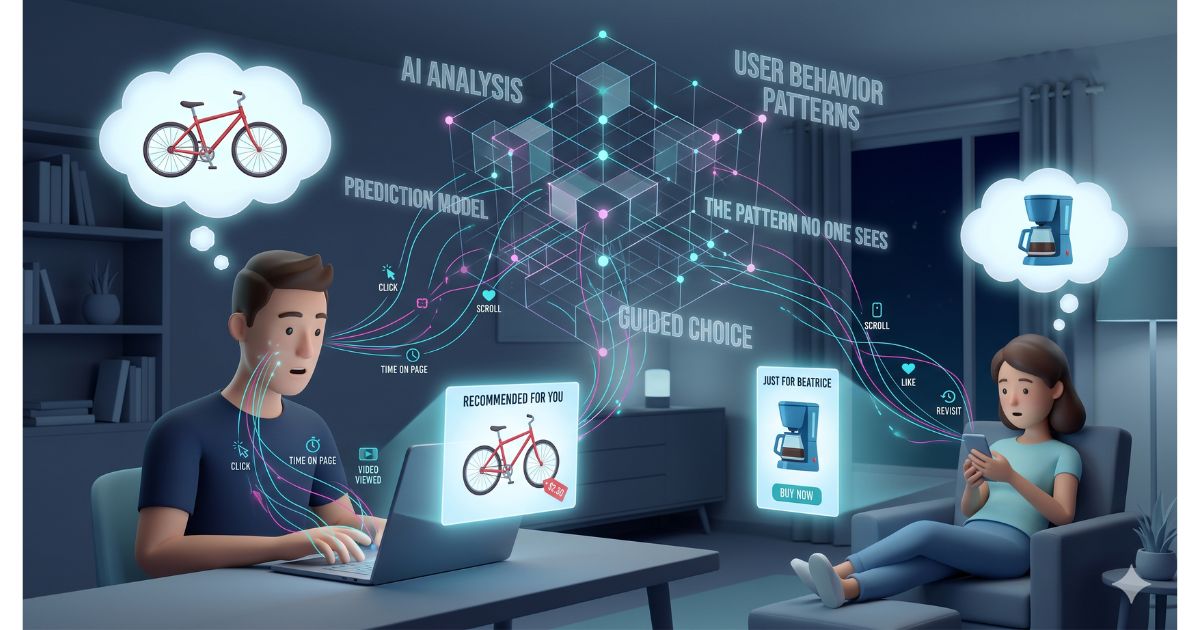
Beatrice didn’t search for it. She didn’t type it.She didn’t say it out loud. But there it was. An ad appeared on her screen. Exactly what she had been thinking about the night before. Same product. Same style. Even the same color. She paused. How did it know? The Pattern No One Sees Beatrice hadn’t searched for the item directly. But over the past few days, she had: Individually, these actions felt meaningless. But together, they told a story. Not to her. But to the system. What Online Behaviour Really Means Every time you use the internet, you leave small signals behind. Things like: These signals may seem random. But to AI systems, they are patterns. And patterns can be learned. When Data Becomes Prediction AI doesn’t just collect information. It studies behaviour. Over time, it begins to understand: In Beatrice’s case, the system didn’t need her to search. It already had enough data to predict her interest. The Quiet Shift At first, this feels helpful. Better recommendations.More relevant content.Less time searching. But something changes. Instead of you deciding what to explore… The system starts deciding what to show you. And slowly, your choices begin to narrow. The Hidden Risk Beatrice didn’t realise it, but her online experience was being shaped. Not forced. Just guided. The more she interacted, the more the system learned. And the more it learned, the more it influenced. This creates a subtle shift:From user controlTo system influence Why This Matters This isn’t just about ads. It affects: AI systems are designed to predict behaviour. But prediction can become influence. And influence can affect outcomes. A Question of Control Beatrice wasn’t being watched in the way she imagined. But her behaviour was being observed, analysed, and used. Not to harm her. But to understand her. The question is: How much of your decisions are truly yours… and how much are being shaped for you? A Cybersecurity and GRC Perspective This is where things connect to cybersecurity and governance. Because it’s not just about data collection. It’s about: In GRC, this raises important concerns: On A Final Note Beatrice eventually clicked on the ad. It was exactly what she wanted. Or at least… what she thought she wanted. AI didn’t force her decision. It simply understood her well enough to guide it. If you’re starting your journey in cybersecurity, this is something to remember: Data is not just collectedIt is used to predict, influence, and shape behaviour Because sometimes, the most powerful systems don’t control what you do. They simply make sure you see exactly what they want you to choose.

Why ‘Accept All Cookies’ Is a Bigger Risk Than You Think (AI & Data Privacy Explained)
Beatrice didn’t even pause. The pop-up appeared at the bottom of the screen: “We use cookies to improve your experience.” Two options. Accept AllManage Preferences She clicked Accept All without thinking and continued scrolling. It was quick. Easy. Harmless… or so it seemed. A few days later, something felt different. The ads she saw were unusually specific.The content recommendations felt almost too accurate.Even the products suggested matched things she had only thought about briefly. It was as if the internet was watching her. In a way, it was. The Click That Feels Too Small to Matter Most people think cybersecurity risks come from big actions: But sometimes, the risk begins with something much smaller. Something we barely notice. Like clicking “Accept All Cookies.” What Cookies Actually Do (Simple Explanation) Cookies are small pieces of data stored on your device when you visit a website. They help websites remember things like: On their own, cookies are not always harmful. But when combined and shared across platforms, they begin to tell a story. Your story. What “Accept All” Really Means When Beatrice clicked “Accept All,” she didn’t just accept one thing. She gave permission for: And most importantly… She allowed this data to be used in ways she didn’t fully understand. Where AI Comes In This is where things become more complex. Cookies don’t just store data. They feed AI systems. AI uses this data to: Over time, these systems begin to understand patterns: And slowly, a digital version of you is created. Not who you are. But who the system thinks you are. The Hidden Risk Beatrice never saw this happening. There was no alert. No warning. Just a better “user experience.” But behind the scenes: The risk isn’t just that data is collected. It is that control is quietly given away. What Most People Don’t Realise When people click “Accept All,” they assume: It is just for this website. But in reality, the data can travel. It can be: This creates a much bigger picture than most people expect. Where Data Privacy Comes In This is why data protection laws like the General Data Protection Regulation (GDPR) exist. They are designed to ensure that: In theory, Beatrice had a choice. She could have: But like many people, she chose convenience. A Familiar Pattern Beatrice’s story is not unusual. It happens every day. A small decision.A quick click.A moment of convenience. And over time, those small actions build something much bigger. On A Final Note…. Clicking “Accept All Cookies” doesn’t feel like a cybersecurity decision. But in today’s world, it is. Because data is no longer just information. It’s influence.It’s prediction.It’s power. And understanding how it’s used is one of the most important steps in protecting yourself. If you’re starting your journey in cybersecurity, remember this: Not all risks look dangerousSome look like convenience

What Happens After You Click a Phishing Link in the Age of AI
Beatrice almost ignored the email. It looked routine. “Urgent: Payroll verification required.” The message was clear, professional, and written exactly the way her company usually communicated. No spelling mistakes. No strange formatting. Even the tone felt familiar. She hesitated for a second. Then she clicked the link. Nothing unusual happened. A login page appeared. Clean. Branded. Normal. She entered her details and moved on with her day. By 11:42 AM, someone else had logged into her account. By 1:15 PM, internal emails were being accessed. By 3:30 PM, sensitive files had been downloaded. And by the end of the day, what started as a simple click had become a cybersecurity incident. But this time, something was different. This wasn’t just phishing. This was AI-assisted phishing. The Attack Didn’t Start With the Click It started much earlier. The attacker didn’t randomly send emails. Instead, they used AI tools to: The result? An email that didn’t look suspicious. It looked perfect. In the past, phishing emails were easier to spot. They contained: Now, AI has changed the game. Attackers no longer need to be skilled writers. They just need the AI right tools. Step by Step: What Actually Happened Beatrice’s click was just one moment in a chain of events. Here is how it all unfolded: 1. The Fake Page The link led to a login page designed to look identical to her company’s system. Every detail matched. Because AI can now help replicate interfaces quickly and convincingly. 2. The Credential Capture The moment she entered her login details, they were sent directly to the attacker. No alarms. No warnings. Just silent access. 3. The Silent Login Within minutes, the attacker logged into her real account. No hacking required. Just valid credentials. 4. The Expansion From there, access grew. Emails were read. Contacts were mapped. Internal systems were explored. In some cases, attackers use AI to analyse large amounts of data quickly, identifying what is valuable. 5. The Impact What began as one compromised account quickly became a wider risk: Why AI Makes This More Dangerous The goal of phishing hasn’t changed. But AI has made it: In other words: The attack is no longer obvious.The mistake is no longer easy to avoid. The Real Risk Isn’t Technology It’s easy to think this is a technology problem. But Beatrice didn’t fail because she lacked technical knowledge. She made a decision based on what she saw. And what she saw looked real. This is where cybersecurity becomes human. Because no matter how advanced systems become, people still have to: A New Reality for Beginners If you’re starting your cybersecurity journey, this is important to understand: The risks are no longer just technical. They are psychological, behavioural, and increasingly AI-driven. You’re not just learning how systems work. You’re learning how deception works at scale. On a final note…. Beatrice’s story isn’t rare. It’s becoming more common. Because in 2026, cyber attacks are no longer just about breaking systems. They are about convincing people. And AI is making that easier than ever. Because sometimes, the most dangerous part of a cyber attack…is not the code behind it. It’s how real it looks.
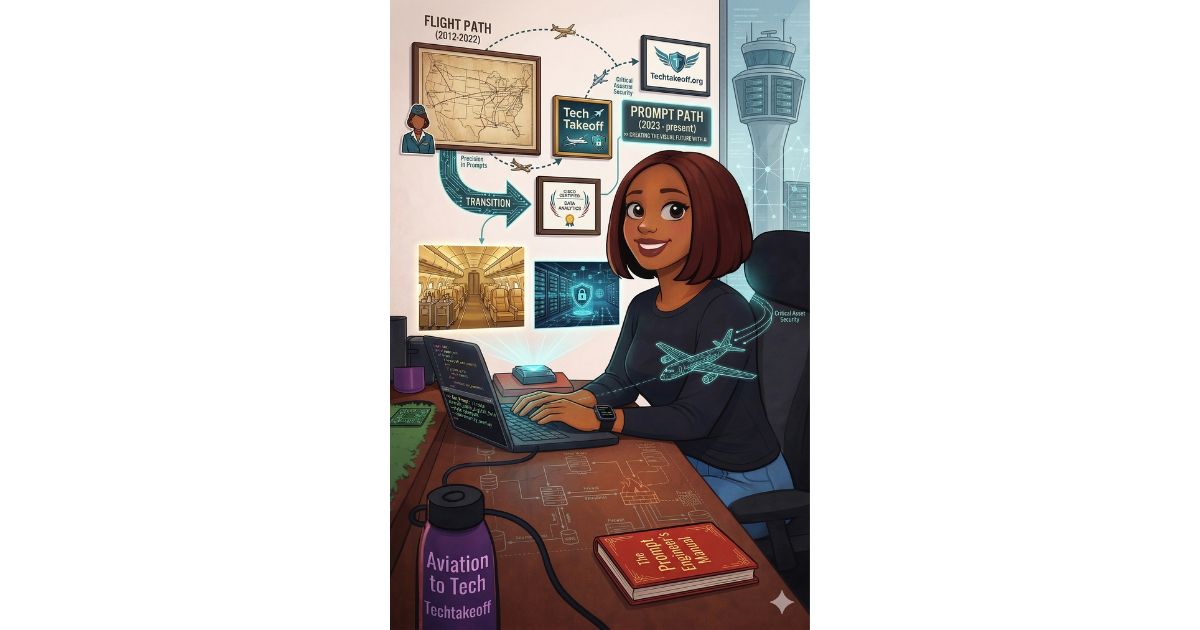
From Flight Paths to Prompt Paths: How I Design Techtakeoff with AI
When I started my transition from aviation to cybersecurity, I knew I wanted Techtakeoff to have a unique visual identity. I didn’t want generic stock photos; I wanted images that reflected my journey, my style, and the future I am building. That’s when I stepped into the world of Prompt Engineering. I did a course in AI for creatives. What is an AI Prompt? Think of an AI prompt like a flight plan. Just as a pilot needs specific coordinates, weather data, and altitude instructions to reach a destination, an AI model needs descriptive text to land on the right image. My Creative Process To create the visuals you see on this blog, I use Text-to-Image generative tools. I don’t just type “girl at a laptop.” I have to be the director, the lighting technician, and the stylist. For example, to create my “Tech Branding” images, I use detailed prompts like: A high-quality 3D animation style illustration of a confident Black woman with a sleek bob and glasses, sitting at a modern outdoor cafe. she is writing in a notebook labeled ‘Techtakeoff,’ with a laptop and coffee nearby. Cinematic lighting, soft morning sun, professional and chic aesthetic. Why This Matters for My Tech Journey You might wonder: What does making art have to do with Cybersecurity? The answer is Precision.