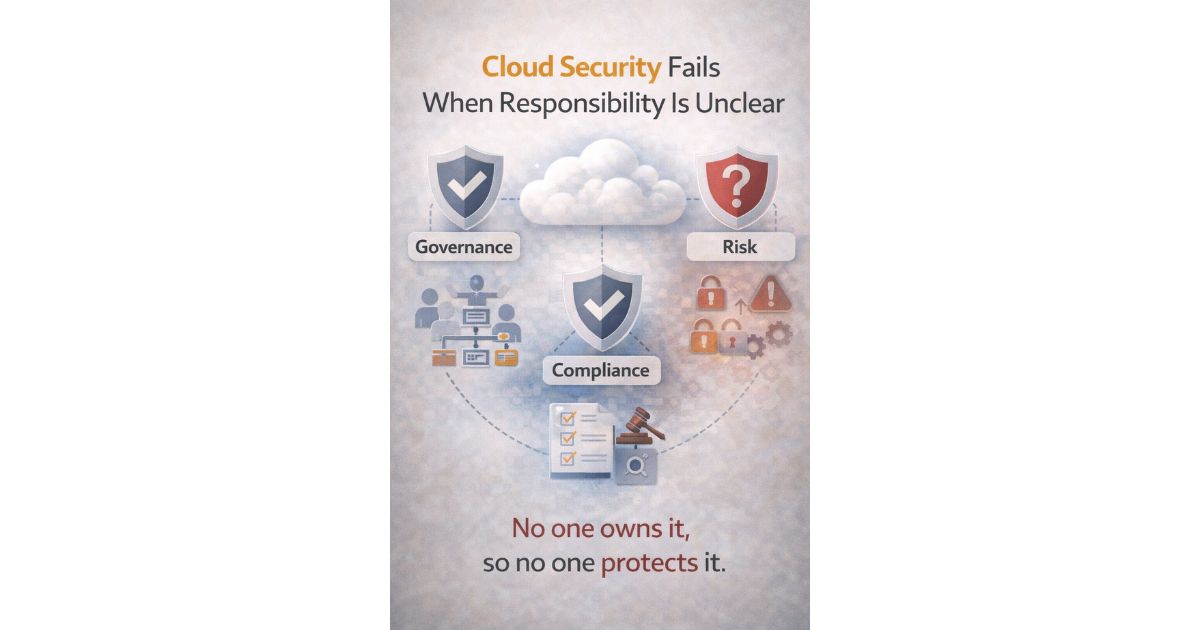
One of the biggest lessons I am learning as I explore cloud security through a GRC lens is this: Cloud security doesn’t usually fail because tools are missing.It fails because responsibility is unclear. In the cloud, everything feels shared. Infrastructure, platforms, applications, data. And when things feel shared, responsibility often becomes blurred. Everyone assumes someone else is handling security until something goes wrong. That’s where Governance, Risk, and Compliance (GRC) come in. Governance: Defining Who Owns What Governance answers one simple but powerful question:Who is responsible for what? In cloud environments, governance defines: Without clear governance, security tasks fall into gaps. Controls exist, but no one is accountable for them. Decisions are made without clarity, and risks quietly grow. Governance creates structure so responsibility is not assumed it is assigned. Compliance: Making Responsibilities Visible Compliance turns responsibility into something measurable. Policies, standards, and regulatory requirements force organizations to document: In the cloud, compliance helps ensure that security expectations are not just understood but followed consistently. It provides proof that responsibilities are being met not guessed. Without compliance, responsibility becomes informal and unreliable. Risk: What Happens When No One Owns It Risk thrives in uncertainty. When responsibility is unclear: Risk management in GRC asks: Cloud risk is not just technical. It is organizational. Why This Matters Cloud providers secure the infrastructure but organisations are responsible for how they use it. This shared model only works when responsibility is clearly defined. When it isn’t, security fails quietly until it doesn’t. On a Final note…. Cloud security is not just about tools or platforms. It’s about: When responsibility is unclear, cloud security fails.When GRC is strong, responsibility is clear and security has a fighting chance.
Cloud Security Isn’t Just Tools It’s a Chain (And GRC Holds It Together)
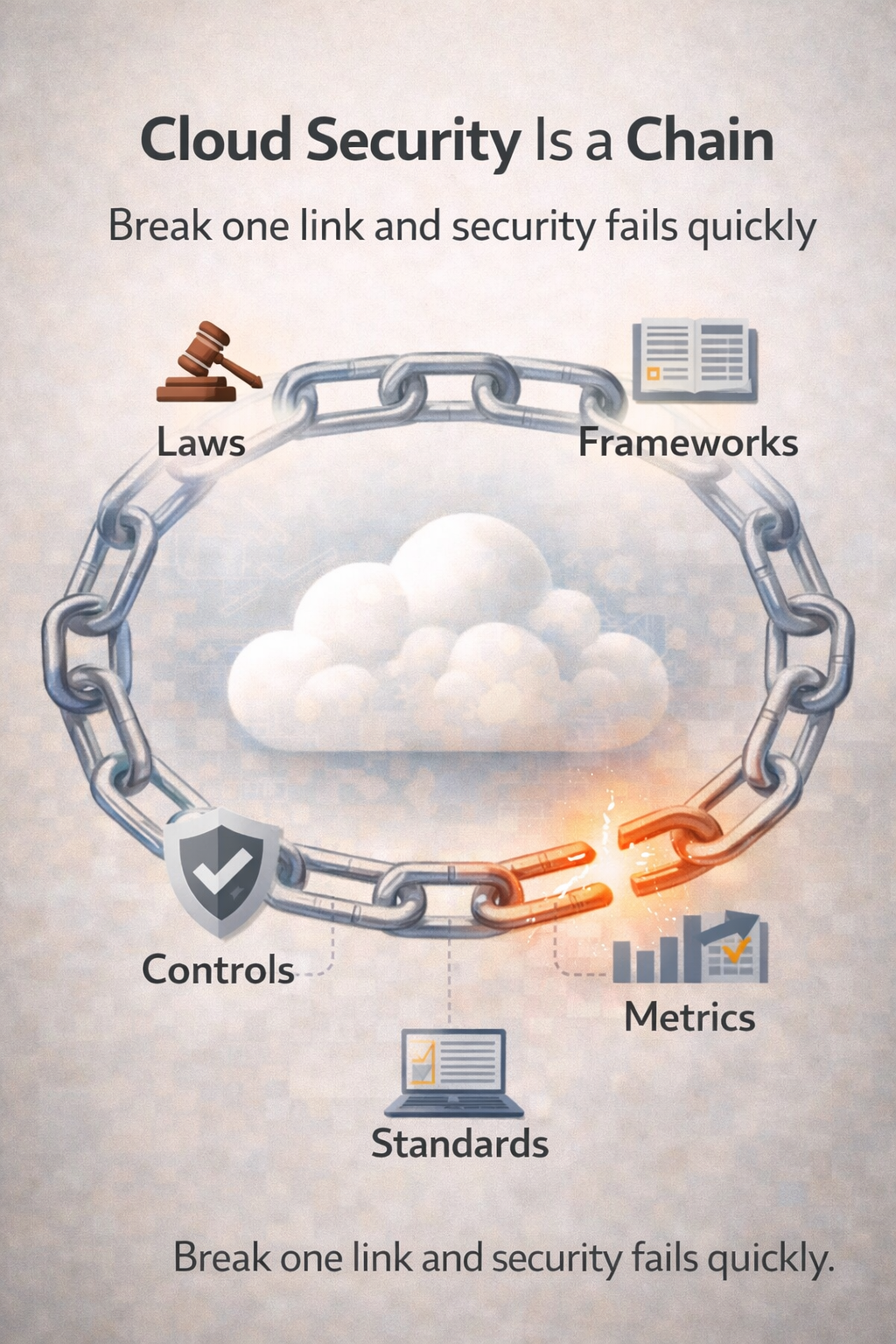
I just started learning about cloud security in GRC, I assumed it would mostly be about tools firewalls, access controls, dashboards, and configurations. But very quickly, I realized something important: Cloud security is not a single tool. It’s a chain. And like every chain, it is only as strong as its weakest link. In cloud environments, security works in layers that depend on one another. If one layer is ignored, the entire structure becomes fragile. This is where GRC (Governance, Risk, and Compliance) quietly does the heavy lifting. The chain starts with laws and regulations. These are the rules set by governments and regions data protection laws, privacy requirements, and industry mandates. They define what must be protected and why it matters. Without laws, there is no obligation to secure data properly. Next come frameworks. Frameworks translate legal and business expectations into structured guidance. They help organizations understand how to approach security in a consistent way across cloud environments. Then we have standards. Standards turn frameworks into measurable expectations. They define what “good security” should look like in practice, making it easier to assess whether an organization is meeting its obligations. From standards flow controls. Controls are the actual actions taken access restrictions, logging, encryption, identity management. This is where many people think cloud security starts, but in reality, it’s already several steps into the chain. Finally, there are metrics. Metrics answer one simple question: Is any of this actually working? They help organizations measure effectiveness, spot weaknesses, and improve continuously. Break one link ignore laws, skip frameworks, poorly implement controls, or fail to measure outcomes and cloud security fails faster than expected. This is why cloud security and GRC are deeply connected. GRC ensures the chain stays intact, aligned, and accountable. It reminds us that security isn’t just about technology it’s about structure, responsibility, and follow-through. Cloud security doesn’t collapse because tools are missing.It collapses because connections are broken. And GRC exists to make sure they aren’t.