Imagine an airline is preparing for a busy day. Hundreds of flights are scheduled. Thousands of passengers are travelling. Weather conditions are changing. Aircraft are moving between airports. Crew schedules are being coordinated. Behind all of this, artificial intelligence is quietly analysing information and identifying patterns. An AI system produces a recommendation. It looks convincing. The data looks convincing. The system has processed far more information than a human could reasonably analyse in the same amount of time. So someone asks a very simple question: Can we trust it? That question may become one of the most important questions aviation has to answer as Artificial Intelligence becomes more deeply integrated into airline operations. The issue is not whether AI can be useful. It clearly can. The bigger question is: How do airlines make sure AI is being used safely, responsibly and with the right human oversight? That is where AI Governance in aviation comes in. AI Is Already Becoming Part of Aviation’s Future Artificial Intelligence is no longer just something we hear about in technology conferences. It is becoming part of the aviation industry. Airlines and aviation organisations are exploring how AI can be used for areas such as flight operations, safety, air traffic management, aircraft maintenance and other parts of aviation. The International Civil Aviation Organization (ICAO) recognises both the benefits and risks of using AI in aviation. It says AI needs to be developed and used in a way that is safe, transparent, secure and accountable, with humans still playing an important role. In Europe, the European Union Aviation Safety Agency (EASA) is also working on how AI can be used safely in aviation. In June 2026, EASA released an updated AI Concept Paper that looks at newer AI technologies and more advanced forms of automation. Its approach focuses on making AI trustworthy while keeping aviation safety and human involvement at the centre. So this conversation is not simply about whether airlines might use AI one day. It is about how aviation can responsibly integrate increasingly capable AI systems. And that brings us to five questions. 1. Is the AI Using Accurate Data? This might sound like a technical question. It is actually one of the most important governance questions. AI is only as reliable as the information it is working with. Imagine an AI system is helping an airline analyse operational information. The system receives information from several different sources. But what if some of that information is incomplete? What if records are outdated? What if information has been entered incorrectly? What if two systems contain conflicting information? The AI may still produce an answer. And the answer may even sound extremely confident. But confidence does not equal accuracy. This is why Data Governance becomes such an important part of AI Governance. Organisations need to understand where data comes from, whether it is fit for purpose, how it is managed and who is responsible for it. ICAO has specifically highlighted the importance of information and data management for AI applications, noting that datasets used to train and validate AI need to be complete, representative and of high quality. This is a lesson I find particularly interesting as I learn more about AI Governance. Before asking: What can the AI do? we should also ask: What information is the AI learning from? 2. Can a Human Challenge the AI? Now imagine the AI has analysed the data and produced a recommendation. Should the airline simply follow it? Not necessarily. Aviation has always relied heavily on human expertise, procedures and professional judgement. AI does not change that overnight. Instead, the challenge is finding the right relationship between humans and AI. EASA’s work on Level 2 AI specifically addresses human AI teaming, where AI systems can perform certain decision making functions while remaining under human oversight. EASA also emphasises the importance of safe human AI interaction. In simple terms: The AI can make a recommendation, but the human needs to understand it, evaluate it and have the ability to intervene when appropriate. Think of the AI as an extremely sophisticated alarm clock. It can wake you up. It can tell you something needs attention. But it should not automatically decide what you do next. That distinction matters enormously when AI is used in aviation. 3. Can We Understand Why the AI Made Its Recommendation? Imagine an AI system tells an airline: There is a high risk associated with this situation. A natural question follows: Why? If nobody can explain what information influenced the recommendation, it becomes difficult to properly assess the result. This does not mean every AI system needs to reveal every mathematical calculation behind its output to every user. It means organisations need appropriate levels of explainability and transparency for the context in which the AI is being used. This becomes particularly important when AI is involved in safety related applications. EASA’s aviation AI work includes concepts such as AI explainability and learning assurance as part of developing trustworthy AI systems. The question therefore becomes: Can the people responsible for the decision understand enough about the AI’s output to use it safely? If the answer is no, that itself becomes a governance concern. 4. Who Is Accountable When AI Gets It Wrong? This may be one of the most uncomfortable questions. Imagine an AI system makes a recommendation. A human follows the recommendation. Later, the decision turns out to have been wrong. Who is responsible? The AI? The person who approved the recommendation? The airline? The team that developed the system? The organisation that supplied the technology? This is why AI Governance cannot simply be about whether the technology works. It must also establish accountability. People need to understand their responsibilities. There should be appropriate processes for monitoring the system. There should be mechanisms for reporting problems. And there should be clarity around who has authority to intervene. ICAO has identified accountability, fairness, human control and technical robustness among principles relevant to trustworthy AI in aviation. This

What Can a Flight Attendant Do With AI and Cybersecurity? 4 Career Paths to Explore
For years, I thought of my career as something that existed entirely inside an aircraft. Safety demonstrations. Passenger service. Emergency procedures. Crew coordination. Long flights. Different countries. Different cultures. Different passengers. Then I started learning about cybersecurity. And later, Artificial Intelligence, Data Governance and AI Governance. Something unexpected happened. I began looking at my aviation career differently. I started asking myself: Could the skills I developed as a flight attendant actually be useful in technology? The answer surprised me. They can. A flight attendant does not need to become a software engineer to enter the technology industry. There are technology careers where understanding risk, procedures, people, data, compliance and decision making can be just as important as knowing how to write complex software. And this is particularly interesting as Artificial Intelligence becomes increasingly important across industries, including aviation. If you are a flight attendant thinking about changing careers, you may have more transferable skills than you realise. Here are four career paths worth exploring. 1. AI Governance This is the area that interests me the most. AI Governance is about creating the policies, processes, controls and accountability structures that help organisations use Artificial Intelligence responsibly. Think about an airline introducing an AI system. It might use AI for customer service. It might use AI to support operational planning. It might use AI to analyse data. It might use AI to identify potential risks. The technology may be impressive. But someone still needs to ask: What could go wrong? What data is the AI using? Is the data accurate? Is passenger information being protected? Who is responsible for the system? Can a human override the AI? How is the AI being monitored? These are governance questions. And this is where a flight attendant’s experience can become relevant. What Does a Flight Attendant Already Know About Risk? Aviation is built around risk management. You are trained to recognise hazards. You follow established procedures. You understand escalation. You know that not every situation should be handled independently. You document and report incidents. You work within clearly defined responsibilities. And you understand that procedures exist for a reason. These principles are not exclusive to aviation. They are also important in governance, risk and compliance. A flight attendant moving into AI Governance therefore is not starting from zero. They may need to learn the technology, governance frameworks, privacy principles and regulatory environment. But they already understand something extremely valuable: how to work within a safety and risk conscious environment. 2. Cybersecurity GRC Another possible pathway is Cybersecurity Governance, Risk and Compliance, commonly known as GRC. This is different from the image many people have of cybersecurity. When people hear cybersecurity, they often imagine someone sitting behind multiple screens, writing code or investigating sophisticated cyberattacks. That is one part of cybersecurity. But it is not the whole industry. Cybersecurity GRC focuses heavily on areas such as: This can be an interesting pathway for professionals coming from highly regulated industries. And aviation is certainly one of them. The Aviation Connection Flight attendants work within an environment where procedures and compliance matter every day. You cannot simply decide: ‘I don’t feel like following this procedure today.’ There are established requirements around safety, security, emergency procedures and passenger handling. That procedural mindset can transfer into cybersecurity GRC. For example, a cybersecurity GRC professional may need to assess whether an organisation has appropriate controls for protecting information. A flight attendant may be accustomed to checking whether required procedures have been followed. The subject matter is different. The underlying mindset can be surprisingly similar. 3. Data Governance This is another area that I believe deserves more attention. Artificial Intelligence needs data. But organisations cannot simply collect information and assume that the AI will automatically make good decisions. The data needs to be managed. Who owns the data? Where did it come from? Is it accurate? Is it complete? Who can access it? How should it be protected? How long should it be retained? These are Data Governance questions. And they are becoming increasingly important as organisations adopt AI. Why Could This Matter in Aviation? Think about the amount of information involved in air travel. Passenger information. Booking information. Operational information. Crew information. Aircraft information. Airport information. Customer service information. Loyalty programme information. The aviation industry is highly data driven. As airlines increasingly use AI, the quality and management of that data becomes even more important. A flight attendant may not have worked as a data analyst before. But they have experience working around information, procedures, passenger records and operational processes. That experience can become part of a broader career transition into Data Governance. Of course, additional technical and governance knowledge is still necessary. Transferable skills are an advantage. They are not a substitute for learning. 4. AI Privacy and Data Privacy This is another area I am currently learning about, and I think it presents an interesting opportunity for people coming from customer facing industries. Imagine an airline chatbot. A passenger wants to change a flight. The chatbot asks for a booking reference. The passenger provides their information. The AI accesses information connected to the booking. The passenger receives an answer. The process may seem simple. But behind the interaction are important privacy questions. What personal data is the AI processing? Why does it need that information? Who can access it? Where is the information stored? How long is it retained? Is the passenger informed about how their information is being used? These questions sit at the intersection of AI, privacy and governance. Someone working in AI Privacy or Data Privacy does not necessarily need to build the AI system. They need to understand the risks surrounding the information the system uses. Your Flight Attendant Experience Can Actually Be an Advantage There is something I want to make clear. I am not saying that being a flight attendant automatically qualifies someone for an AI or cybersecurity role. It doesn’t. You still need to learn. You may need certifications. You may
5 AI Myths I Believed Before Learning AI Governance
When Beatrice first became interested in artificial intelligence, she was both fascinated and intimidated. Everywhere she looked, people were talking about AI changing the world. Some claimed AI would replace millions of jobs. Others believed it was smarter than humans. The more videos she watched and articles she read, the more overwhelmed she became. She wondered if there was even a place for someone like her in this fast-growing field. As she began learning cybersecurity, Governance, Risk, and Compliance (GRC), and eventually AI Governance, she realised something surprising. Many of the things she believed about AI simply weren’t true. If you arejust beginning your AI Governance journey, you may have believed some of these myths too. Myth 1: AI Knows Everything When Beatrice first used an AI chatbot, she assumed every answer it gave was correct. After all, the responses sounded confident and well written. But as she continued learning, she discovered an important truth. AI does not “know” facts the way humans do. Instead, AI identifies patterns from the information it has been trained on and generates responses based on those patterns. That means AI can sometimes provide incomplete, outdated, or incorrect information. This is one reason why human oversight remains a key principle of AI Governance. The lesson? Always verify important information instead of assuming AI is always right. Myth 2: AI Thinks Like a Human One of Beatrice’s biggest misconceptions was believing AI actually thinks. It doesn’t. AI does not have emotions. It does not have personal experiences. It does not understand the world in the same way people do. Instead, AI predicts the most likely response based on patterns in data. That is very different from human reasoning. Understanding this distinction helps explain why AI sometimes produces unexpected or inaccurate answers. Myth 3: AI Governance Is Only for Programmer This myth almost stopped Beatrice from pursuing AI Governance. She assumed everyone in the field had a Computer Science degree and years of coding experience. As she researched further, she realised AI Governance brings together many different disciplines. It involves: Technical knowledge is valuable, but AI Governance also needs professionals who understand policies, accountability, and responsible decision-making. That discovery gave her the confidence to keep learning. Myth 4: Better AI Always Means Better Results At first, Beatrice believed that the more advanced an AI system became, the better its decisions would be. Then she learned one of the most important lessons in AI Governance. AI depends on data. If the data is poor, biased, incomplete, or inaccurate, even the most advanced AI system may produce poor results. This is why Data Governance has become so important. Good AI starts with good data. Without trustworthy data, trustworthy AI becomes much harder to achieve. Myth 5: Learning AI Means Learning Everything at Once The world of AI can feel overwhelming. Machine Learning. Large Language Models. Data Governance. Cybersecurity. Privacy. Risk Management. At first, Beatrice thought she needed to understand everything before she could even begin. She was wrong. She realised that every expert started somewhere. Her own journey began with Cisco Networking Essentials. Then Introduction to Cybersecurity. Then CyberOps. Then GRC. Now she is learning AI Governance one concept at a time. Progress came through consistency, not perfection. What These Myths Taught Me Looking back, Beatrice realised that learning AI Governance was not about memorising technical terms. It was about changing the way she thought about technology. She learned that responsible AI depends on: Most importantly, she learned that curiosity is one of the greatest strengths a beginner can have. On A Final Note If you are considering a career in AI Governance, don’t let common myths discourage you. You don’t need to know everything on your first day. You don’t need to have all the answers. You simply need the willingness to learn. Every article you read. Every course you complete. Every question you ask. Brings you one step closer to understanding one of the most important fields shaping the future of technology. Beatrice is still learning. So am I. And perhaps that’s the best place to begin. AI myths, AI Governance for beginners, common AI misconceptions, artificial intelligence explained, AI Governance career, responsible AI, Data Governance, AI bias, AI chatbot myths, cybersecurity and AI, AI learning journey, beginner’s guide to AI Governance, trustworthy AI, AI fundamentals.
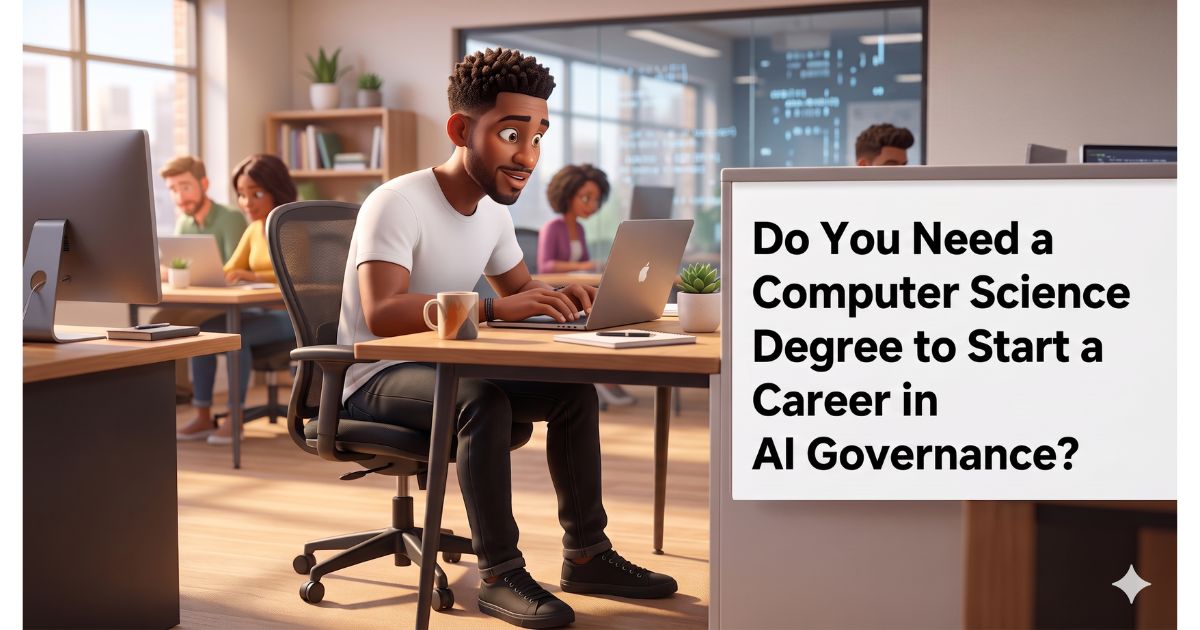
Do You Need a Computer Science Degree to Start a Career in AI Governance?
Beatrice almost talked herself out of it. She had been reading about AI Governance for weeks. Every article she found mentioned artificial intelligence, machine learning, algorithms, and data. The more she read, the more one thought kept returning. “Maybe this field is not for someone like me.” After all, she wasn’t a software engineer. She didn’t have a Computer Science degree. Her background was aviation. She had spent years ensuring passenger safety, following procedures, managing emergencies, and making decisions under pressure. What place did she have in a field that seemed filled with programmers and data scientists? Then she started researching the people already working in AI Governance. To her surprise, not everyone had studied Computer Science. Some came from law. Others came from cybersecurity. Some worked in compliance, risk management, auditing, public policy, or data privacy. That was the moment she realised something important. AI Governance is not just about building AI. It is about governing how AI is used responsibly. Why So Many People Think You Need a Computer Science Degree It is an understandable assumption. Artificial Intelligence sounds highly technical. When people hear the words “AI,” they often imagine: Those professionals play an important role in developing AI systems. But building AI and governing AI are not the same thing. As organisations adopt AI across healthcare, aviation, finance, retail, education, and government, they also need people who can answer questions like: These are governance questions. Not programming questions. What Is AI Governance AI Governance is the process of ensuring that artificial intelligence is developed, deployed, and used responsibly. It brings together: The goal is not simply to make AI more intelligent. The goal is to make AI more trustworthy. So, Do You Need a Computer Science Degree? The short answer is: No, not necessarily. Many AI Governance roles value a combination of technical awareness and non-technical expertise. Employers may look for people who understand: A Computer Science degree can certainly be an advantage for some roles. But it is not the only pathway into AI Governance. Understanding how AI impacts people, organisations, and society is just as important. The Skills That Matter As Beatrice continued learning, she realised she had already developed many relevant skills through aviation. Without knowing it, years of working as a flight attendant had taught her to think like a governance professional. She already understood: Risk Awareness Every flight involves identifying and managing risks before they become problems. Compliance Following procedures is essential in aviation. The same mindset applies to AI Governance. Communication Complex situations often require clear, calm communication with passengers and colleagues. Governance professionals communicate policies, risks, and recommendations in much the same way. Decision Making AI may provide recommendations, but responsible organisations still rely on human judgement for important decisions. Accountability In aviation, every action has an owner. AI Governance follows the same principle. Someone must remain accountable for how AI systems are used. Where Should Beginners Start? One lesson I have learned during my own transition is that strong foundations matter. My journey started with Cisco Networking Essentials. That helped me understand how networks and digital systems work. I then completed Introduction to Cybersecurity and CyberOps, where I first discovered risk management. That curiosity eventually led me to Governance, Risk, and Compliance. Now, I am exploring AI Governance because artificial intelligence is changing the way organisations manage risk, privacy, and accountability. Every step built upon the previous one. I did not need to know everything on day one. I simply needed to keep learning. Why AI Governance Needs Diverse Backgrounds Artificial Intelligence affects almost every industry. That means organisations need professionals with different perspectives. People from: all bring valuable experience. Because AI Governance is ultimately about helping organisations use AI responsibly. Technology alone cannot solve governance challenges. People do. On A Final Note As Beatrice closed her notebook after another evening of studying, she realised the question she had been asking herself was the wrong one. She had been asking: “Do I have the right degree?” The better question was: “Am I willing to keep learning?” A Computer Science degree can be valuable. But curiosity, continuous learning, and an understanding of governance, risk, privacy, and accountability are equally important in this rapidly evolving field. If you are considering a career in AI Governance, don’t let the absence of a Computer Science degree stop you from exploring the field. Every expert started as a beginner. And every career transition begins with one decision to learn something new.
Why Data Governance Will Be One of the Most Important Careers in the AI Era
Beatrice was fascinated by artificial intelligence. Every day, she seemed to hear a new story about AI transforming industries. AI was helping doctors detect diseases. AI was assisting banks in identifying fraud. AI was supporting airlines with scheduling, forecasting, and operational planning. The possibilities seemed endless. The more she learned, the more she believed that AI would shape the future. Then one day, she came across a quote that stopped her in her tracks: AI is only as good as the data it learns from. At first, it sounded simple. But the more she thought about it, the more she realised that behind every successful AI system was something most people rarely talked about. Data. Not the AI model. Not the chatbot. Not the algorithm. Data. And that discovery led her to a field she had never seriously considered before. Data Governance. The Hidden Foundation of AI When people talk about artificial intelligence, they usually focus on what AI can do. They talk about: What often gets overlooked is the information powering those systems. AI systems learn from data. They depend on data. They make decisions based on data. If the data is inaccurate, incomplete, outdated, or biased, the AI system may produce poor outcomes. In other words: Good data helps create trustworthy AI. Bad data creates risk. The Day Beatrice Understood the Problem Imagine a hospital using an AI system to help identify patients at risk of developing certain illnesses. The AI appears intelligent. The predictions seem impressive. But what if the patient records being used contain errors? What if important information is missing? What if the data was never properly reviewed? Suddenly, the issue is no longer about artificial intelligence. It becomes a data problem. And that is exactly why organisations are beginning to pay more attention to data governance. What Is Data Governance? Data Governance is the process of ensuring that data is: It establishes rules, policies, and responsibilities for how organisations collect, store, share, and protect information. Think of it as the framework that helps organisations trust their data. Without governance, data can quickly become disorganised, inconsistent, or unreliable. And if AI relies on poor-quality data, the results may also be poor. Why AI Is Creating More Demand for Data Governance As AI adoption increases, organisations are collecting and processing more information than ever before. This creates important questions: These questions are no longer optional. They are becoming essential business concerns. The more organisations invest in AI, the more they need professionals who understand how to govern data responsibly. Why Data Governance Is More Than a Technical Role One of the biggest misconceptions is that data governance is only for highly technical professionals. The reality is different. Data governance sits at the intersection of: Professionals in this field often work with: In many ways, data governance is as much about people and processes as it is about technology. Where AI Governance and Data Governance Meet As Beatrice continued exploring the field, she discovered something interesting. AI Governance and Data Governance are closely connected. AI Governance focuses on ensuring AI systems are: Data Governance focuses on ensuring the information feeding those systems is: One cannot succeed without the other. You cannot build responsible AI on poor-quality data. And you cannot govern AI effectively if you do not understand the data behind it. Why This Career Will Matter in the Future Many experts believe data will become one of the most valuable assets organisations own. At the same time, regulators around the world are increasing expectations around: Organisations will need professionals who can help them navigate these challenges. People who understand: This is why Data Governance is becoming one of the most important careers in the AI era. A Great Opportunity for Career Changer As Beatrice researched further, she realised something encouraging. Many skills required in data governance are transferable. Professionals from backgrounds such as: may already possess valuable skills that align with governance-focused careers. The field is not only about technology. It is about creating trust in how organisations manage information. On A Final Note When most people think about the future of AI, they imagine smarter algorithms and more powerful systems. But the future of AI depends on something much simpler. Data. And as organisations increasingly rely on AI to make decisions, the people who understand how to govern, protect, and manage that data will become more valuable than ever. Because in the AI era, success will not belong only to those who build intelligent systems. It will also belong to those who ensure the data behind those systems can be trusted.
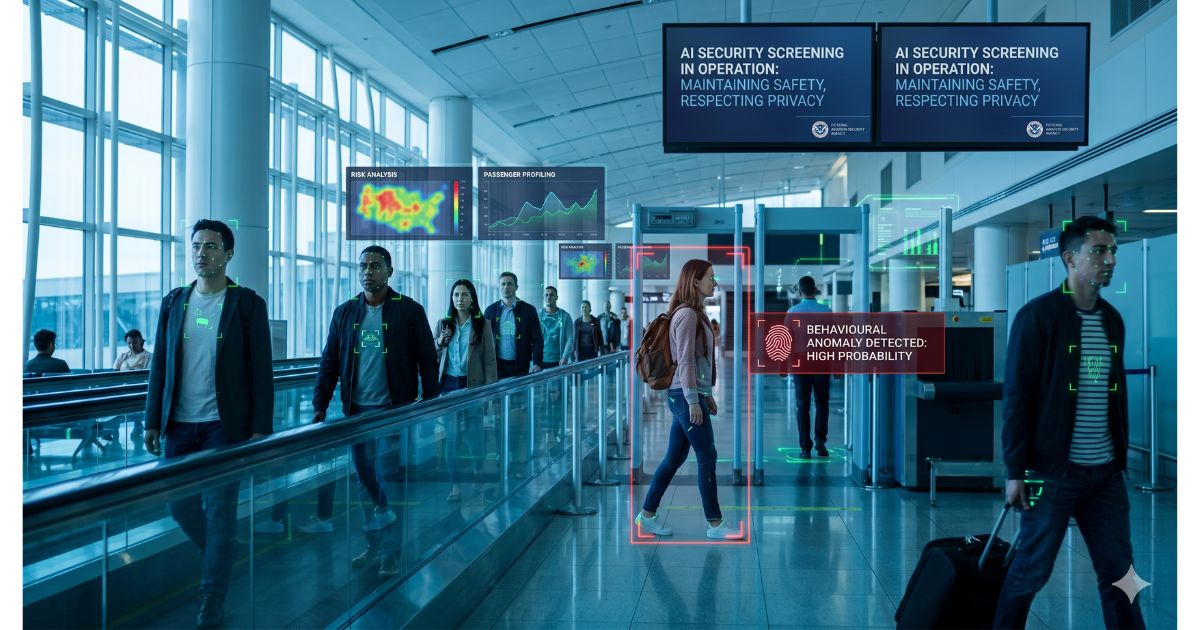
How Airlines Use AI to Detect Suspicious Passengers: Privacy, Security, and the Hidden Risks
Beatrice noticed the cameras immediately. As she walked through the airport terminal during a layover, she realised something had changed. The security process felt faster. Smoother. More automated. Passengers moved through checkpoints with minimal interaction. Some gates opened automatically after facial scans. Screens tracked movement quietly in the background. Most travelers barely noticed. But Beatrice did. As a flight attendant, airports were familiar environments. Yet this time, it felt different. Less human. More intelligent. Later that evening, she began wondering: How much is AI actually watching inside airports? The answer was more complex than she expected. How AI Is Used in Modern Airports Today, airports across the UK and Europe increasingly use AI-powered systems to improve security and operational efficiency. These systems can help: AI is now integrated into technologies like: Facial Recognition Systems Used to compare passenger faces with identification documents or watchlists. Behaviour Analysis Systems Designed to identify unusual movement patterns or suspicious activity. Smart Security Screening AI-assisted scanning systems that help identify prohibited items more efficiently. For airports handling millions of passengers yearly, automation helps process people faster and more consistently. The Security Advantage From an aviation safety perspective, the benefits are clear. Airports face enormous pressure to maintain security while managing large passenger volumes. AI systems can help by: For example, AI may identify: All within seconds. This creates a safer and more responsive environment. But Here is the Hidden Question As Beatrice continued thinking about it, another question appeared. What happens if the system gets it wrong? Because AI systems don’t think like humans. They rely on: And human behaviour is not always predictable. A nervous passenger may simply fear flying. Someone moving quickly through the terminal may just be late for boarding. But to an AI system, unusual behaviour can sometimes appear suspicious. When Passenger Data Becomes Part of the System To function effectively, many AI airport systems rely on large amounts of passenger data. This may include: Over time, these systems build detailed profiles and behavioural models. And this is where privacy concerns begin to grow. The Privacy Risk Most Passengers Don’t See Most travelers focus on catching flights, checking luggage, and getting through security. Few think about what happens to their data behind the scenes. But AI surveillance systems raise important questions: This is no longer just an aviation issue. It becomes a governance and data privacy issue. Where GDPR and Data Protection Come In In the UK and Europe, passenger data protection is guided by laws like the General Data Protection Regulation. These regulations require organisations to: In theory, these rules help balance: But AI introduces new complexity. Because AI systems can process and analyse data at a scale humans cannot. The Governance Challenge This is where Governance, Risk, and Compliance becomes critical. Airports and airlines must ensure: Governance Clear policies exist around how AI surveillance systems are used. Risk Management Potential risks such as: are properly assessed. Compliance Systems comply with: Because if AI systems make mistakes, accountability still matters. Aviation Has Always Balanced Safety and Trust Aviation depends on trust. Passengers trust: AI may improve efficiency and strengthen security. But trust cannot rely on automation alone. Passengers still need transparency. They need to know: The Bigger Picture As Beatrice boarded her next flight, she realised something important. AI is quietly reshaping modern aviation. Not only through security systems. But through: The technology is becoming more intelligent every year. But intelligence without oversight creates risk. On A Final Note AI may help airports identify suspicious activity faster. But airports are not just processing passengers. They are processing people’s data, behaviour, and identities. And as aviation becomes more automated, the real challenge will not simply be improving security. It will be protecting privacy, maintaining accountability, and ensuring humans remain visible within the system.

Is Your Data Safe with AI in the UK? What GDPR Really Protects
(Beginner Guide) Beatrice didn’t think twice about it. She had just downloaded a new app. It promised smarter recommendations, faster results, and a more personalised experience powered by AI. She signed up, entered her details, and clicked: Accept All. A few days later, something felt different. The app seemed to know her preferences almost too well.It suggested things she hadn’t explicitly searched for.Even the timing of the recommendations felt… accurate. She paused for a moment. How much of my data is this app actually using? The Question Most People Don’t Ask In the UK today, AI is part of everyday life. From: These systems rely on data to function. Your data. But here’s the question many beginners don’t ask: Is your data actually safe? What Happens to Your Data When You Use AI When Beatrice signed up, she shared more than she realised. Not just her name and email. But also: AI systems use this data to: Over time, this builds a detailed profile. Not just of who she is. But how she behaves. This Is Where GDPR Comes In In the UK, data protection is guided by laws based on the General Data Protection Regulation. These rules exist to protect people like Beatrice. In simple terms, GDPR says: What GDPR Actually Protects Beatrice has rights, even if she doesn’t always realise it. She has the right to: This means her data is not supposed to be used freely without limits. There are rules. But Here’s What Most People Don’t Realise GDPR doesn’t stop companies from using your data. It regulates how they use it. So when Beatrice clicked “Accept All,” she gave consent. And that changes things. Because once consent is given: As long as it follows legal guidelines. The Gap Between Protection and Reality This is where things become more complex. Even with GDPR in place: So while the law provides protection… Many people don’t fully understand how their data is being used. A Cybersecurity and GRC Perspective From a cybersecurity and governance point of view, this raises important questions: Because protecting data is not just about security. It’s about: The Real Question Beatrice’s data wasn’t stolen. It wasn’t hacked. It was used… exactly as she had allowed. But she didn’t fully understand what she had agreed to. And that’s where the real risk lies. On A Final Note AI is powerful because it learns from data. And in the UK, GDPR exists to make sure that learning happens responsibly. But protection doesn’t replace awareness. Because at the end of the day: your data may be protected by lawbut your choices still shape how it’s used If you are starting your journey in cybersecurity, this is something worth remembering: Data privacy is not just about laws It’s about understanding how your information flows and who controls it

Top 5 Cybersecurity Risks Every Beginner Should Know in 2026
Beatrice didn’t think she had done anything wrong. It was a normal Tuesday morning. She had just settled into her desk, coffee still warm, emails already piling up. One message stood out. “Urgent: Your payroll account needs verification.” It looked legitimate. Same company logo. Same tone. Same formatting she had seen many times before. Without thinking too much, she clicked the link and entered her login details. Nothing happened. So she moved on with her day. By 11:30 AM, the IT team noticed unusual login activity. By 1:00 PM, multiple employee accounts had been accessed. By 3:00 PM, sensitive company data had been downloaded. And by the end of the day, what started as a simple click had turned into a cybersecurity incident. Beatrice didn’t mean to cause it. But this is how most cyber incidents begin. Not with advanced hacking tools.Not with dramatic breaches. But with everyday risks that are easy to overlook. If you are new to cybersecurity, here are five risks you need to understand because they are happening around you every day. 1. Phishing: When Trust Becomes a Weakness Beatrice’s story started with a phishing email. Phishing works because it doesn’t attack systems it targets people. The message looked familiar. It felt urgent. It created just enough pressure for her to act quickly. And that’s the point. Attackers don’t need you to be careless.They just need you to be human. In 2026, phishing attacks are more convincing than ever. The real danger isn’t the email. It’s how easily trust can be manipulated. 2. Password Reuse: One Key Opens Many Doors After the incident, the IT team discovered something else. Beatrice had used the same password across multiple accounts. Her email. Internal systems. Even external platforms. Once attackers gained access to one account, they tried the same password elsewhere. And it worked. This is called credential reuse, and it’s one of the simplest ways attackers expand access. The risk isn’t just a weak password. It’s reusing the same key for too many doors. 3. Human Error: The Risk No System Can Fully Prevent It would be easy to blame Beatrice. But that would miss the bigger picture. She was busy. The message looked real. The request felt urgent. She made a decision in a normal working moment. This is what human error looks like in cybersecurity. Not negligence.Not carelessness. Just real people making quick decisions under pressure. And this is why human error remains one of the biggest cybersecurity risks today. Systems can detect threats. But people decide how to respond. 4. Misconfigured Systems: The Risk No One Sees As the investigation continued, another issue emerged. A shared folder containing sensitive data had broader access permissions than it should have. Once attackers got into the system, they didn’t need to break anything. They simply accessed what was already exposed. Misconfigurations like this happen more often than people realise. 5. Third-Party Risk: When Trust Extends Beyond Your Organisation The final piece of the puzzle was unexpected. The phishing email Beatrice received had been crafted using information from a third-party platform the company used. Some data had already been exposed externally. Which made the attack more convincing. This is the reality of modern cybersecurity. Organisations don’t operate alone. They rely on vendors, tools, and external services each introducing another layer of risk. The question is no longer just “Are we secure?” It’s “Are the people we trust secure too?” The Bigger Lesson At the end of the investigation, one thing became clear. There wasn’t a single point of failure. There were multiple small risks: Individually, they seemed minor. Together, they created an incident. Final Thought Beatrice’s story isn’t unusual. In fact, it’s happening in organisations every day. And that’s what makes cybersecurity so important and so human. If you are starting your journey in cybersecurity, don’t just focus on tools or technical skills. Start by understanding how risk actually shows up in real life. Because behind every cyber incident, there is usually a story like this. A normal day.A small decision.And a chain of events that no one expected.
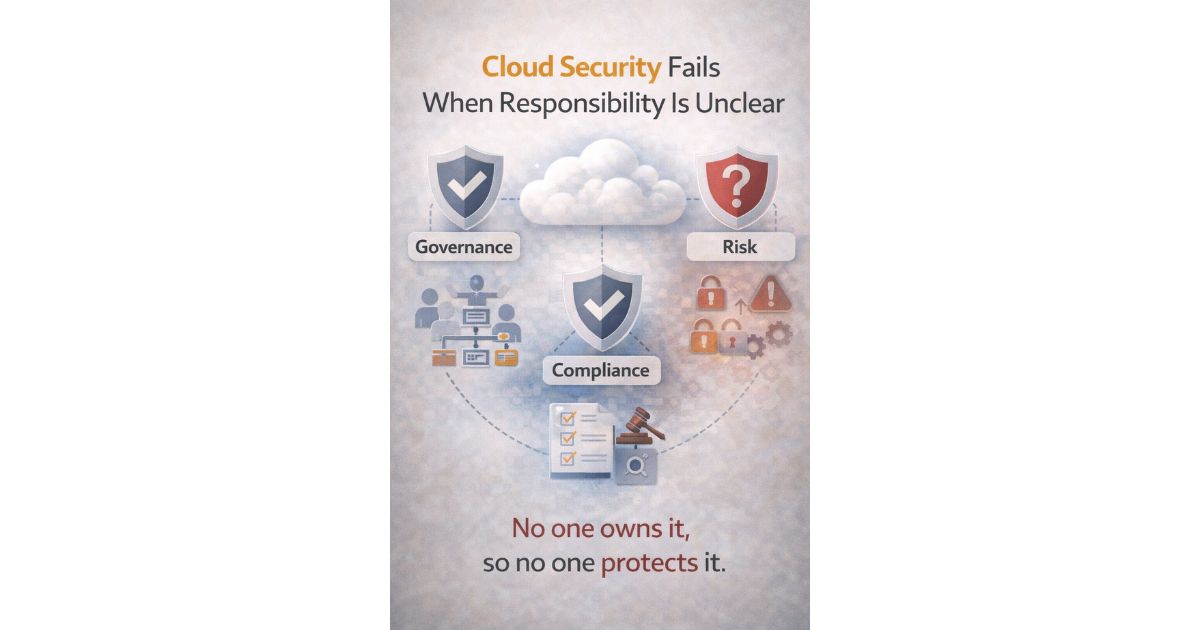
Cloud Security Fails When Responsibility Is Unclear
One of the biggest lessons I am learning as I explore cloud security through a GRC lens is this: Cloud security doesn’t usually fail because tools are missing.It fails because responsibility is unclear. In the cloud, everything feels shared. Infrastructure, platforms, applications, data. And when things feel shared, responsibility often becomes blurred. Everyone assumes someone else is handling security until something goes wrong. That’s where Governance, Risk, and Compliance (GRC) come in. Governance: Defining Who Owns What Governance answers one simple but powerful question:Who is responsible for what? In cloud environments, governance defines: Without clear governance, security tasks fall into gaps. Controls exist, but no one is accountable for them. Decisions are made without clarity, and risks quietly grow. Governance creates structure so responsibility is not assumed it is assigned. Compliance: Making Responsibilities Visible Compliance turns responsibility into something measurable. Policies, standards, and regulatory requirements force organizations to document: In the cloud, compliance helps ensure that security expectations are not just understood but followed consistently. It provides proof that responsibilities are being met not guessed. Without compliance, responsibility becomes informal and unreliable. Risk: What Happens When No One Owns It Risk thrives in uncertainty. When responsibility is unclear: Risk management in GRC asks: Cloud risk is not just technical. It is organizational. Why This Matters Cloud providers secure the infrastructure but organisations are responsible for how they use it. This shared model only works when responsibility is clearly defined. When it isn’t, security fails quietly until it doesn’t. On a Final note…. Cloud security is not just about tools or platforms. It’s about: When responsibility is unclear, cloud security fails.When GRC is strong, responsibility is clear and security has a fighting chance.
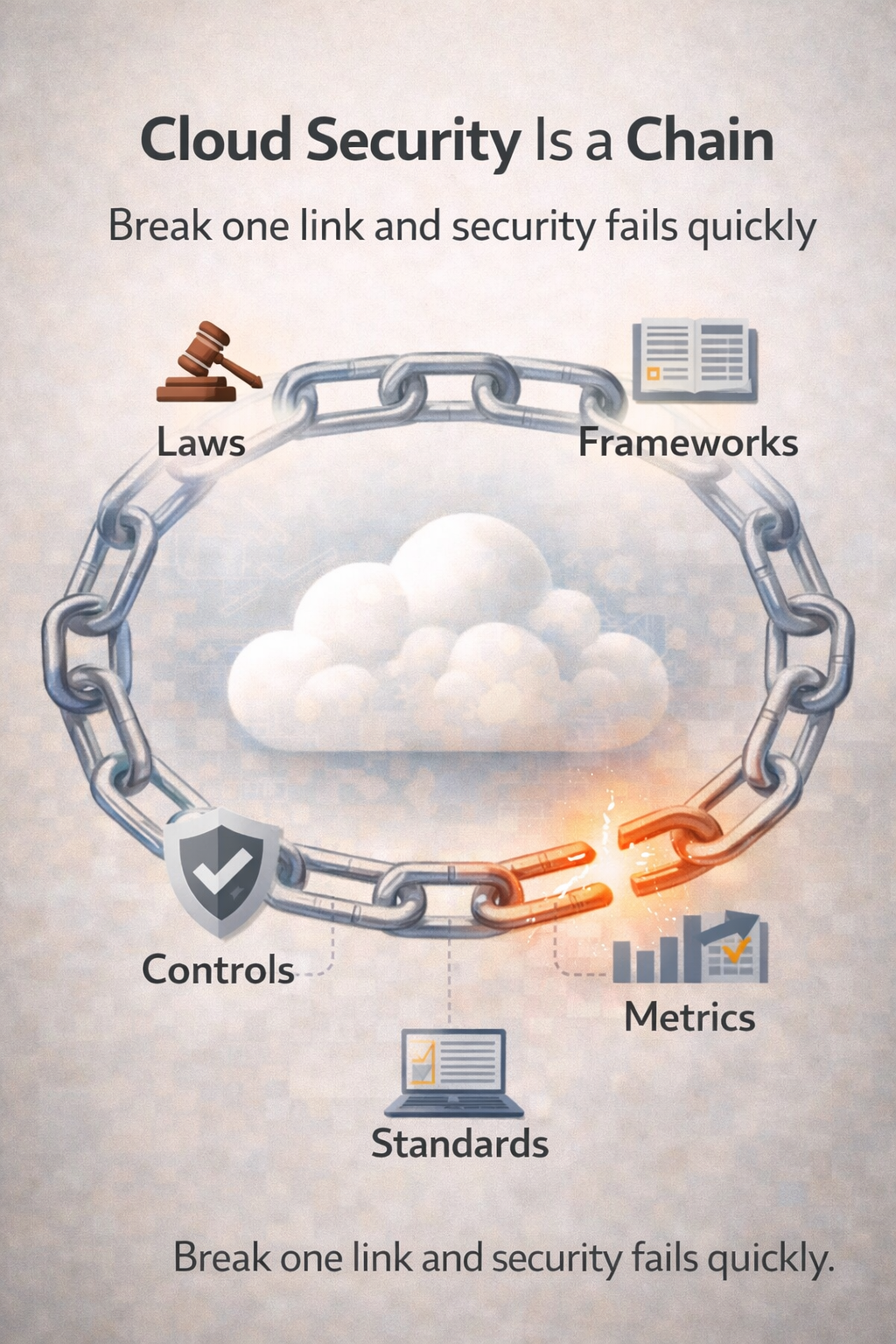
Cloud Security Isn’t Just Tools It’s a Chain (And GRC Holds It Together)
I just started learning about cloud security in GRC, I assumed it would mostly be about tools firewalls, access controls, dashboards, and configurations. But very quickly, I realized something important: Cloud security is not a single tool. It’s a chain. And like every chain, it is only as strong as its weakest link. In cloud environments, security works in layers that depend on one another. If one layer is ignored, the entire structure becomes fragile. This is where GRC (Governance, Risk, and Compliance) quietly does the heavy lifting. The chain starts with laws and regulations. These are the rules set by governments and regions data protection laws, privacy requirements, and industry mandates. They define what must be protected and why it matters. Without laws, there is no obligation to secure data properly. Next come frameworks. Frameworks translate legal and business expectations into structured guidance. They help organizations understand how to approach security in a consistent way across cloud environments. Then we have standards. Standards turn frameworks into measurable expectations. They define what “good security” should look like in practice, making it easier to assess whether an organization is meeting its obligations. From standards flow controls. Controls are the actual actions taken access restrictions, logging, encryption, identity management. This is where many people think cloud security starts, but in reality, it’s already several steps into the chain. Finally, there are metrics. Metrics answer one simple question: Is any of this actually working? They help organizations measure effectiveness, spot weaknesses, and improve continuously. Break one link ignore laws, skip frameworks, poorly implement controls, or fail to measure outcomes and cloud security fails faster than expected. This is why cloud security and GRC are deeply connected. GRC ensures the chain stays intact, aligned, and accountable. It reminds us that security isn’t just about technology it’s about structure, responsibility, and follow-through. Cloud security doesn’t collapse because tools are missing.It collapses because connections are broken. And GRC exists to make sure they aren’t.