
Trust is human.
Security is intentional.
In everyday life, trust helps relationships work. We trust colleagues, friends, family, service providers, and systems to do the right thing. Without trust, society would struggle.
But in cybersecurity, trust alone is not enough.
This is where one of the most important principles comes in:
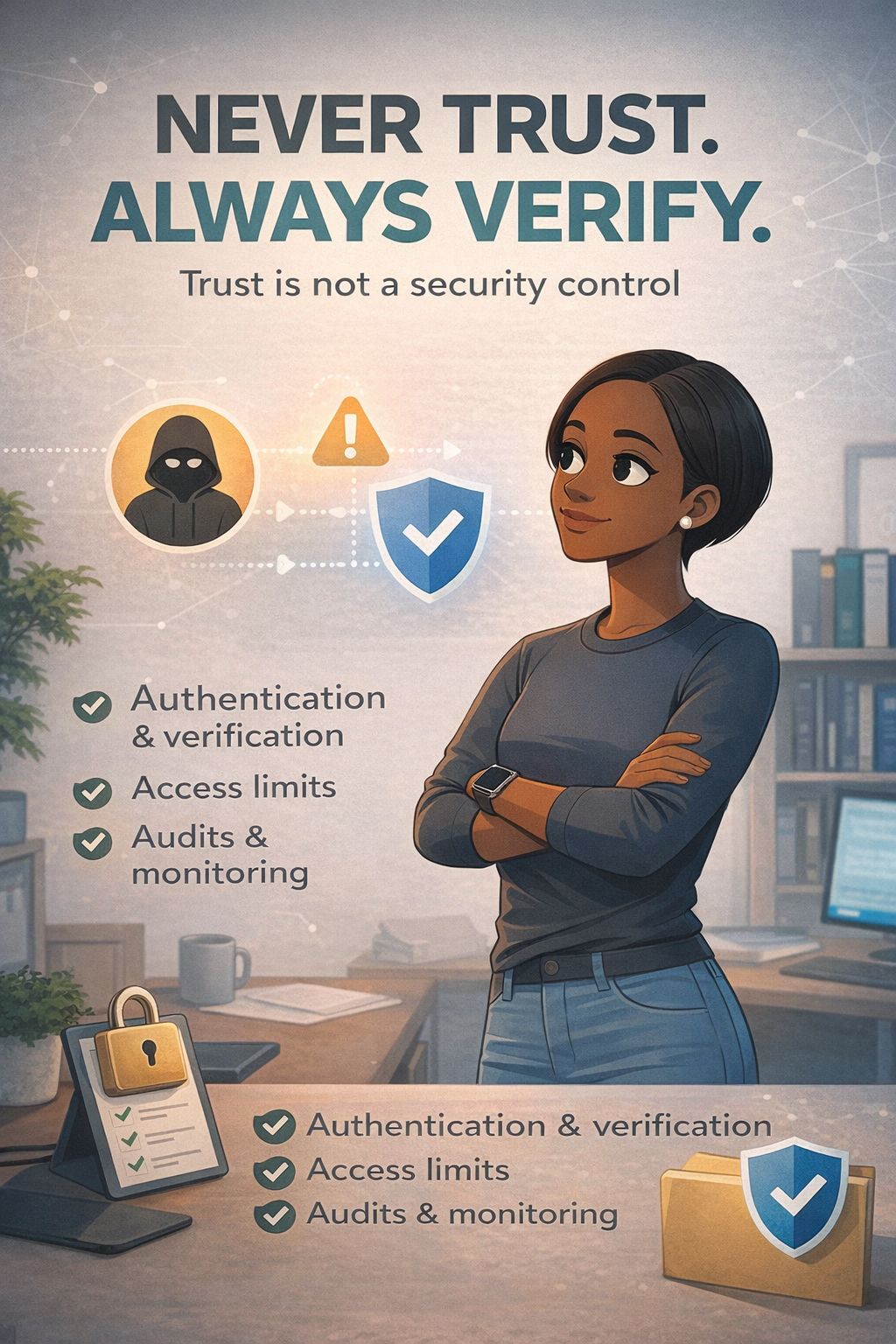
Never trust. Always verify.
This doesn’t mean people are bad. It means systems must be designed to remain secure even when trust fails.
Why Trust Fails in Security
Security planning starts with one simple truth:
humans make mistakes.
People forget.
People get tired.
People feel pressure.
People respond to urgency.
Trust does not protect systems in these moments.
A trusted employee can click a phishing link.
A trusted vendor can be compromised.
A trusted account can be misused.
None of this happens because people are careless it happens because people are human.
What “Never Trust, Always Verify” Really Mean
“Never trust, always verify” is not about suspicion.
It is about designing systems that do not rely on assumptions.
Verification means:
- confirming identity, even when someone is familiar
- limiting access, even for trusted roles
- logging actions, even when intentions are good
- requiring approvals, even when urgency exists
Verification protects both the user and the system.
Security Controls Exist for a Reason
Security controls reduce risk where trust alone cannot.
Examples include:
- multi-factor authentication
- access controls
- separation of duties
- monitoring and logging
- audits and reviews
These controls do not replace trust they support it by creating accountability and resilience.
Attackers Exploit Trust
Social engineering works because attackers understand one thing:
trust bypasses verification.
They pose as:
- colleagues
- support teams
- recruiters
- familiar brands
Once trust replaces verification, controls are quietly ignored and that is where breaches happen.
Why This Matters in GRC
In governance, risk, and compliance, trust is never the answer to “what went wrong.”
The real question is:
“What controls failed or were missing?”
GRC is built on evidence, accountability, and repeatability.
Verification makes that possible.
Final Thought
Trust makes things move faster.
Verification makes things safer.
Good security does not assume bad people it assumes imperfect moments.
That is why the rule remains simple and powerful:
Never trust. Always verify.
Want more like this?
I share practical, human-centred cybersecurity lessons and career insights by email.