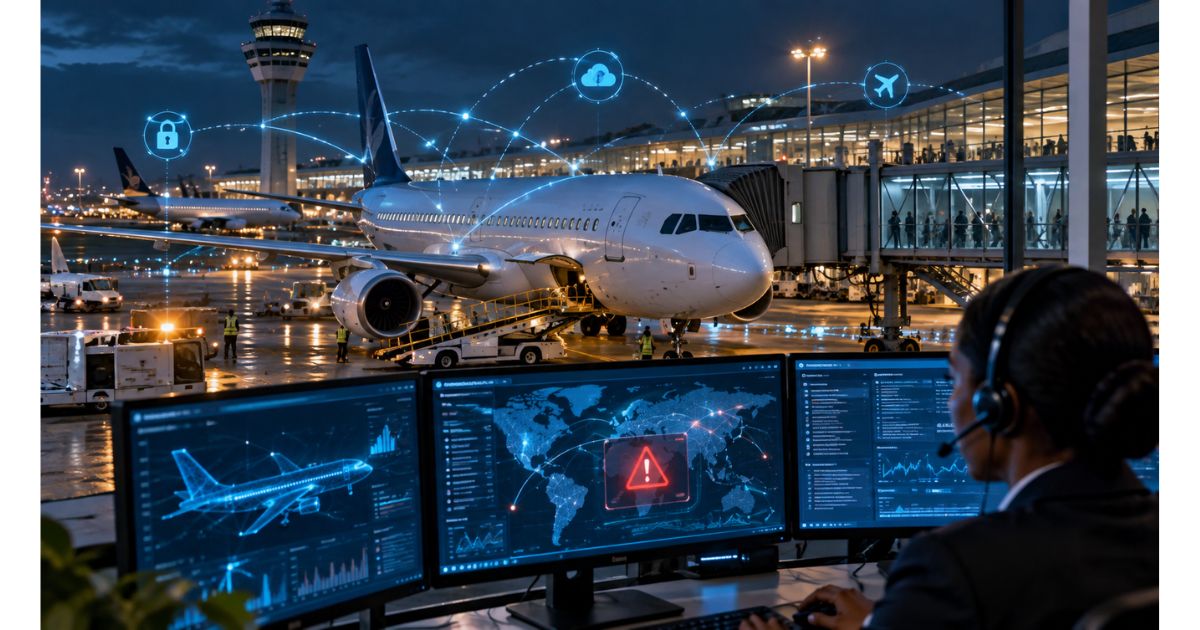
Can AI predict turbulence before your flight? Imagine you are sitting comfortably in your window seat. The cabin crew has just completed the safety demonstration, the aircraft is climbing through the clouds, and everything feels perfectly normal. Then suddenly, the aircraft shakes. You look outside, but there is nothing unusual to see. No dark clouds. No storm. Just clear blue sky. That is one of the reasons turbulence can be so unsettling. It is not always visible, and it does not always arrive with an obvious warning. But aviation is changing. Weather models are becoming more sophisticated, aircraft are generating enormous amounts of data, and artificial intelligence is being explored as another tool for understanding atmospheric conditions. So, can AI predict turbulence before your flight? The answer is yes, to a certain extent. AI and machine learning can analyse large amounts of weather and aircraft data to identify patterns associated with turbulence. However, AI cannot guarantee exactly where turbulence will occur, how severe it will be, or precisely when an aircraft will encounter it. And that distinction matters. What exactly is turbulence? Before understanding can AI predict turbulence before your flight, it helps to understand what turbulence actually is. Turbulence is essentially irregular movement of air. Instead of an aircraft moving through relatively smooth airflow, it encounters changing currents, wind speeds or directions that cause the aircraft to move or shake. According to the Federal Aviation Administration, turbulence can be associated with jet streams, mountains, weather fronts, thunderstorms and other atmospheric conditions. It can even occur when the sky looks completely clear. That last part is particularly important. You might look through the aircraft window and see nothing but sunshine while the aircraft encounters clear air turbulence, commonly called CAT. This is one of the more difficult types of turbulence to anticipate because there may be no visible cloud or storm acting as an obvious warning. So, can AI predict turbulence before your flight when there is nothing obvious to see? This is where data becomes important. How does AI predict turbulence? AI does not simply look at a photograph of the sky and say, There will be turbulence here. Instead, machine learning systems can examine large quantities of information and identify patterns that humans might not easily detect across such a large dataset. For example, turbulence prediction can involve information about: The FAA’s turbulence program already combines different sources of information to produce turbulence forecasts. Its Graphical Turbulence Guidance system uses numerical weather model data alongside aircraft turbulence observations and pilot reports. This gives us an important distinction. AI is not replacing meteorology. Instead, AI can become another layer that helps analyse and interpret complex atmospheric information. Research has already demonstrated that machine learning can improve turbulence forecasting. One study using an XGBoost machine learning model combined several conventional turbulence indicators and found improved forecasting performance compared with individual indicators across the Asia Pacific region. So, can AI predict turbulence before your flight using this type of information? It can estimate the risk of turbulence. That is different from knowing exactly what will happen. AI can look for turbulence patterns Think about the way AI predicts other aviation disruptions. In flight delay prediction, an AI system can look at weather, aircraft location, airport congestion, previous delays and other operational information. Turbulence prediction follows a similar principle. The system can examine multiple variables at the same time. Imagine an aircraft preparing to fly across a region where: A strong jet stream is developing. Wind speeds are changing rapidly. Atmospheric conditions are becoming unstable. Previous aircraft have reported turbulence in the area. Weather models are also showing conditions associated with increased turbulence. Individually, each piece of information might not tell the whole story. Together, however, they create a pattern. This is where can AI predict turbulence before your flight becomes a much more interesting question. AI can potentially identify those patterns and provide an estimate of where turbulence may be more likely. What about clear air turbulence? This is probably the part passengers find most interesting. Can AI predict turbulence before your flight when there are no clouds? Clear air turbulence can occur without visible clouds or thunderstorms. The FAA notes that clear air turbulence is particularly relevant to jet operations at higher altitudes, and pilot reports remain an important source of information about where it is occurring. This makes CAT particularly challenging. A passenger cannot simply look through the window and identify it. Even a pilot cannot rely only on what is visible outside the cockpit. Instead, aviation professionals use weather information, forecasts, reports and other available data to assess the environment. AI could make this process more powerful by analysing enormous datasets and identifying subtle relationships between atmospheric variables and turbulence encounters. Research published in 2025 also investigated machine learning for global low level turbulence forecasting, using millions of turbulence diagnostics and aircraft based observations. That does not mean AI has solved turbulence prediction. It means researchers are actively exploring how machine learning can improve it. AI can also learn from aircraft One of the most interesting developments is that the aircraft itself can become a source of information. Modern aircraft contain sensors and systems that collect information about the aircraft and its surrounding environment. The FAA describes an in situ Eddy Dissipation Rate system that uses aircraft sensor information, including winds and pressure, together with other aircraft measurements to estimate atmospheric turbulence. Aircraft observations can also be shared to improve the overall picture of atmospheric conditions. Imagine one aircraft encounters moderate turbulence at a particular altitude. That information can potentially help other aircraft operating nearby. Now imagine thousands of aircraft contributing information. This creates something much bigger than one aircraft’s experience. It creates a constantly changing picture of atmospheric conditions. AI can then potentially help identify patterns within that enormous stream of information. But can AI predict exactly when turbulence will happen? This is where we need to be careful. Can AI predict turbulence before your flight