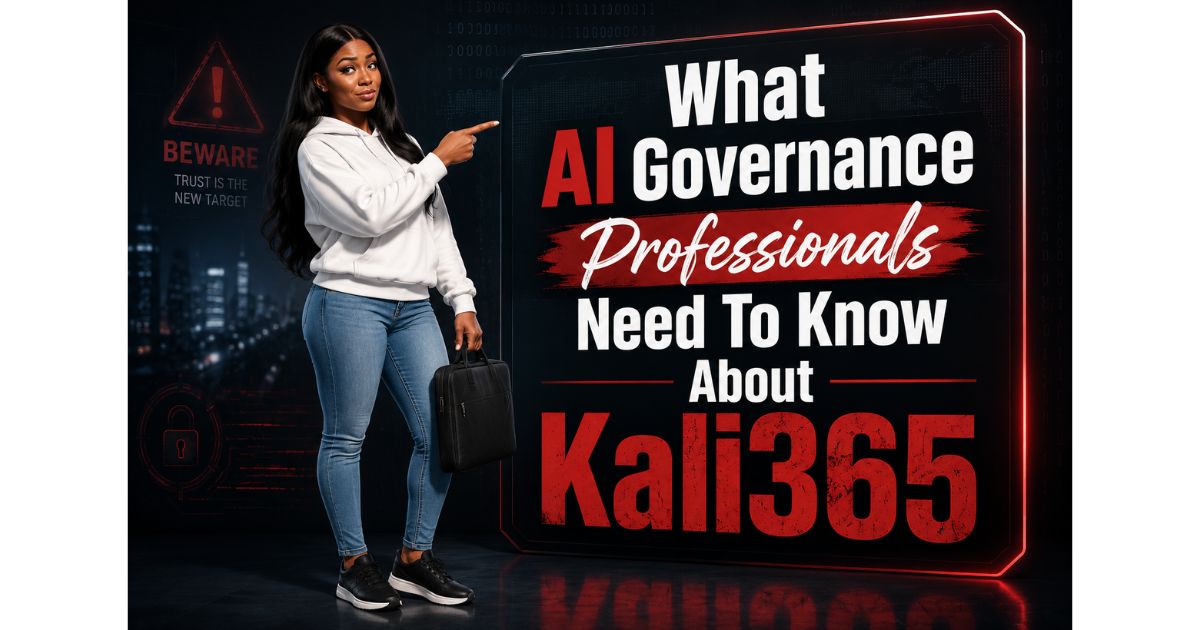
MFA Bypass, Digital Trust, and the Growing Risk of Automated Cyber Threats
Beatrice almost clicked the link.
The email looked completely legitimate.
It carried Microsoft branding, familiar formatting, and even the login page appeared authentic.
Nothing immediately looked dangerous.
And that was exactly what made the threat so concerning.
A few days earlier, Beatrice had read about an FBI warning involving a phishing-as-a-service platform known as Kali365.
What caught her attention was not only the phishing attack itself.
It was the bigger governance problem hiding underneath it.
According to reports, platforms like Kali365 were capable of helping attackers bypass Multi-Factor Authentication, including Microsoft authentication systems.
For years, MFA had been considered one of the strongest layers of modern cybersecurity protection.
But incidents like this revealed something uncomfortable:
Security controls are only effective if organisations understand how cyber threats evolve alongside automation.
And that is exactly why AI governance professionals should pay attention.
Why Kali365 Matters Beyond Cybersecurity
At first glance, Kali365 may seem like a purely technical cybersecurity issue.
But the deeper issue is governance.
Platforms like this represent a new generation of:
- scalable cybercrime ecosystems
- automated phishing infrastructure
- intelligent deception systems
This changes the risk landscape significantly.
Because organisations are no longer defending against isolated manual attacks.
They are increasingly defending against highly automated threat ecosystems designed to exploit trust at scale.
What Is Kali365?
Kali365 is an example of what is known as:
Phishing-as-a-Service (PhaaS)
Instead of attackers building phishing campaigns manually, these platforms provide ready-made attack infrastructure.
This may include:
- fake Microsoft login pages
- credential harvesting systems
- session cookie theft tools
- automated phishing kits
- MFA bypass capabilities
The result is simple:
Cybercrime becomes easier to scale.
Why MFA Bypass Changes the Governance Conversation
For many organisations, Multi-Factor Authentication became a key trust mechanism.
The assumption was:
if passwords fail, MFA provides another layer of protection.
But phishing platforms increasingly target:
- authentication sessions
- browser tokens
- live login workflows
This means attackers may bypass authentication protections without directly needing the second factor itself.
For governance professionals, this creates an important challenge:
Organisations can no longer rely on static security assumptions.
Governance frameworks must evolve alongside emerging threat capabilities.
The Hidden AI Governance Risk
AI governance is often discussed in terms of:
- bias
- transparency
- fairness
- explainability
But governance also includes understanding how intelligent and automated systems reshape operational risk.
And modern phishing ecosystems increasingly rely on:
- automation
- adaptive deception
- behavioural targeting
- AI-assisted communication techniques
Some phishing campaigns now use AI-generated content capable of:
- mimicking human writing styles
- personalising attacks
- increasing psychological manipulation
This creates a much larger governance challenge than traditional phishing alone.
Why Human Behaviour Remains the Weak Point
As Beatrice reviewed the email again, she realised something important.
The attack was not targeting technology alone.
It was targeting human trust.
Cybercriminals understand that people naturally trust:
- familiar systems
- recognised brands
- professional communication patterns
That means cybersecurity risk is no longer only technical.
It becomes:
- behavioural
- operational
- psychological
And governance professionals must account for those human factors when designing risk strategies.
What AI Governance Professionals Should Focus On
Incidents like Kali365 highlight several growing priorities for AI governance and cybersecurity leaders.
1. Identity Trust Can No Longer Be Assumed
Authentication systems remain important, but organisations must prepare for increasingly advanced identity attacks.
2. Automation Changes Threat Scale
Cybercrime platforms now operate with service-based efficiency and scalability.
3. Human Risk Requires More Attention
Employees remain major targets for social engineering and AI-assisted phishing.
4. Governance Must Include Threat Evolution
AI governance cannot focus only on internal AI systems.
It must also address:
- AI-enabled cyber threats
- automated abuse systems
- operational resilience
Why This Matters for Aviation and Critical Industries
Industries like aviation rely heavily on:
- cloud systems
- identity management platforms
- operational access controls
- Microsoft environments
If authentication systems are compromised successfully, risks may extend beyond IT environments into:
- operational disruption
- internal communications
- sensitive passenger data exposure
- business continuity risks
This transforms phishing into a much broader governance issue.
The Bigger Lesson
Kali365 represents something larger than a phishing platform.
It represents how automation is transforming cyber risk itself.
As intelligent systems evolve, organisations must recognise that attackers are evolving too.
And governance frameworks that fail to adapt may struggle to protect:
- digital trust
- operational resilience
- organisational security
On A Final Note
For AI governance professionals, the lesson from Kali365 is clear.
Governance is no longer only about managing beneficial AI systems.
It is also about understanding how automation, intelligent deception, and evolving cyber threats reshape organisational risk.
Because in today’s digital environment, protecting trust has become just as important as protecting systems.