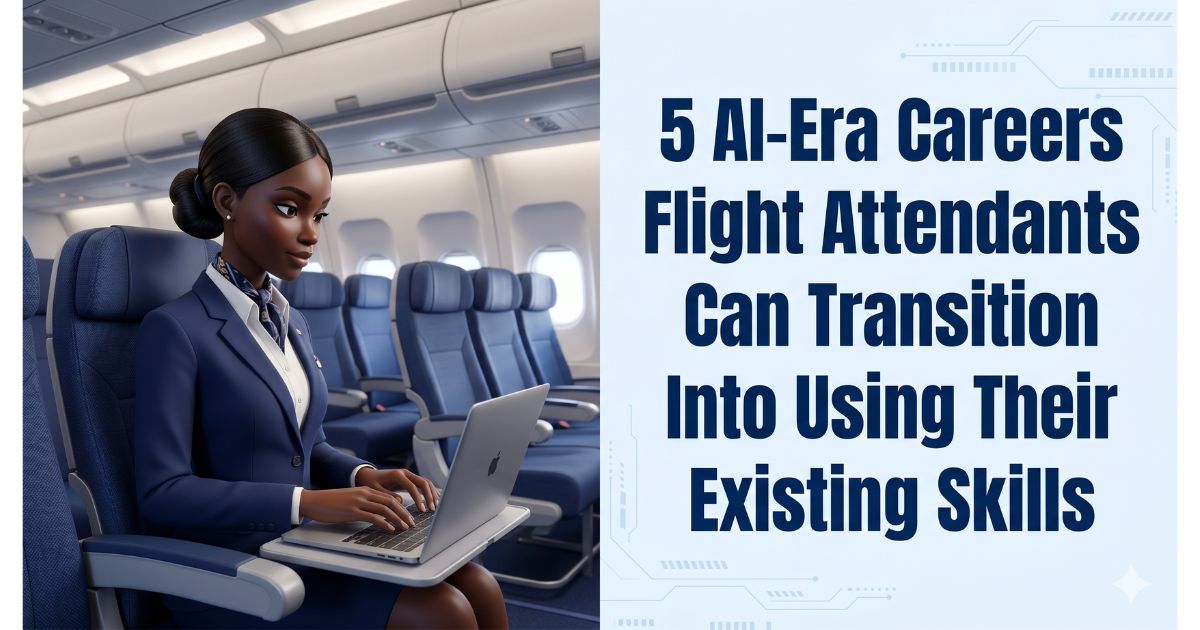
When Beatrice first heard people talking about AI changing the future of work, she felt a little uncertain.
Everywhere she looked, there were headlines about automation, artificial intelligence, and the future of jobs.
As a flight attendant, she wondered where she fit into that future.
For years, she had built her career around safety, customer service, communication, and handling unexpected situations.
She wasn’t a software engineer.
She wasn’t a data scientist.
She didn’t have a computer science degree.
So what place could she possibly have in the AI era?
The answer surprised her.
A bigger one than she ever imagined.
The Skills Flight Attendants Often Undervalue
One thing aviation teaches you very quickly is responsibility.
Every day, flight attendants make decisions that affect passenger safety, operational compliance, and customer experience.
They learn how to:
- follow strict procedures
- assess risks
- manage incidents
- communicate effectively
- remain calm under pressure
- document events accurately
- work within highly regulated environments
The interesting part?
These are many of the same skills employers are looking for in emerging AI and governance-related careers.
The AI era is creating opportunities that require human judgement, accountability, risk awareness, and compliance expertise.
And flight attendants already have experience in all of these areas.
1. AI Governance Analyst
As organisations increasingly adopt AI systems, they need professionals who can ensure those systems are used responsibly.
AI Governance Analysts help organisations answer questions such as:
- Is the AI system fair?
- Is it compliant with regulations?
- What risks does it introduce?
- Who is accountable for decisions?
Flight attendants already understand the importance of procedures, oversight, accountability, and safety culture.
Those principles translate surprisingly well into AI governance.
2. GRC Analyst (Governance, Risk, and Compliance)
This is one of the most natural transitions.
GRC professionals help organisations:
- identify risks
- create policies
- ensure compliance
- improve governance
In aviation, compliance and safety procedures are part of everyday operations.
Flight attendants understand what it means to operate within regulations while maintaining safety standards.
That mindset is incredibly valuable in GRC.
3. Data Privacy Analyst
Every day, airlines handle sensitive passenger information.
Flight attendants understand the importance of confidentiality, professionalism, and protecting personal information.
Data Privacy Analysts help organisations manage:
- personal data
- privacy regulations
- consent requirements
- compliance obligations
As AI systems rely more heavily on data, privacy professionals are becoming increasingly important.
4. Trust and Safety Specialist
Many technology companies hire Trust and Safety professionals to help protect users, platforms, and communities.
The role often involves:
- reviewing incidents
- enforcing policies
- assessing risks
- investigating reports
- making fair decisions
If you have spent years managing difficult situations with passengers, resolving conflicts, and applying procedures consistently, you already possess many of the core skills needed for this role.
5. AI Risk Analyst
AI systems introduce new types of risk.
These risks may involve:
- privacy concerns
- cybersecurity threats
- biased outcomes
- regulatory challenges
AI Risk Analysts help organisations identify and manage these risks before they become serious problems.
Flight attendants are trained to think proactively about safety and operational risk.
That ability to anticipate issues and evaluate potential consequences is highly valuable in AI risk management.
Why the AI Era Needs Human Skills
One of the biggest misconceptions about AI is that it only creates opportunities for highly technical professionals.
The reality is very different.
As AI becomes more integrated into organisations, there is growing demand for people who understand:
- governance
- accountability
- compliance
- risk management
- ethics
- communication
These are human-centred skills.
And they cannot be automated easily.
Beatrice’s Realisation
The more Beatrice learned about AI Governance and GRC, the more she realised something important.
She wasn’t starting from zero.
Years in aviation had already taught her valuable skills.
The challenge wasn’t learning an entirely new identity.
It was learning how to apply existing skills in a new industry.
That shift in perspective changed everything.
On A Final Note
If you are a flight attendant wondering whether you can transition into tech, cybersecurity, AI governance, or GRC, remember this:
Your experience has value.
The skills you have developed through years of aviation operations, compliance, safety procedures, and customer interaction are more transferable than you may think.
The AI era isn’t only creating opportunities for coders.
It’s creating opportunities for professionals who understand people, risk, trust, and accountability.
And that might include you.