One of the biggest lessons I am learning as I explore cloud security through a GRC lens is this:
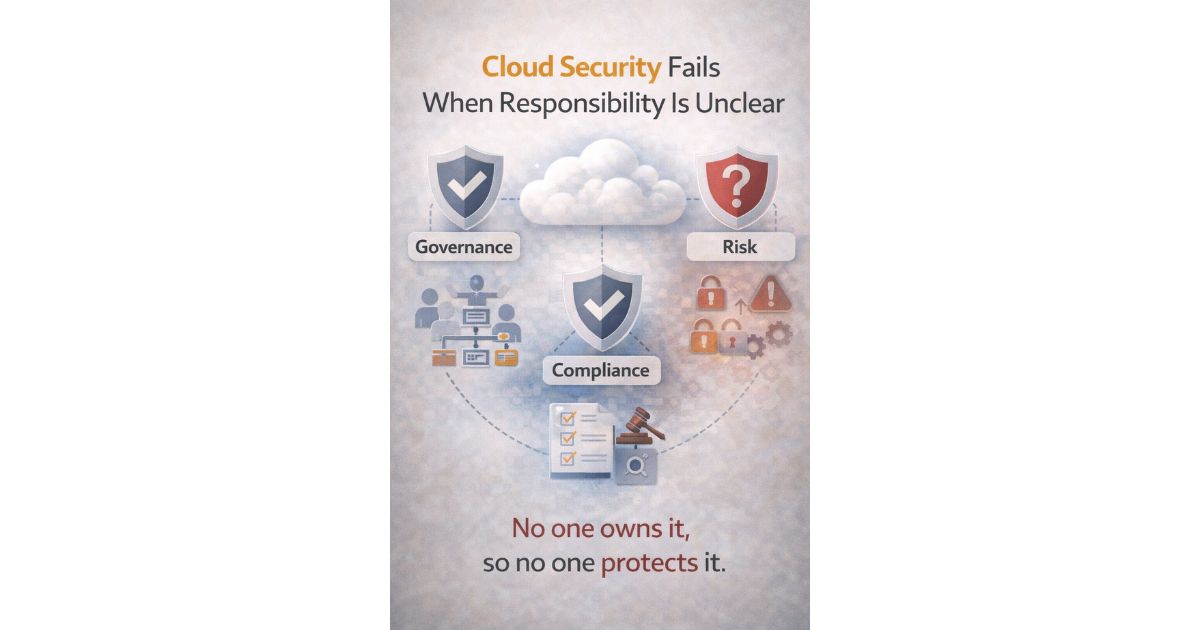
Cloud security doesn’t usually fail because tools are missing.
It fails because responsibility is unclear.
In the cloud, everything feels shared. Infrastructure, platforms, applications, data. And when things feel shared, responsibility often becomes blurred. Everyone assumes someone else is handling security until something goes wrong.
That’s where Governance, Risk, and Compliance (GRC) come in.
Governance: Defining Who Owns What
Governance answers one simple but powerful question:
Who is responsible for what?
In cloud environments, governance defines:
- who owns the data
- who manages access
- who approves changes
- who monitors activity
- who responds when incidents occur
Without clear governance, security tasks fall into gaps. Controls exist, but no one is accountable for them. Decisions are made without clarity, and risks quietly grow.
Governance creates structure so responsibility is not assumed it is assigned.
Compliance: Making Responsibilities Visible
Compliance turns responsibility into something measurable.
Policies, standards, and regulatory requirements force organizations to document:
- roles
- responsibilities
- procedures
- evidence of action
In the cloud, compliance helps ensure that security expectations are not just understood but followed consistently. It provides proof that responsibilities are being met not guessed.
Without compliance, responsibility becomes informal and unreliable.
Risk: What Happens When No One Owns It
Risk thrives in uncertainty.
When responsibility is unclear:
- misconfigurations go unnoticed
- access permissions grow unchecked
- incidents are delayed or ignored
- recovery plans are unclear
Risk management in GRC asks:
- What could go wrong?
- Who is responsible for preventing it?
- Who responds if it happens?
- How do we reduce impact?
Cloud risk is not just technical. It is organizational.
Why This Matters
Cloud providers secure the infrastructure but organisations are responsible for how they use it. This shared model only works when responsibility is clearly defined.
When it isn’t, security fails quietly until it doesn’t.
On a Final note….
Cloud security is not just about tools or platforms.
It’s about:
- governance that assigns ownership
- compliance that enforces expectations
- risk management that prepares for reality
When responsibility is unclear, cloud security fails.
When GRC is strong, responsibility is clear and security has a fighting chance.