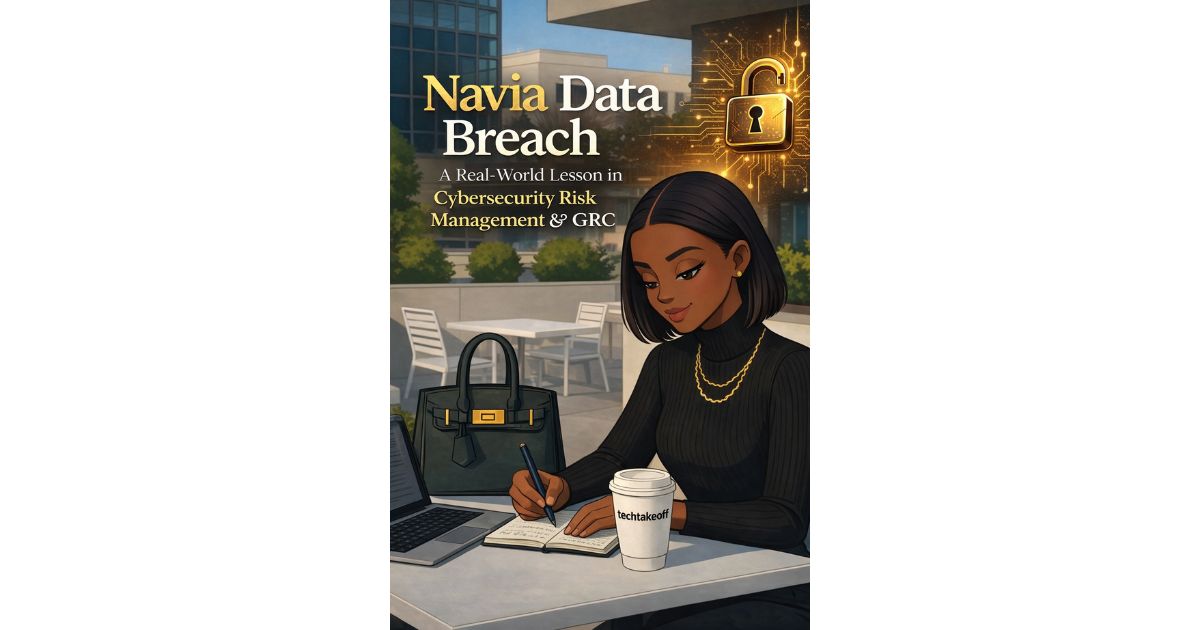

Beatrice didn’t think she had done anything wrong.
It was a normal Tuesday morning. She had just settled into her desk, coffee still warm, emails already piling up.
One message stood out.
“Urgent: Your payroll account needs verification.”
It looked legitimate. Same company logo. Same tone. Same formatting she had seen many times before.
Without thinking too much, she clicked the link and entered her login details.
Nothing happened.
So she moved on with her day.
By 11:30 AM, the IT team noticed unusual login activity.
By 1:00 PM, multiple employee accounts had been accessed.
By 3:00 PM, sensitive company data had been downloaded.
And by the end of the day, what started as a simple click had turned into a cybersecurity incident.
Beatrice didn’t mean to cause it.
But this is how most cyber incidents begin.
Not with advanced hacking tools.
Not with dramatic breaches.
But with everyday risks that are easy to overlook.
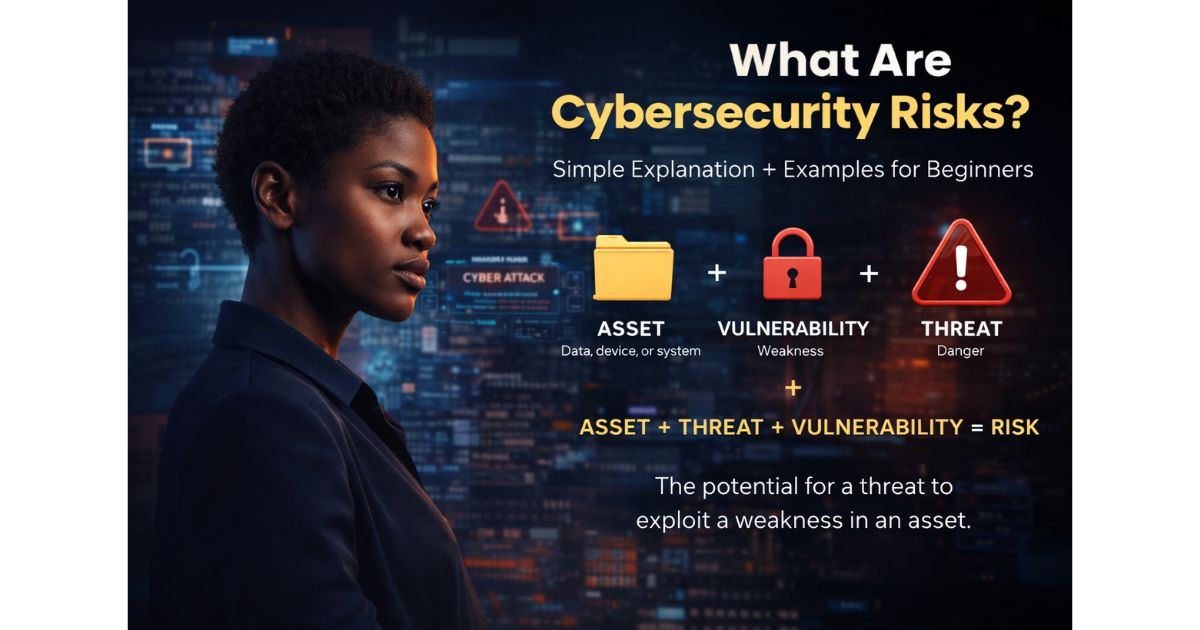
If you are new to cybersecurity, here are five risks you need to understand because they are happening around you every day.
1. Phishing: When Trust Becomes a Weakness
Beatrice’s story started with a phishing email.
Phishing works because it doesn’t attack systems it targets people.
The message looked familiar. It felt urgent. It created just enough pressure for her to act quickly.
And that’s the point.
Attackers don’t need you to be careless.
They just need you to be human.
In 2026, phishing attacks are more convincing than ever.
The real danger isn’t the email.
It’s how easily trust can be manipulated.
2. Password Reuse: One Key Opens Many Doors
After the incident, the IT team discovered something else.
Beatrice had used the same password across multiple accounts.
Her email. Internal systems. Even external platforms.
Once attackers gained access to one account, they tried the same password elsewhere.
And it worked.
This is called credential reuse, and it’s one of the simplest ways attackers expand access.
The risk isn’t just a weak password.
It’s reusing the same key for too many doors.
3. Human Error: The Risk No System Can Fully Prevent
It would be easy to blame Beatrice.
But that would miss the bigger picture.
She was busy. The message looked real. The request felt urgent.
She made a decision in a normal working moment.
This is what human error looks like in cybersecurity.
Not negligence.
Not carelessness.
Just real people making quick decisions under pressure.
And this is why human error remains one of the biggest cybersecurity risks today.
Systems can detect threats.
But people decide how to respond.
4. Misconfigured Systems: The Risk No One Sees
As the investigation continued, another issue emerged.
A shared folder containing sensitive data had broader access permissions than it should have.
Once attackers got into the system, they didn’t need to break anything.
They simply accessed what was already exposed.
Misconfigurations like this happen more often than people realise.
- a setting left open
- permissions not reviewed
- systems set up quickly but not securely
- The danger isn’t always a breach.
- Sometimes it’s what was already accessible without anyone noticing.
5. Third-Party Risk: When Trust Extends Beyond Your Organisation
The final piece of the puzzle was unexpected.
The phishing email Beatrice received had been crafted using information from a third-party platform the company used.
Some data had already been exposed externally.
Which made the attack more convincing.
This is the reality of modern cybersecurity.
Organisations don’t operate alone.
They rely on vendors, tools, and external services each introducing another layer of risk.
The question is no longer just “Are we secure?”
It’s “Are the people we trust secure too?”
The Bigger Lesson
At the end of the investigation, one thing became clear.
There wasn’t a single point of failure.
There were multiple small risks:
- a convincing phishing email
- a reused password
- a human decision under pressure
- a misconfigured system
- external exposure from a third party
Individually, they seemed minor.
Together, they created an incident.
Final Thought
Beatrice’s story isn’t unusual.
In fact, it’s happening in organisations every day.
And that’s what makes cybersecurity so important and so human.
If you are starting your journey in cybersecurity, don’t just focus on tools or technical skills.
Start by understanding how risk actually shows up in real life.
Because behind every cyber incident, there is usually a story like this.
A normal day.
A small decision.
And a chain of events that no one expected.