
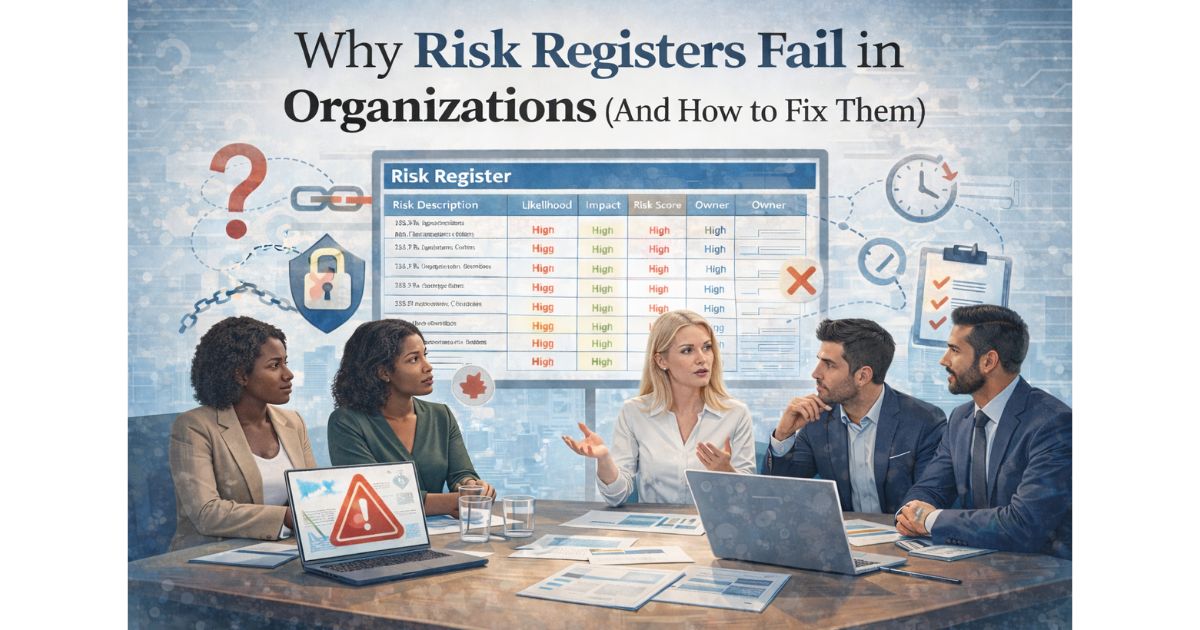
One Monday morning, the security team gathered for their regular risk review meeting. The risk register was open on the screen. It was a long spreadsheet filled with risks, scores, and notes about possible controls.
Everything looked organised.
But after some time, the discussion slowed down. Some risks had been on the list for months. Many of them were marked as “High.” A few risks did not even have a clear owner.
The team realised something important. The risk register existed, but it was not really helping them decide what to do.
This situation happens in many organisations. Risk registers are created with good intentions, but over time they stop being useful.
One common reason is that the risk register becomes just another document. Teams update it because governance processes require it or because auditors expect to see it. Instead of helping people manage risk, the register slowly becomes a record of problems that no one is actively solving.
Another problem is that too many risks are marked as “High.” When teams score risks, they often want to be cautious, so they rate many issues as high priority. At first this seems responsible, but when almost every risk is labelled “High,” it becomes difficult to know which ones truly need urgent attention. When everything looks critical, nothing clearly stands out.
Risk registers also fail when risks do not have clear owners. A risk might say that outdated systems could create security vulnerabilities. That sounds serious, but who is responsible for fixing it? If there is no clear owner, the risk stays in the register but no action is taken.
Sometimes the way risks are described also causes problems. Many risks are written in technical language that business leaders may not fully understand. For example, a risk might mention outdated encryption protocols or system vulnerabilities. While these are technical issues, they do not clearly explain what could happen to the business. When risks are connected to real outcomes like financial loss, regulatory penalties, service disruption, or customer impact, leaders can better understand why they matter.
In some organisations, the risk register is updated regularly but rarely used to guide decisions. The document exists, and teams review it occasionally, but it does not influence how security resources are prioritised or how risks are addressed. When that happens, the register becomes part of a process rather than a tool for action.
A good risk register should help organisations focus on the risks that matter most. It should make it easier to see which risks require immediate attention, which risks need mitigation, and which ones the business may decide to accept.
For a risk register to work properly, risks need clear scoring criteria, clear ownership, and regular review. Most importantly, the risks should be linked to real business consequences.
When these elements are in place, the risk register becomes more than just a list of problems. It becomes a tool that helps organisations make better decisions about managing cyber risk.