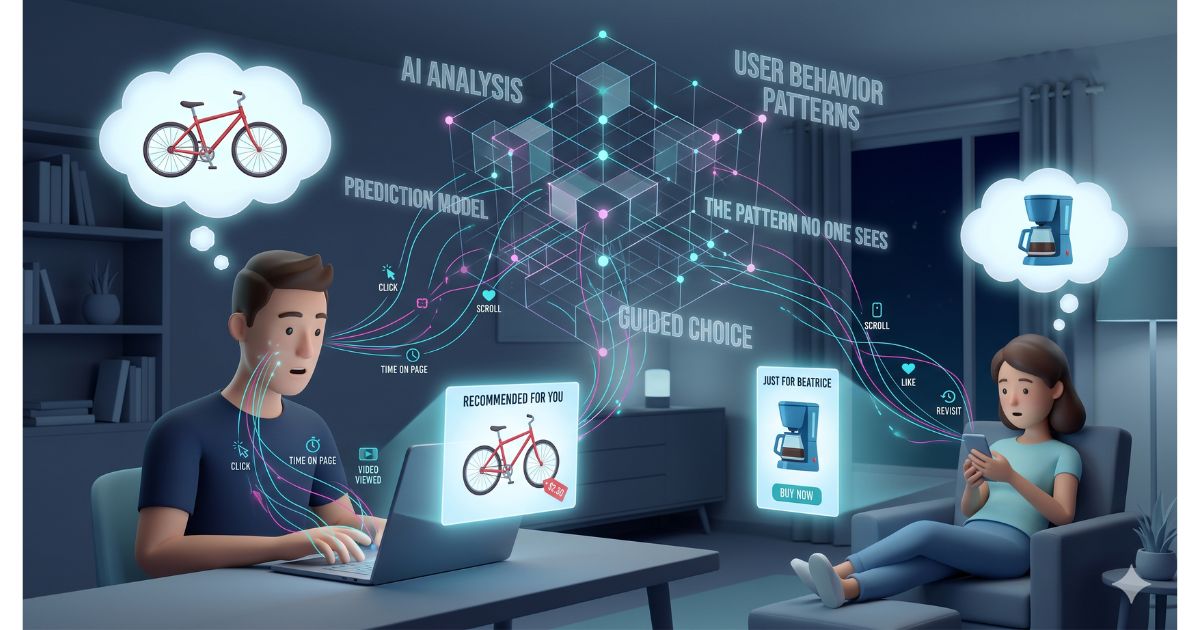
Beatrice didn’t search for it. She didn’t type it.She didn’t say it out loud. But there it was. An ad appeared on her screen. Exactly what she had been thinking about the night before. Same product. Same style. Even the same color. She paused. How did it know? The Pattern No One Sees Beatrice hadn’t searched for the item directly. But over the past few days, she had: Individually, these actions felt meaningless. But together, they told a story. Not to her. But to the system. What Online Behaviour Really Means Every time you use the internet, you leave small signals behind. Things like: These signals may seem random. But to AI systems, they are patterns. And patterns can be learned. When Data Becomes Prediction AI doesn’t just collect information. It studies behaviour. Over time, it begins to understand: In Beatrice’s case, the system didn’t need her to search. It already had enough data to predict her interest. The Quiet Shift At first, this feels helpful. Better recommendations.More relevant content.Less time searching. But something changes. Instead of you deciding what to explore… The system starts deciding what to show you. And slowly, your choices begin to narrow. The Hidden Risk Beatrice didn’t realise it, but her online experience was being shaped. Not forced. Just guided. The more she interacted, the more the system learned. And the more it learned, the more it influenced. This creates a subtle shift:From user controlTo system influence Why This Matters This isn’t just about ads. It affects: AI systems are designed to predict behaviour. But prediction can become influence. And influence can affect outcomes. A Question of Control Beatrice wasn’t being watched in the way she imagined. But her behaviour was being observed, analysed, and used. Not to harm her. But to understand her. The question is: How much of your decisions are truly yours… and how much are being shaped for you? A Cybersecurity and GRC Perspective This is where things connect to cybersecurity and governance. Because it’s not just about data collection. It’s about: In GRC, this raises important concerns: On A Final Note Beatrice eventually clicked on the ad. It was exactly what she wanted. Or at least… what she thought she wanted. AI didn’t force her decision. It simply understood her well enough to guide it. If you’re starting your journey in cybersecurity, this is something to remember: Data is not just collectedIt is used to predict, influence, and shape behaviour Because sometimes, the most powerful systems don’t control what you do. They simply make sure you see exactly what they want you to choose.
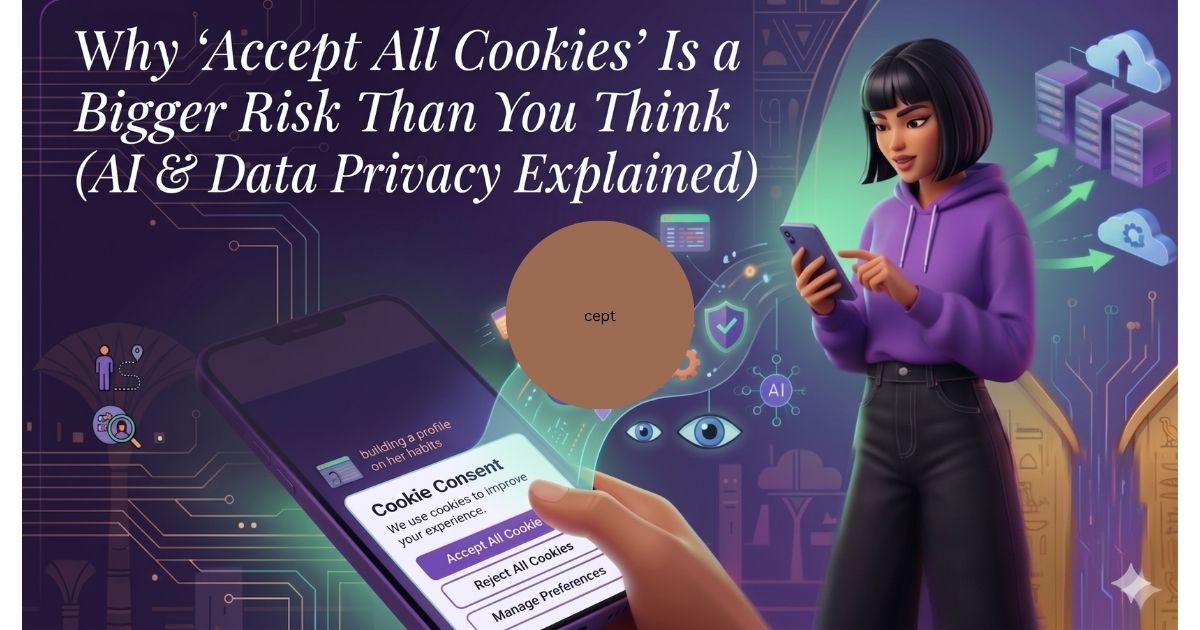
Why ‘Accept All Cookies’ Is a Bigger Risk Than You Think (AI & Data Privacy Explained)
Beatrice didn’t even pause. The pop-up appeared at the bottom of the screen: “We use cookies to improve your experience.” Two options. Accept AllManage Preferences She clicked Accept All without thinking and continued scrolling. It was quick. Easy. Harmless… or so it seemed. A few days later, something felt different. The ads she saw were unusually specific.The content recommendations felt almost too accurate.Even the products suggested matched things she had only thought about briefly. It was as if the internet was watching her. In a way, it was. The Click That Feels Too Small to Matter Most people think cybersecurity risks come from big actions: But sometimes, the risk begins with something much smaller. Something we barely notice. Like clicking “Accept All Cookies.” What Cookies Actually Do (Simple Explanation) Cookies are small pieces of data stored on your device when you visit a website. They help websites remember things like: On their own, cookies are not always harmful. But when combined and shared across platforms, they begin to tell a story. Your story. What “Accept All” Really Means When Beatrice clicked “Accept All,” she didn’t just accept one thing. She gave permission for: And most importantly… She allowed this data to be used in ways she didn’t fully understand. Where AI Comes In This is where things become more complex. Cookies don’t just store data. They feed AI systems. AI uses this data to: Over time, these systems begin to understand patterns: And slowly, a digital version of you is created. Not who you are. But who the system thinks you are. The Hidden Risk Beatrice never saw this happening. There was no alert. No warning. Just a better “user experience.” But behind the scenes: The risk isn’t just that data is collected. It is that control is quietly given away. What Most People Don’t Realise When people click “Accept All,” they assume: It is just for this website. But in reality, the data can travel. It can be: This creates a much bigger picture than most people expect. Where Data Privacy Comes In This is why data protection laws like the General Data Protection Regulation (GDPR) exist. They are designed to ensure that: In theory, Beatrice had a choice. She could have: But like many people, she chose convenience. A Familiar Pattern Beatrice’s story is not unusual. It happens every day. A small decision.A quick click.A moment of convenience. And over time, those small actions build something much bigger. On A Final Note…. Clicking “Accept All Cookies” doesn’t feel like a cybersecurity decision. But in today’s world, it is. Because data is no longer just information. It’s influence.It’s prediction.It’s power. And understanding how it’s used is one of the most important steps in protecting yourself. If you’re starting your journey in cybersecurity, remember this: Not all risks look dangerousSome look like convenience

What Happens to Your Data When AI Uses It? (GDPR Explained for Beginners)
Beatrice didn’t think much about it at first. She signed up for a new app. It promised convenience. Personalised recommendations. Smarter features powered by AI. She clicked “Accept All Cookies” and moved on. A few days later, something felt… strange. The app seemed to know too much. It suggested things she had only searched once.It recommended content that felt unusually personal. And then it hit her. How much of her data was this system actually using? The Invisible Exchange Most digital services today run on data. When you: You are often sharing personal information. This may include: AI systems use this data to: But here’s the important question: Do you really know how your data is being used? This Is Where GDPR Comes In The General Data Protection Regulation (GDPR) was created to protect people like Beatrice. It gives individuals more control over their personal data. In simple terms, GDPR says: Your Rights (Explained Simply) Under GDPR, Beatrice has rights even if she does not always realise it. She has the right to: These rights are especially important in the age of AI. The AI Problem: It is Not Always Transparent AI systems don’t just store data. They learn from it. They analyse patterns. Predict behaviour. Make decisions. But here’s the challenge: So even if Beatrice agreed to share her data… She may not fully understand what happens next. When Privacy Meets Automation Imagine this: An AI system uses Beatrice’s data to: But she doesn’t know: This creates a gap between: what users expectand what actually happens Why This Matters for Cybersecurity and GRC Data privacy is not just about protecting information. It’s about: In cybersecurity and GRC, this means: Because when data is misused… the impact is not just technical it is personal The Real Lesson Beatrice didn’t realise she had a choice. She clicked “accept” and moved on. But in today’s world, data is one of the most valuable things we have. And understanding how it is used is no longer optional. On a Final note… AI is powerful because of data. But with that power comes responsibility. That is why GDPR exists. Not to stop innovation… But to make sure that as technology evolves, people don’t lose control of their own information. If you’re starting your journey in cybersecurity, this is something worth remembering: It is not just about securing systemsIt is about protecting people

How I Built a Policy Compliance Framework for an Aviation Company (Step-by-Step)
Most organizations have policies. Very few actually enforce them. That gap between writing policies and actually making sure they are followed is where risk lives. And that’s exactly the problem I set out to solve by building a Policy Compliance Framework for Gobuy Aviation. This wasn’t just an academic exercise. I approached it like a real-world GRC project, focusing on structure, accountability, and continuous monitoring. Let me walk you through how I built it. The Problem: Policies Without Enforcement Gobuy Aviation, like many organizations, lacked a structured and enforceable compliance framework. That means: So the goal was simple: Build a framework that ensures policies are not just written, but actively enforced The Objective The framework was designed to: Step 1: Define the Scope Before building anything, I clearly defined what the framework would cover. It applies to: This ensures the framework is not limited to IT alone, but covers the entire organization. Step 2: Develop Core Policies A total of 10 policies were developed to support the framework: These policies form the foundation of the compliance structure. Step 3: Align Policies with ISO 27002 To ensure the framework follows global best practices, each policy was mapped to ISO 27002 control themes: This alignment ensures the framework is structured, standardized, and audit-ready. Step 4: Build the Compliance Framework (The Core) This is where the real work happens. Each policy is tied to: Here is a simplified example: Policy Activity Owner Frequency Evidence IAM Policy User access review IAM Specialist Monthly Access reports Incident Management Incident monitoring Security Team Daily Incident logs Data Protection Data compliance review Compliance Officer Quarterly Audit records This structure ensures: Step 5: Introduce AI Governance (A Key Differentiator) One of the most important additions was the Artificial Intelligence Policy. AI introduces new risks: Instead of treating AI like a normal policy, I built a dedicated compliance framework for it, including: This aligns with emerging AI governance practices and positions the framework for future risks. Step 6: Establish Policy Governance Each policy includes a document control structure, defining: This ensures: Without this, policies quickly become outdated and ineffective. Step 7: Define Monitoring vs Review One critical distinction in the framework is: This ensures policies stay relevant while compliance is continuously tracked. Step 8: Provide Implementation Recommendations To make the framework practical, I included key recommendations: What Makes This Framework Effective This framework works because it: On A Final Note Building a Policy Compliance Framework is not about writing documents. It’s about creating a system where: If organizations get this right, they don’t just improve compliance. They build resilience. If you are getting into GRC, this is the mindset you need: Don’t just ask, Do we have policies? Ask, Are we actually following them? That is where the real work begins. Here is the link to my Policy Compliance framework https://drive.google.com/file/d/15t66ot2sdqyk60lsPSY221y14L6JgnX5/view?usp=sharing

Why AI Decisions Are Hard to Challenge (And Why It is a Risk)
Beatrice did not give up immediately. After her loan application was rejected, she decided to challenge the decision. There had to be a mistake. She had a stable income. No debt issues. Nothing that should raise concern. So she reached out. The response came quickly. “Your application was assessed using our automated decision system. Unfortunately, we are unable to provide further details.” Beatrice read the message again. No explanation.No breakdown.No human review. Just a decision… with no clear reason behind it. When There Is No One to Question In the past, decisions like this involved people. You could ask: There was always someone accountable. But with AI systems, things are different. The decision is made instantly.The process is hidden.And often, there is no clear path to challenge it. The Problem With “Black Box” Decisions Many AI systems operate in what experts call a black box. That doesn’t mean they are broken. It means: The system produces an outcome, but the reasoning behind it isn’t easily understood Even the organisations using these systems may not fully understand: So when someone like Beatrice asks for answers… There may not be a clear one to give. Why This Becomes a Risk At first, this might not seem like a cybersecurity issue. But it is a governance and risk problem. Because when decisions cannot be explained: In Beatrice’s case, the risk wasn’t just the rejection. It was the lack of transparency behind it. When AI Gets It Wrong AI systems are trained on data. And that data may contain: This means AI can make decisions that are: And without the ability to challenge those decisions, the impact becomes even more serious. The Governance Gap This is where governance becomes critical. Organisations cannot rely on AI systems without oversight. They need to ensure: Because if no one can challenge a decision… Then no one is truly responsible for it. A Familiar Pattern in a New Form This problem may feel new, but the underlying issue isn’t. In many industries, systems have always failed when: AI is simply amplifying that problem. Faster decisions.Less visibility.Higher impact. The Human Side of the Problem Beatrice wasn’t trying to break a system. She was trying to understand it. She wanted clarity.A reason.A chance to respond. What she faced instead was a system that had already decided and moved on. On A Final Note AI is becoming a powerful part of how decisions are made. But power without transparency creates risk. Because when people cannot question decisions… They cannot trust them. And in cybersecurity, governance, and risk management, trust is everything. If you are beginning your journey in cybersecurity or GRC, this is something worth thinking about: It’s not just about building smarter systemsIt’s about making sure those systems can be understood, challenged, and trusted

What Happens After You Click a Phishing Link in the Age of AI
Beatrice almost ignored the email. It looked routine. “Urgent: Payroll verification required.” The message was clear, professional, and written exactly the way her company usually communicated. No spelling mistakes. No strange formatting. Even the tone felt familiar. She hesitated for a second. Then she clicked the link. Nothing unusual happened. A login page appeared. Clean. Branded. Normal. She entered her details and moved on with her day. By 11:42 AM, someone else had logged into her account. By 1:15 PM, internal emails were being accessed. By 3:30 PM, sensitive files had been downloaded. And by the end of the day, what started as a simple click had become a cybersecurity incident. But this time, something was different. This wasn’t just phishing. This was AI-assisted phishing. The Attack Didn’t Start With the Click It started much earlier. The attacker didn’t randomly send emails. Instead, they used AI tools to: The result? An email that didn’t look suspicious. It looked perfect. In the past, phishing emails were easier to spot. They contained: Now, AI has changed the game. Attackers no longer need to be skilled writers. They just need the AI right tools. Step by Step: What Actually Happened Beatrice’s click was just one moment in a chain of events. Here is how it all unfolded: 1. The Fake Page The link led to a login page designed to look identical to her company’s system. Every detail matched. Because AI can now help replicate interfaces quickly and convincingly. 2. The Credential Capture The moment she entered her login details, they were sent directly to the attacker. No alarms. No warnings. Just silent access. 3. The Silent Login Within minutes, the attacker logged into her real account. No hacking required. Just valid credentials. 4. The Expansion From there, access grew. Emails were read. Contacts were mapped. Internal systems were explored. In some cases, attackers use AI to analyse large amounts of data quickly, identifying what is valuable. 5. The Impact What began as one compromised account quickly became a wider risk: Why AI Makes This More Dangerous The goal of phishing hasn’t changed. But AI has made it: In other words: The attack is no longer obvious.The mistake is no longer easy to avoid. The Real Risk Isn’t Technology It’s easy to think this is a technology problem. But Beatrice didn’t fail because she lacked technical knowledge. She made a decision based on what she saw. And what she saw looked real. This is where cybersecurity becomes human. Because no matter how advanced systems become, people still have to: A New Reality for Beginners If you’re starting your cybersecurity journey, this is important to understand: The risks are no longer just technical. They are psychological, behavioural, and increasingly AI-driven. You’re not just learning how systems work. You’re learning how deception works at scale. On a final note…. Beatrice’s story isn’t rare. It’s becoming more common. Because in 2026, cyber attacks are no longer just about breaking systems. They are about convincing people. And AI is making that easier than ever. Because sometimes, the most dangerous part of a cyber attack…is not the code behind it. It’s how real it looks.

Top 5 Cybersecurity Risks Every Beginner Should Know in 2026
Beatrice didn’t think she had done anything wrong. It was a normal Tuesday morning. She had just settled into her desk, coffee still warm, emails already piling up. One message stood out. “Urgent: Your payroll account needs verification.” It looked legitimate. Same company logo. Same tone. Same formatting she had seen many times before. Without thinking too much, she clicked the link and entered her login details. Nothing happened. So she moved on with her day. By 11:30 AM, the IT team noticed unusual login activity. By 1:00 PM, multiple employee accounts had been accessed. By 3:00 PM, sensitive company data had been downloaded. And by the end of the day, what started as a simple click had turned into a cybersecurity incident. Beatrice didn’t mean to cause it. But this is how most cyber incidents begin. Not with advanced hacking tools.Not with dramatic breaches. But with everyday risks that are easy to overlook. If you are new to cybersecurity, here are five risks you need to understand because they are happening around you every day. 1. Phishing: When Trust Becomes a Weakness Beatrice’s story started with a phishing email. Phishing works because it doesn’t attack systems it targets people. The message looked familiar. It felt urgent. It created just enough pressure for her to act quickly. And that’s the point. Attackers don’t need you to be careless.They just need you to be human. In 2026, phishing attacks are more convincing than ever. The real danger isn’t the email. It’s how easily trust can be manipulated. 2. Password Reuse: One Key Opens Many Doors After the incident, the IT team discovered something else. Beatrice had used the same password across multiple accounts. Her email. Internal systems. Even external platforms. Once attackers gained access to one account, they tried the same password elsewhere. And it worked. This is called credential reuse, and it’s one of the simplest ways attackers expand access. The risk isn’t just a weak password. It’s reusing the same key for too many doors. 3. Human Error: The Risk No System Can Fully Prevent It would be easy to blame Beatrice. But that would miss the bigger picture. She was busy. The message looked real. The request felt urgent. She made a decision in a normal working moment. This is what human error looks like in cybersecurity. Not negligence.Not carelessness. Just real people making quick decisions under pressure. And this is why human error remains one of the biggest cybersecurity risks today. Systems can detect threats. But people decide how to respond. 4. Misconfigured Systems: The Risk No One Sees As the investigation continued, another issue emerged. A shared folder containing sensitive data had broader access permissions than it should have. Once attackers got into the system, they didn’t need to break anything. They simply accessed what was already exposed. Misconfigurations like this happen more often than people realise. 5. Third-Party Risk: When Trust Extends Beyond Your Organisation The final piece of the puzzle was unexpected. The phishing email Beatrice received had been crafted using information from a third-party platform the company used. Some data had already been exposed externally. Which made the attack more convincing. This is the reality of modern cybersecurity. Organisations don’t operate alone. They rely on vendors, tools, and external services each introducing another layer of risk. The question is no longer just “Are we secure?” It’s “Are the people we trust secure too?” The Bigger Lesson At the end of the investigation, one thing became clear. There wasn’t a single point of failure. There were multiple small risks: Individually, they seemed minor. Together, they created an incident. Final Thought Beatrice’s story isn’t unusual. In fact, it’s happening in organisations every day. And that’s what makes cybersecurity so important and so human. If you are starting your journey in cybersecurity, don’t just focus on tools or technical skills. Start by understanding how risk actually shows up in real life. Because behind every cyber incident, there is usually a story like this. A normal day.A small decision.And a chain of events that no one expected.
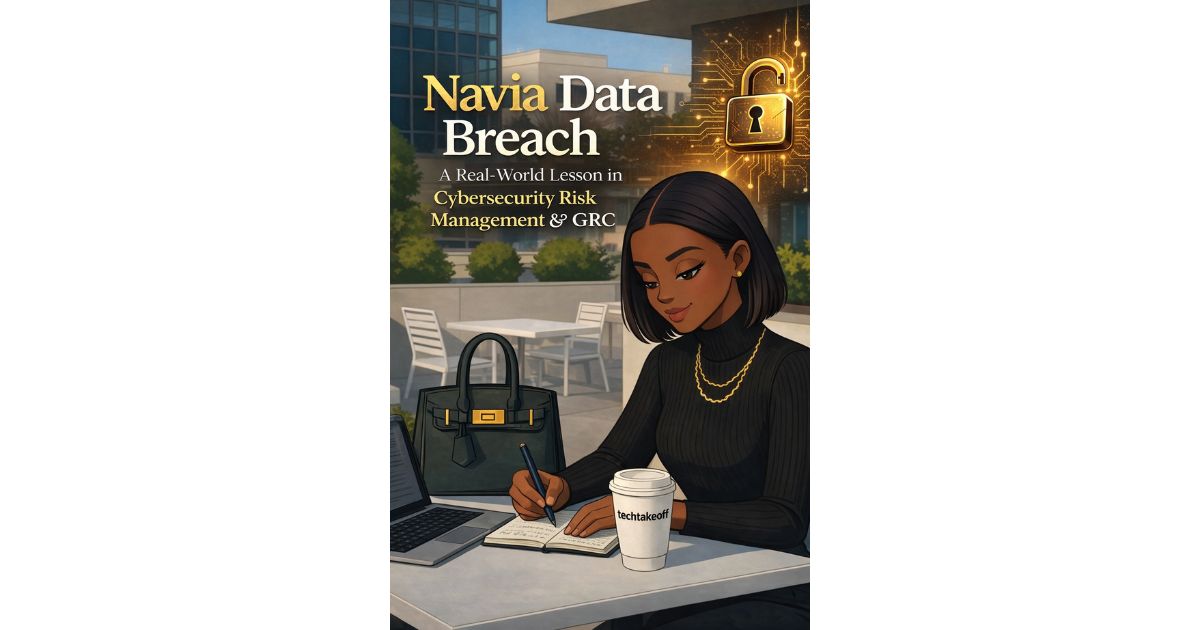
Navia Data Breach: A Real-World Lesson in Cybersecurity Risk Management and GRC
In March 2026, Navia Benefit Solutions confirmed a major data breach affecting approximately 2.7 million individuals. At first glance, this might seem like just another cybersecurity incident. But when you look closer, this breach is a powerful example of how failures in risk management, governance, and oversight can lead to real-world consequences. Let’s break it down in a way that helps you understand how cybersecurity works beyond just tools and technical jargon. What Happened? Navia, a company that manages employee benefits for over 10,000 employers, holds a large amount of sensitive data, including: According to the report, attackers gained unauthorised access through a vulnerability in an API used by the organisation. This incident is best understood as a third-party supply chain attack. This means the attackers did not directly break into the core system first. Instead, they exploited a weakness in a connected system or interface, allowing them to access sensitive data indirectly. Another important detail is that the attackers had read-only access, which allowed them to move quietly within the system without immediately triggering alarms. Understanding the Risk Behind the Breach To understand what really happened, we need to apply a core concept in cybersecurity: Asset + Threat + Vulnerability = Risk 🔹 Asset The sensitive data Navia was responsible for protecting, including personal and health-related information of millions of users. 🔹 Vulnerability A weakness in the API, likely due to insufficient security controls, validation, or monitoring. 🔹 Threat A malicious third party exploiting that weakness to gain unauthorized access. The Risk Realized Because all three elements existed together, the result was a large-scale data exposure affecting millions of individuals. Where Governance and GRC Failed This incident is not just a technical issue it is a clear example of gaps in GRC (Governance, Risk, and Compliance). First, there is the question of risk identification. Was this vulnerability known but not prioritised? If so, that reflects a failure in risk management processes. Second, there is the issue of oversight. Organisations that handle sensitive data at this scale must ensure continuous monitoring, strong access controls, and regular security assessments, especially for connected systems and third-party integrations. Third, detection was delayed. Because the attackers had read-only access, they were able to remain undetected for longer. This suggests weaknesses in monitoring, logging, and alerting systems. The Real Risk After the Breach Even though direct financial data may not have been accessed, the exposed information still creates serious risks. This includes: This highlights an important lesson: The impact of a breach is not only what is accessed, but how that information can be used later. What This Teaches About GRC This case clearly shows why GRC is critical in modern organisations. Governance ensures that responsibilities, policies, and controls are clearly defined. Risk management focuses on identifying vulnerabilities before they are exploited and prioritising what needs to be addressed. Compliance ensures that organizations meet legal and regulatory requirements when handling sensitive data. When any of these areas are weak, incidents like this become more likely. Key Lessons for Beginners in Cybersecurity If you are planning to study cybersecurity or transition into this field, this case teaches you something very important. Cybersecurity is not just about tools or technical skills. It is about understanding risk, making decisions, and protecting what matters. Every system has vulnerabilities. The goal is not to eliminate all risk, but to manage it effectively. And most importantly: Cybersecurity starts with risk management. If you don’t understand risk, you won’t understand what you are protecting or why it matters. On a final note… The Navia breach is not just a news story. It is a real-world example of what happens when valuable assets, existing vulnerabilities, and active threats come together. That combination is what creates risk. And that is why risk management sits at the heart of cybersecurity, GRC, and data protection.
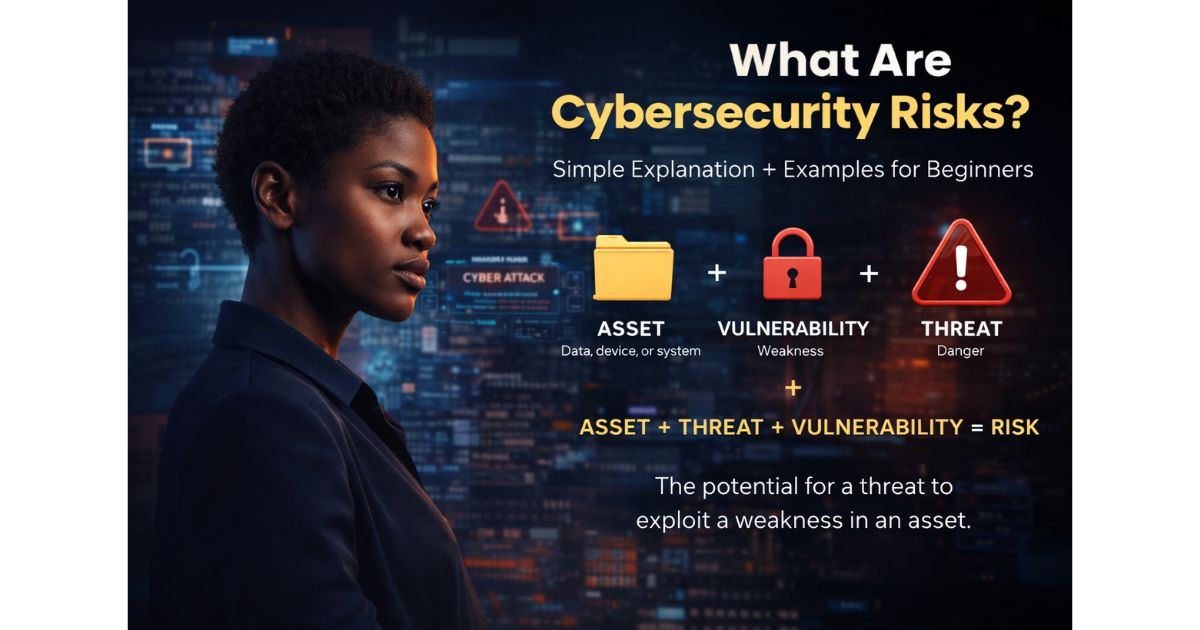
What Are Cybersecurity Risks? Simple Explanation + Examples for Beginners (2026)
If you are new to cybersecurity, you have probably heard the term “cybersecurity risks” thrown around a lot. But what does it actually mean? Let’s break it down in the simplest way possible. What Is a Cybersecurity Risk? A cybersecurity risk is: The possibility that a threat can exploit a vulnerability in an asset and cause harm. To truly understand this, you need to know three key things: So in simple terms: Asset + Threat + Vulnerability = Risk If there is no asset, there is nothing to protect so there is no risk. Think of It Like This Imagine your house: The chance that the thief enters your house through the unlocked door = Risk Common Types of Cybersecurity Risks (With Examples) Let’s look at real-life examples so it becomes clear. 1. Weak Passwords Asset: Your email or bank accountVulnerability: Simple password like 123456Threat: Hackers using password-cracking tools Risk: Your account gets accessed and sensitive information is stolen 2. Phishing Attacks Asset: Your personal or financial informationVulnerability: Trusting fake emails or linksThreat: Cybercriminals pretending to be legitimate organizations Risk: You unknowingly give away your login details 3. Malware (Viruses) Asset: Your computer or smartphoneVulnerability: Downloading from untrusted sourcesThreat: Malicious software Risk: Your data is stolen or your system is damaged 4. Third-Party (Vendor) Risk Asset: Company or customer dataVulnerability: Weak security in a vendor’s systemThreat: Attackers targeting that vendor Risk: Your data is exposed through another company 5. Unsecured Data Asset: Sensitive files (customer data, personal records)Vulnerability: No encryption or access controlThreat: Unauthorized users or attackers Risk: Anyone can access or leak the data Why Cybersecurity Risks Matter Cybersecurity risks are not just technical problems they affect real lives and businesses. They can lead to: For individuals, this could mean identity theft.For businesses, it could mean losing millions. How Can You Reduce Cybersecurity Risks? You don’t need to be a tech expert to start protecting yourself. Here are simple steps you can take: On a final note Cybersecurity risks are everywhere but they become easier to understand when you break them down. Always remember: No asset = no riskRisk exists when a threat can exploit a vulnerability in something valuable And if you are planning to study or transition into cybersecurity, this is something you must understand early: Cybersecurity is not just about tools or hacking it starts with risk management. If you don’t understand risk, you won’t understand what you’re trying to protect or why it matters. That’s why risk management is the foundation of careers in GRC, data privacy, and cybersecurity.

The First Four Hours of a Cyber Incident: Why Human Decisions Matter Most
At 09:00 on a Monday morning, the security dashboard lit up with alerts. Unusual network activity.Multiple authentication failures.Files suddenly becoming inaccessible. Within minutes, the IT team realised something serious was happening. Systems that had worked perfectly the night before were now behaving unpredictably. Employees began reporting that shared folders would not open. By 09:40, the first encrypted file appeared. What had started as a strange technical glitch had now become a cybersecurity incident. And the most important decisions had to be made quickly. Because in cybersecurity, the first four hours often determine whether an incident becomes a contained disruption or a full-scale crisis. Why the Early Hours Matter So Much When people imagine cyberattacks, they often picture hackers typing lines of code in dark rooms. In reality, many attacks unfold quietly over time. Attackers may spend days or weeks inside a network before they are detected. But once an incident becomes visible, the organisation enters a critical window of response. These early hours are when teams must decide: Every one of these decisions carries risk. Shutting down systems too early may disrupt operations unnecessarily. Waiting too long may allow attackers to spread further across the network. In those first few hours, organisations are not just responding to technology. They are responding to uncertainty. Technology Detects Incidents. Humans Decide What Happens Next. Modern cybersecurity tools are incredibly sophisticated. Security monitoring systems can detect anomalies across millions of network events. Artificial intelligence can flag suspicious behaviour faster than any human analyst. But technology alone does not manage a cyber crisis. People do. When an incident begins, someone must decide: These decisions rarely happen in calm conditions. They happen while teams are still trying to understand what is actually going on. The pressure can be intense. Senior leadership wants answers. Employees want reassurance. Customers expect stability. In these moments, the organisation is not just defending its network. It is defending its ability to think clearly under pressure. Communication Becomes the Real Battlefield One of the most overlooked risks during cyber incidents is communication failure. When teams operate in silos, confusion spreads quickly. IT teams may focus on technical containment while business leaders worry about operational disruption. Legal teams may be considering regulatory obligations while communications teams prepare external statements. Without clear coordination, even skilled teams can end up working against each other. This is why mature organisations treat cybersecurity incidents as cross-departmental crises, not purely technical events. Security teams must collaborate with: The speed and clarity of communication often determine whether the organisation regains control quickly or loses valuable time. In aviation, this principle is deeply understood. When something goes wrong in the cockpit, pilots rely on structured communication protocols to coordinate their response. Clear language, defined roles, and shared situational awareness prevent confusion during high-pressure moments. Cybersecurity teams increasingly need the same kind of discipline. The Hidden Risk: Decision Paralysis During the early hours of a cyber incident, one of the greatest dangers is not making the wrong decision. It is making no decision at all. Teams may hesitate because they lack complete information. They may fear shutting down critical systems unnecessarily. They may hope the situation resolves itself. But attackers rarely wait. While teams debate their next steps, malicious software can spread across networks, escalate privileges, and exfiltrate data. The organisations that recover fastest are not always the ones with the best technology. They are the ones with the clearest decision frameworks. Prepared organisations run incident simulations. They practice response scenarios. They define leadership roles before a crisis ever begins. When incidents occur, they are ready to act. Governance Is the Real Foundation of Incident Response Strong incident response is not built in the moment of crisis. It is built long before the incident begins. Organisations that respond effectively usually have several governance elements already in place: These structures provide guidance when uncertainty appears. Without them, teams are forced to improvise under pressure. And improvisation during a cyber crisis can be dangerous. The Human Side of Cybersecurity Many discussions about cybersecurity focus on tools, technologies, and vulnerabilities. But behind every cyber incident is a series of human decisions. Someone decides whether a suspicious alert is investigated.Someone decides whether a system is isolated from the network.Someone decides how the organisation communicates with employees and customers. Cybersecurity is not only about protecting systems. It is about enabling people to respond intelligently when systems fail. The organisations that handle incidents best are not those that never experience attacks. They are the ones that have built cultures of preparedness, accountability, and coordinated decision-making. Because when a cyber incident begins, technology may raise the alarm. But it is human judgement that determines the outcome.