Understanding Aviation Cyber Risks, Human Oversight, and the Hidden Challenge of AI in Aviation
The cabin lights blinked for a second.
Most passengers barely noticed.
But Beatrice did.
As a flight attendant, she had learned something early in aviation:
Small changes matter.
A strange sound.
An unusual delay.
A system behaving differently for even a moment.
Those details could mean nothing.
Or they could mean everything.
The aircraft continued normally.
Passengers watched movies, adjusted their seats, and prepared for landing.
But in the galley, Beatrice noticed the crew quietly checking operational systems again.
Everything was still functioning.
Still stable.
Still controlled.
Yet the moment stayed in her mind.
Because modern aircraft no longer rely only on human judgement.
Increasingly, aviation depends on intelligent systems powered by automation, data, and AI-assisted technologies.
And that raises an important question:
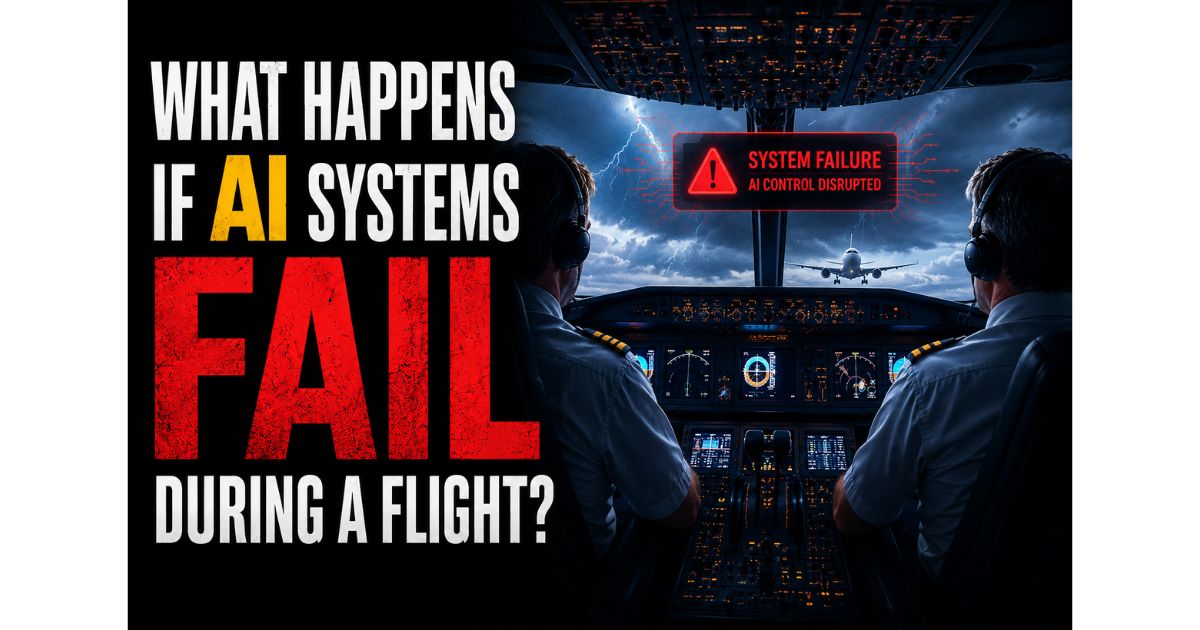
What happens if those systems fail during a flight?
How AI Is Used in Modern Aviation
Today, AI systems support many areas of aviation operations across the UK, Europe, and globally.
These systems help airlines with:
- predictive maintenance
- flight route optimisation
- crew scheduling
- operational monitoring
- fuel efficiency calculations
- passenger management systems
Some aircraft systems also use advanced automation to assist pilots with operational awareness and decision-making.
The goal is clear: improve efficiency, safety, and operational performance.
And in many ways, AI has already transformed aviation positively.
Why AI Systems Matter in Aviation
Modern aviation is built around precision.
AI helps process enormous amounts of operational data faster than humans alone.
For example, AI systems can:
- identify potential maintenance issues before failure occurs
- analyse weather patterns
- optimise flight paths
- reduce operational delays
This improves:
- efficiency
- safety monitoring
- operational reliability
In a highly complex industry like aviation, intelligent systems are becoming increasingly important.
But Systems Can Still Fail
As Beatrice thought about the blinking systems, another reality became clear.
No technology is perfect.
AI systems can experience:
- software failures
- incorrect predictions
- data inaccuracies
- cybersecurity incidents
- communication disruptions
And in aviation, even small technical problems require immediate attention.
Not because failure is guaranteed.
But because aviation safety culture depends on preparing for risk before it escalates.
The Cybersecurity Risk Most Passengers Never See
Most passengers think aviation cybersecurity means protecting booking systems or passenger data.
But modern aviation systems are deeply interconnected.
Airlines rely on:
- cloud systems
- operational software
- communication networks
- AI-assisted monitoring systems
This creates a larger digital environment where operational technology and cybersecurity increasingly overlap.
If critical systems fail, become compromised, or behave unpredictably, operational disruption may follow.
That is why aviation cybersecurity is becoming more important every year.
Why Human Oversight Still Matters
Despite automation, aviation still depends heavily on human judgement.
Pilots train extensively for:
- manual procedures
- system failures
- abnormal operational scenarios
Cabin crew also train repeatedly for emergency situations and operational disruptions.
Why?
Because aviation has always understood an important principle:
Automation should support humans, not replace them.
AI may assist with decisions.
But humans remain responsible for safety.
The Governance Challenge of AI in Aviation
This is where Governance, Risk, and Compliance becomes critical.
As airlines increasingly adopt AI systems, organisations must ask:
- What happens if AI predictions are wrong?
- Who is accountable when systems fail?
- How are risks monitored and managed?
- Are cybersecurity protections strong enough?
Because AI systems operating in safety-critical environments require:
- oversight
- transparency
- operational resilience
- cybersecurity protection
Without strong governance, automation itself can become a risk.
Aviation Has Always Been Built on Layers of Safety
What reassured Beatrice most that evening was not the technology itself.
It was the process behind it.
Aviation never relies on one system alone.
There are:
- backup systems
- operational procedures
- human checks
- emergency protocols
That layered safety culture is one of aviation’s greatest strengths.
And it becomes even more important as AI systems grow more advanced.
The Bigger Question
As the aircraft landed safely, passengers stood up and reached for their luggage like nothing unusual had happened.
Most never thought about the systems helping the flight operate safely behind the scenes.
But Beatrice did.
Because aviation is changing.
Aircraft are becoming smarter.
Systems are becoming more automated.
AI is becoming more embedded in operations.
And with that intelligence comes a new responsibility:
Ensuring technology remains secure, accountable, and properly governed.
On A Final Note
AI systems may improve aviation safety, efficiency, and operational performance.
But no intelligent system removes the need for:
- human awareness
- cybersecurity resilience
- risk management
- operational oversight
Because in aviation, safety has never depended on technology alone.
It depends on how humans prepare for failure before it happens.