Beatrice was excited. She had discovered a new AI tool that could summarise documents, generate reports, and answer questions in seconds. One afternoon, she uploaded a lengthy document she had been working on for hours. Within moments, the AI produced exactly what she needed. The process was fast. Efficient. Almost magical. But as she closed her laptop, a question suddenly crossed her mind. Who owns the data I just shared? Was it still hers? Did the AI company have access to it? Could it be stored somewhere? Could it be used to train future AI systems? The more she thought about it, the more she realised she wasn’t alone. Millions of people use AI tools every day without fully understanding what happens to the data they provide. And that is why data ownership has become one of the most important AI governance questions organisations must answer. Why Data Matters in the Age of AI Artificial Intelligence relies on data. Without data, AI systems cannot learn, improve, or generate useful outputs. Every day, organisations process enormous amounts of information, including: As AI becomes more integrated into business operations, organisations must determine how this data is collected, stored, shared, and governed. Because data is no longer just information. It is a valuable business asset. The Data Ownership Challenge At first glance, ownership seems straightforward. If a company creates a document, surely that company owns it. But AI introduces new complexities. Consider these questions: These questions are no longer just technical concerns. They are governance concerns. Why Organisations Must Pay Attention As Beatrice continued researching, she discovered that many organisations focus heavily on what AI can do. They ask: But fewer organisations ask: What happens to the data once it enters the AI system? This oversight can create risks involving: Without clear governance, organisations may unintentionally expose sensitive information. The Role of AI Governance This is where AI Governance becomes essential. AI Governance helps organisations establish clear rules for how AI systems should be used responsibly. It encourages organisations to ask: Governance creates the structure needed to balance innovation with responsibility. Data Privacy and Compliance Many countries now have regulations designed to protect personal information. These regulations require organisations to handle data carefully and transparently. If employees upload sensitive customer information into an AI tool without proper controls, organisations may face: This is why data governance and AI governance increasingly work hand in hand. Why This Matters Beyond Technology One of the biggest misconceptions about AI governance is that it only concerns technology teams. In reality, data ownership affects everyone. It impacts: Anyone who uses AI tools must understand the importance of responsible data handling. Because governance is not only about technology. It is about accountability. The Bigger Question As Beatrice reflected on her experience, she realised something important. The future of AI is not only about building smarter systems. It is about building trustworthy systems. And trust begins with transparency. If organisations cannot answer basic questions about data ownership, they may struggle to govern AI responsibly. On A Final Note The next time you upload a document, enter information into an AI tool, or rely on an AI-generated response, ask yourself the same question Beatrice asked: Who owns the data? Because in the age of artificial intelligence, understanding where data goes, who controls it, and how it is used may be just as important as understanding the technology itself. As AI adoption grows across industries, organisations that prioritise data governance, privacy, and accountability will be better positioned to build trust, manage risk, and use AI responsibly. And that is exactly what effective AI governance is all about.
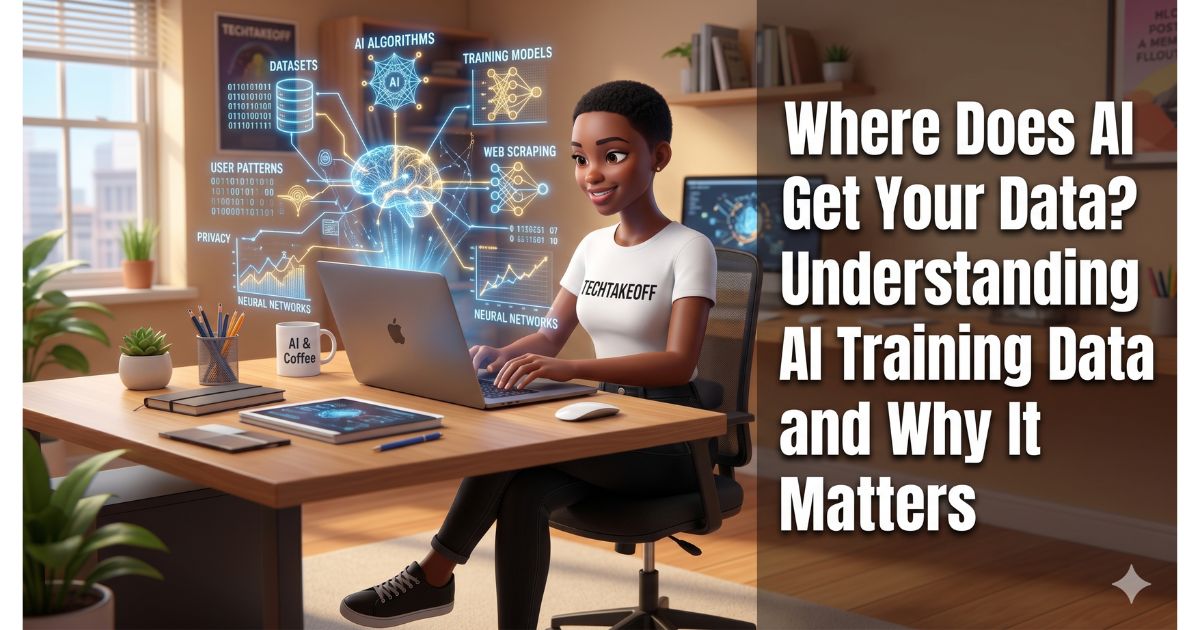
Where Does AI Get Your Data? Understanding AI Training Data and Why It Matters
AI Training Data Explained for Beginners Beatrice was impressed. She had just asked an AI chatbot a question about aviation safety, and within seconds, it produced a detailed answer. Not only was it fast. It was surprisingly good. The explanation was clear. The examples made sense. The information seemed accurate. She sat back and thought for a moment. Then a new question popped into her mind. How does AI know all this? After all, AI does not attend school. It does not read books like humans do. It does not spend years working in aviation, cybersecurity, healthcare, or finance. So where does all that knowledge come from? The answer begins with one word: Data. What Is AI Training Data? Before an AI system can answer questions, write content, generate images, or analyse information, it must first learn from enormous amounts of data. This information is known as training data. Training data can include: Think of it like teaching a child. The more examples a child sees, the more patterns they begin to recognise. AI learns in a similar way. It studies patterns within data to predict the most likely response to a question. Why AI Needs So Much Data Beatrice imagined teaching someone how to identify an aircraft. Showing one photograph would not be enough. But showing thousands of aircraft images from different angles would help them recognise patterns much faster. AI works in a similar way. The more examples it receives, the better it becomes at: Without data, AI simply cannot learn. Data is the fuel that powers artificial intelligence. Does AI Use Personal Data? This is where many people become concerned. When people hear the word data, they often think about: The reality is more complex. AI developers are expected to follow data protection and privacy regulations when building AI systems. However, organisations must carefully manage: This is why conversations around AI and data privacy have become so important. What Happens When AI Learns From Poor Data? As Beatrice continued researching, she discovered another challenge. AI is only as good as the data it learns from. If the data contains: The AI may produce flawed results. This is often called: Garbage In, Garbage Out Poor quality data can lead to: Which is why organisations spend significant time reviewing and managing data quality. Where AI Governance Comes In This is where AI Governance becomes essential. AI Governance helps organisations answer important questions such as: Without proper governance, organisations may struggle to build trustworthy AI systems. Why Data Matters More Than Ever Today, AI is being used in: Every one of these industries relies on data. And the quality of that data directly affects the quality of AI outcomes. As organisations adopt more AI systems, managing data responsibly becomes just as important as building the technology itself. The Bigger Picture As Beatrice closed her laptop, she realised something important. Most people focus on what AI can do. But fewer people stop to think about what makes AI possible. Behind every chatbot response, image generation, recommendation, or prediction is one critical ingredient: Data. Without data, AI cannot learn. Without governance, AI cannot be trusted. And without trust, even the most advanced AI system may struggle to deliver value. On A Final Note The next time you use an AI tool and receive an impressive answer in seconds, consider asking yourself the same question Beatrice asked: Where did this AI learn that? Because understanding AI starts with understanding the data behind it. And as AI becomes part of everyday life, data governance, privacy, and accountability will become more important than ever.
What AI Governance Professionals Need To Know About Kali365
MFA Bypass, Digital Trust, and the Growing Risk of Automated Cyber Threats Beatrice almost clicked the link. The email looked completely legitimate. It carried Microsoft branding, familiar formatting, and even the login page appeared authentic. Nothing immediately looked dangerous. And that was exactly what made the threat so concerning. A few days earlier, Beatrice had read about an FBI warning involving a phishing-as-a-service platform known as Kali365. What caught her attention was not only the phishing attack itself. It was the bigger governance problem hiding underneath it. According to reports, platforms like Kali365 were capable of helping attackers bypass Multi-Factor Authentication, including Microsoft authentication systems. For years, MFA had been considered one of the strongest layers of modern cybersecurity protection. But incidents like this revealed something uncomfortable: Security controls are only effective if organisations understand how cyber threats evolve alongside automation. And that is exactly why AI governance professionals should pay attention. Why Kali365 Matters Beyond Cybersecurity At first glance, Kali365 may seem like a purely technical cybersecurity issue. But the deeper issue is governance. Platforms like this represent a new generation of: This changes the risk landscape significantly. Because organisations are no longer defending against isolated manual attacks. They are increasingly defending against highly automated threat ecosystems designed to exploit trust at scale. What Is Kali365? Kali365 is an example of what is known as: Phishing-as-a-Service (PhaaS) Instead of attackers building phishing campaigns manually, these platforms provide ready-made attack infrastructure. This may include: The result is simple: Cybercrime becomes easier to scale. Why MFA Bypass Changes the Governance Conversation For many organisations, Multi-Factor Authentication became a key trust mechanism. The assumption was: if passwords fail, MFA provides another layer of protection. But phishing platforms increasingly target: This means attackers may bypass authentication protections without directly needing the second factor itself. For governance professionals, this creates an important challenge: Organisations can no longer rely on static security assumptions. Governance frameworks must evolve alongside emerging threat capabilities. The Hidden AI Governance Risk AI governance is often discussed in terms of: But governance also includes understanding how intelligent and automated systems reshape operational risk. And modern phishing ecosystems increasingly rely on: Some phishing campaigns now use AI-generated content capable of: This creates a much larger governance challenge than traditional phishing alone. Why Human Behaviour Remains the Weak Point As Beatrice reviewed the email again, she realised something important. The attack was not targeting technology alone. It was targeting human trust. Cybercriminals understand that people naturally trust: That means cybersecurity risk is no longer only technical. It becomes: And governance professionals must account for those human factors when designing risk strategies. What AI Governance Professionals Should Focus On Incidents like Kali365 highlight several growing priorities for AI governance and cybersecurity leaders. 1. Identity Trust Can No Longer Be Assumed Authentication systems remain important, but organisations must prepare for increasingly advanced identity attacks. 2. Automation Changes Threat Scale Cybercrime platforms now operate with service-based efficiency and scalability. 3. Human Risk Requires More Attention Employees remain major targets for social engineering and AI-assisted phishing. 4. Governance Must Include Threat Evolution AI governance cannot focus only on internal AI systems. It must also address: Why This Matters for Aviation and Critical Industries Industries like aviation rely heavily on: If authentication systems are compromised successfully, risks may extend beyond IT environments into: This transforms phishing into a much broader governance issue. The Bigger Lesson Kali365 represents something larger than a phishing platform. It represents how automation is transforming cyber risk itself. As intelligent systems evolve, organisations must recognise that attackers are evolving too. And governance frameworks that fail to adapt may struggle to protect: On A Final Note For AI governance professionals, the lesson from Kali365 is clear. Governance is no longer only about managing beneficial AI systems. It is also about understanding how automation, intelligent deception, and evolving cyber threats reshape organisational risk. Because in today’s digital environment, protecting trust has become just as important as protecting systems.

How I Got Into Cybersecurity GRC and AI Governance
From Aviation to Cybersecurity Through Networking, Risk Management, and Curiosity If someone told me a few years ago that I would become deeply interested in cybersecurity, Governance Risk and Compliance, and AI Governance, I honestly would have laughed. At the time, my world was aviation. Cabin briefings. Passenger safety. Long haul flights. Operational procedures. Managing people under pressure. Technology was always around me, but cybersecurity felt like something meant for highly technical people sitting behind multiple computer screens writing code all day. It felt distant. My First Step Into Cybersecurity My journey started with the Cisco Networking Essentials course. At first, I simply wanted to understand how networks worked. That course introduced me to concepts like: For the first time, I started understanding what actually happens behind the internet and digital communication we use every day. And honestly? It was challenging in the beginning. There were moments I had to pause videos repeatedly just to understand one concept. Some days I did not feel like going to class because it was overwhelming for me. But slowly, things started making sense. I realised cybersecurity is built on understanding systems first. And networking became my foundation. Discovering How Broad Cybersecurity Really Is After Networking Essentials, I continued with: also through Cisco. That was when my perspective changed completely. Before then, I thought cybersecurity was only about hacking. But during those courses, I discovered cybersecurity is incredibly broad. There are areas like: And that was when I understood something important: You do not need to fit into every part of cybersecurity. You need to discover the area that genuinely interests you. The Topic That Changed My Direction During my CyberOps course, there was a topic called: Risk Management Something about it immediately caught my attention. Maybe because it connected technology with decision-making. Maybe because it focused on: It felt practical. Human. Strategic. That topic quietly introduced me to the world of GRC. Governance, Risk, and Compliance. And the more I researched it, the more interested I became. Finding My Way Into GRC After learning more about GRC, I started searching for courses that focused specifically on it. That was when I discovered the Cybarik GRC course. At the time, investing in the course was a big decision for me. I had to save money towards it because I genuinely wanted to understand this field properly. And honestly, taking that step changed a lot for me. The course helped me understand: It showed me that cybersecurity is not only technical. It is also about: And even now, I am still learning. Because cybersecurity never truly stops evolving. Why AI Governance Became the Next Step Then something else started happening. AI began transforming industries everywhere. Aviation. Healthcare. Finance. Cybersecurity. Recruitment. Customer service. Suddenly, organisations were relying more heavily on intelligent systems and automation. And naturally, I started asking questions. That curiosity led me toward AI Governance. Because in today’s world, cybersecurity alone is no longer enough. AI systems now influence: Which means governance matters more than ever. My Biggest Realisation One thing I have learned throughout this journey is this: You do not need to know everything before starting cybersecurity. You simply need: I started with foundational networking concepts. One course led to another. One topic sparked curiosity. And eventually, that curiosity became a direction. On A Final Note My journey into Cybersecurity GRC and AI Governance did not begin with expertise. It began with questions. And honestly, I am still learning every day. But that is the beautiful thing about cybersecurity. The field constantly evolves. And if you stay curious, keep learning, and remain open to growth, one small step can completely change your career path.
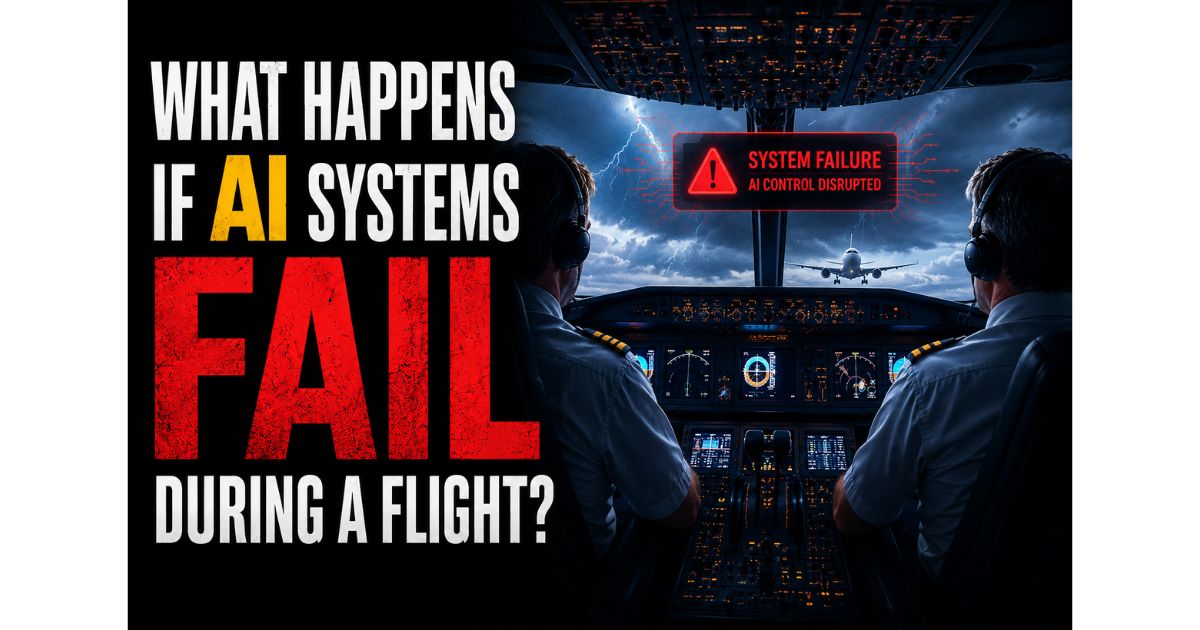
What Happens If AI Systems Fail During a Flight?
Understanding Aviation Cyber Risks, Human Oversight, and the Hidden Challenge of AI in Aviation The cabin lights blinked for a second. Most passengers barely noticed. But Beatrice did. As a flight attendant, she had learned something early in aviation: Small changes matter. A strange sound.An unusual delay.A system behaving differently for even a moment. Those details could mean nothing. Or they could mean everything. The aircraft continued normally. Passengers watched movies, adjusted their seats, and prepared for landing. But in the galley, Beatrice noticed the crew quietly checking operational systems again. Everything was still functioning. Still stable. Still controlled. Yet the moment stayed in her mind. Because modern aircraft no longer rely only on human judgement. Increasingly, aviation depends on intelligent systems powered by automation, data, and AI-assisted technologies. And that raises an important question: What happens if those systems fail during a flight? How AI Is Used in Modern Aviation Today, AI systems support many areas of aviation operations across the UK, Europe, and globally. These systems help airlines with: Some aircraft systems also use advanced automation to assist pilots with operational awareness and decision-making. The goal is clear: improve efficiency, safety, and operational performance. And in many ways, AI has already transformed aviation positively. Why AI Systems Matter in Aviation Modern aviation is built around precision. AI helps process enormous amounts of operational data faster than humans alone. For example, AI systems can: This improves: In a highly complex industry like aviation, intelligent systems are becoming increasingly important. But Systems Can Still Fail As Beatrice thought about the blinking systems, another reality became clear. No technology is perfect. AI systems can experience: And in aviation, even small technical problems require immediate attention. Not because failure is guaranteed. But because aviation safety culture depends on preparing for risk before it escalates. The Cybersecurity Risk Most Passengers Never See Most passengers think aviation cybersecurity means protecting booking systems or passenger data. But modern aviation systems are deeply interconnected. Airlines rely on: This creates a larger digital environment where operational technology and cybersecurity increasingly overlap. If critical systems fail, become compromised, or behave unpredictably, operational disruption may follow. That is why aviation cybersecurity is becoming more important every year. Why Human Oversight Still Matters Despite automation, aviation still depends heavily on human judgement. Pilots train extensively for: Cabin crew also train repeatedly for emergency situations and operational disruptions. Why? Because aviation has always understood an important principle: Automation should support humans, not replace them. AI may assist with decisions. But humans remain responsible for safety. The Governance Challenge of AI in Aviation This is where Governance, Risk, and Compliance becomes critical. As airlines increasingly adopt AI systems, organisations must ask: Because AI systems operating in safety-critical environments require: Without strong governance, automation itself can become a risk. Aviation Has Always Been Built on Layers of Safety What reassured Beatrice most that evening was not the technology itself. It was the process behind it. Aviation never relies on one system alone. There are: That layered safety culture is one of aviation’s greatest strengths. And it becomes even more important as AI systems grow more advanced. The Bigger Question As the aircraft landed safely, passengers stood up and reached for their luggage like nothing unusual had happened. Most never thought about the systems helping the flight operate safely behind the scenes. But Beatrice did. Because aviation is changing. Aircraft are becoming smarter.Systems are becoming more automated.AI is becoming more embedded in operations. And with that intelligence comes a new responsibility: Ensuring technology remains secure, accountable, and properly governed. On A Final Note AI systems may improve aviation safety, efficiency, and operational performance. But no intelligent system removes the need for: Because in aviation, safety has never depended on technology alone. It depends on how humans prepare for failure before it happens.
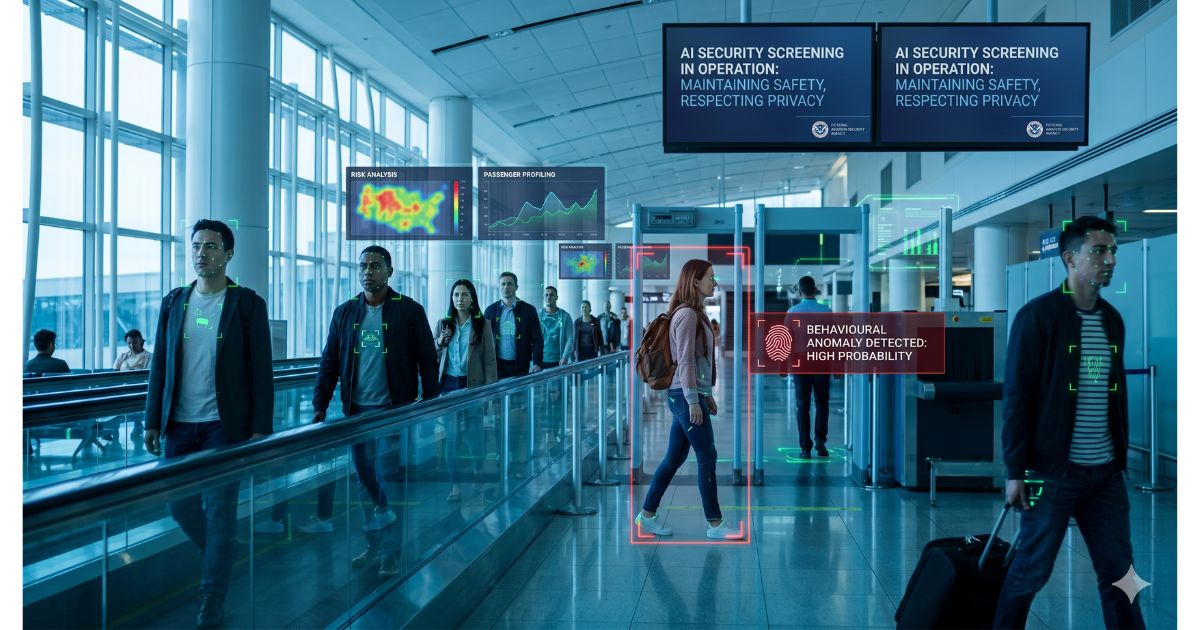
How Airlines Use AI to Detect Suspicious Passengers: Privacy, Security, and the Hidden Risks
Beatrice noticed the cameras immediately. As she walked through the airport terminal during a layover, she realised something had changed. The security process felt faster. Smoother. More automated. Passengers moved through checkpoints with minimal interaction. Some gates opened automatically after facial scans. Screens tracked movement quietly in the background. Most travelers barely noticed. But Beatrice did. As a flight attendant, airports were familiar environments. Yet this time, it felt different. Less human. More intelligent. Later that evening, she began wondering: How much is AI actually watching inside airports? The answer was more complex than she expected. How AI Is Used in Modern Airports Today, airports across the UK and Europe increasingly use AI-powered systems to improve security and operational efficiency. These systems can help: AI is now integrated into technologies like: Facial Recognition Systems Used to compare passenger faces with identification documents or watchlists. Behaviour Analysis Systems Designed to identify unusual movement patterns or suspicious activity. Smart Security Screening AI-assisted scanning systems that help identify prohibited items more efficiently. For airports handling millions of passengers yearly, automation helps process people faster and more consistently. The Security Advantage From an aviation safety perspective, the benefits are clear. Airports face enormous pressure to maintain security while managing large passenger volumes. AI systems can help by: For example, AI may identify: All within seconds. This creates a safer and more responsive environment. But Here is the Hidden Question As Beatrice continued thinking about it, another question appeared. What happens if the system gets it wrong? Because AI systems don’t think like humans. They rely on: And human behaviour is not always predictable. A nervous passenger may simply fear flying. Someone moving quickly through the terminal may just be late for boarding. But to an AI system, unusual behaviour can sometimes appear suspicious. When Passenger Data Becomes Part of the System To function effectively, many AI airport systems rely on large amounts of passenger data. This may include: Over time, these systems build detailed profiles and behavioural models. And this is where privacy concerns begin to grow. The Privacy Risk Most Passengers Don’t See Most travelers focus on catching flights, checking luggage, and getting through security. Few think about what happens to their data behind the scenes. But AI surveillance systems raise important questions: This is no longer just an aviation issue. It becomes a governance and data privacy issue. Where GDPR and Data Protection Come In In the UK and Europe, passenger data protection is guided by laws like the General Data Protection Regulation. These regulations require organisations to: In theory, these rules help balance: But AI introduces new complexity. Because AI systems can process and analyse data at a scale humans cannot. The Governance Challenge This is where Governance, Risk, and Compliance becomes critical. Airports and airlines must ensure: Governance Clear policies exist around how AI surveillance systems are used. Risk Management Potential risks such as: are properly assessed. Compliance Systems comply with: Because if AI systems make mistakes, accountability still matters. Aviation Has Always Balanced Safety and Trust Aviation depends on trust. Passengers trust: AI may improve efficiency and strengthen security. But trust cannot rely on automation alone. Passengers still need transparency. They need to know: The Bigger Picture As Beatrice boarded her next flight, she realised something important. AI is quietly reshaping modern aviation. Not only through security systems. But through: The technology is becoming more intelligent every year. But intelligence without oversight creates risk. On A Final Note AI may help airports identify suspicious activity faster. But airports are not just processing passengers. They are processing people’s data, behaviour, and identities. And as aviation becomes more automated, the real challenge will not simply be improving security. It will be protecting privacy, maintaining accountability, and ensuring humans remain visible within the system.
How I Built an AI Powered ISO 27001 Risk Assessment Automation System Using Python
Introduction ISO 27001 risk assessments are often time consuming, repetitive, and difficult for small and medium sized businesses to manage efficiently. Many organisations still rely on: To explore a more practical approach, I built an AI powered ISO 27001 risk assessment automation system using Python, Excel, and Jupyter Notebook. The goal of the project was simple: Create a lightweight governance, risk, and compliance workflow that automates core ISO 27001 assessment activities without requiring a large enterprise GRC platform. This project focuses on: The project was built specifically with SMEs in mind because many smaller organisations need compliance support but cannot afford complex governance platforms. What Problem Does This AI ISO 27001 Automation System Solve? One of the biggest challenges in ISO 27001 implementation is operational overhead. Risk assessments often involve: This process becomes difficult to scale. Many organisations also struggle with fragmented workflows where: This AI powered ISO 27001 automation project explores how Python based workflows can simplify these activities. How the AI Powered ISO 27001 Risk Assessment System Works The workflow begins with ISO 27001 controls extracted directly from Word document. The system then: This creates a more connected and scalable compliance workflow. Technologies Used in the Project The system was built using: These tools helped automate compliance workflows while keeping the project lightweight and accessible. Extracting ISO 27001 Controls Using Python The first step involved extracting ISO 27001 controls from Microsoft Word document. Using Python and python-docx, the controls were converted into structured data that could be processed programmatically. This allowed the project to: Instead of manually copying controls into spreadsheets, the workflow automates the process. Generating ISO 27001 Risk Assessment Questions One of the most repetitive parts of compliance assessments is questionnaire creation. To simplify this, the project automatically generated structured risk assessment questions for each ISO 27001 control. Examples include: This creates a more standardised and scalable assessment process. Building an Automated ISO 27001 Risk Register After generating assessment questions, the workflow simulates stakeholder responses and calculates: Risks are then categorised as: The final output is a structured ISO 27001 risk register that can be filtered, reviewed, and visualised. Dashboard Metrics and Risk Visualisation The project also generates dashboard metrics to provide visibility into organisational risk posture. Using Python and matplotlib, the system creates visual summaries showing: This improves reporting and simplifies management reviews. Why SMEs Need Lightweight GRC Automation Many governance, risk, and compliance platforms are designed for large enterprises. For smaller organisations, this creates challenges such as: This project explores an alternative approach: Lightweight compliance automation using Python. The idea is not to replace enterprise GRC tools entirely, but to demonstrate how smaller organisations can automate repetitive compliance activities with simpler workflows. Future Improvements for the Project Several enhancements are planned for future versions of the system. These include: The long term goal is to create a practical AI assisted compliance workflow for SMEs. Lessons Learned from Building the Project One important insight from building this project is that governance and compliance are increasingly becoming data and workflow problems. Many compliance processes still rely heavily on: Automation can help reduce operational overhead while improving consistency and visibility. This project also reinforced how useful Python can be for cybersecurity governance, risk management, and compliance engineering. On A Final Note AI powered governance, risk, and compliance workflows are becoming increasingly relevant as organisations look for ways to simplify security and compliance operations. This project demonstrates how Python based automation can help streamline ISO 27001 risk assessment activities while improving structure, scalability, and reporting. The project is still evolving, but it already highlights how lightweight compliance automation can support organisations that want practical alternatives to large enterprise GRC platforms. View the Project GitHub Repository: https://github.com/Iyetunde/AI-ISO27001-risk-assessment-automation
How Airlines Use Your Data: AI, Passenger Privacy, and What You Don’t See
Beatrice booked her flight in less than five minutes. Departure city. Destination. Dates. Within seconds, the options appeared. Different prices. Different times. Different recommendations. It felt simple. But behind that simplicity… something much more complex was happening. A few hours later, she checked the same flight again. The price had changed. Not dramatically. Just enough to make her pause. “Was it always like this?” The Journey Before the Journey Before Beatrice even boarded the plane, her data had already started moving. When she booked her ticket, she shared: But that was just the beginning. Airlines don’t just collect data. They analyse it. Where AI Comes In Modern airlines use AI in ways most passengers never see. From the moment Beatrice searches for a flight, AI systems begin working: Even before she confirms her booking, the system is already learning. Beyond Ticket Sales It doesn’t stop there. AI is also used in: Crew Rostering Matching schedules based on availability, regulations, and fatigue management Passenger Experience Personalising offers, seat suggestions, and in-flight services Predictive Maintenance Identifying potential aircraft issues before they happen All of this depends on one thing: Data The Hidden Layer Most Passengers Don’t See To Beatrice, it looked like a smooth booking experience. But behind the scenes: This doesn’t mean something is wrong. But it does raise an important question: How is this data being used and who controls it? Where Privacy Comes In Passenger data is sensitive. It includes: In regions like Europe and the UK, laws like the General Data Protection Regulation are designed to protect this data. They require airlines to: But here is the challenge. The Gap Between Use and Understanding Beatrice agreed to the terms when she booked her flight. Like most people, she didn’t read everything. So while the system followed legal requirements… She didn’t fully understand what she had agreed to. And this is where risk begins. Not always from misuse. But from lack of awareness. A GRC Perspective From a Governance, Risk, and Compliance point of view, this is critical. Because airlines must ensure: Because when AI is involved, the risk is not just technical. It’s about: trust accountability transparency The Real Question Beatrice boarded her flight without thinking about any of this. To her, everything worked perfectly. But that’s the point. The system is designed to feel invisible. On A Final Note Airlines are becoming smarter, faster, and more efficient because of AI. But behind every smooth experience is a flow of data most passengers never see. And understanding that flow is becoming more important than ever. Because sometimes, the journey isn’t just about where you are going. It’s about what happens to your data along the way.

Is Your Data Safe with AI in the UK? What GDPR Really Protects
(Beginner Guide) Beatrice didn’t think twice about it. She had just downloaded a new app. It promised smarter recommendations, faster results, and a more personalised experience powered by AI. She signed up, entered her details, and clicked: Accept All. A few days later, something felt different. The app seemed to know her preferences almost too well.It suggested things she hadn’t explicitly searched for.Even the timing of the recommendations felt… accurate. She paused for a moment. How much of my data is this app actually using? The Question Most People Don’t Ask In the UK today, AI is part of everyday life. From: These systems rely on data to function. Your data. But here’s the question many beginners don’t ask: Is your data actually safe? What Happens to Your Data When You Use AI When Beatrice signed up, she shared more than she realised. Not just her name and email. But also: AI systems use this data to: Over time, this builds a detailed profile. Not just of who she is. But how she behaves. This Is Where GDPR Comes In In the UK, data protection is guided by laws based on the General Data Protection Regulation. These rules exist to protect people like Beatrice. In simple terms, GDPR says: What GDPR Actually Protects Beatrice has rights, even if she doesn’t always realise it. She has the right to: This means her data is not supposed to be used freely without limits. There are rules. But Here’s What Most People Don’t Realise GDPR doesn’t stop companies from using your data. It regulates how they use it. So when Beatrice clicked “Accept All,” she gave consent. And that changes things. Because once consent is given: As long as it follows legal guidelines. The Gap Between Protection and Reality This is where things become more complex. Even with GDPR in place: So while the law provides protection… Many people don’t fully understand how their data is being used. A Cybersecurity and GRC Perspective From a cybersecurity and governance point of view, this raises important questions: Because protecting data is not just about security. It’s about: The Real Question Beatrice’s data wasn’t stolen. It wasn’t hacked. It was used… exactly as she had allowed. But she didn’t fully understand what she had agreed to. And that’s where the real risk lies. On A Final Note AI is powerful because it learns from data. And in the UK, GDPR exists to make sure that learning happens responsibly. But protection doesn’t replace awareness. Because at the end of the day: your data may be protected by lawbut your choices still shape how it’s used If you are starting your journey in cybersecurity, this is something worth remembering: Data privacy is not just about laws It’s about understanding how your information flows and who controls it

What Happens to Your Data When AI Uses It? (GDPR Explained for Beginners)
Beatrice didn’t think much about it at first. She signed up for a new app. It promised convenience. Personalised recommendations. Smarter features powered by AI. She clicked “Accept All Cookies” and moved on. A few days later, something felt… strange. The app seemed to know too much. It suggested things she had only searched once.It recommended content that felt unusually personal. And then it hit her. How much of her data was this system actually using? The Invisible Exchange Most digital services today run on data. When you: You are often sharing personal information. This may include: AI systems use this data to: But here’s the important question: Do you really know how your data is being used? This Is Where GDPR Comes In The General Data Protection Regulation (GDPR) was created to protect people like Beatrice. It gives individuals more control over their personal data. In simple terms, GDPR says: Your Rights (Explained Simply) Under GDPR, Beatrice has rights even if she does not always realise it. She has the right to: These rights are especially important in the age of AI. The AI Problem: It is Not Always Transparent AI systems don’t just store data. They learn from it. They analyse patterns. Predict behaviour. Make decisions. But here’s the challenge: So even if Beatrice agreed to share her data… She may not fully understand what happens next. When Privacy Meets Automation Imagine this: An AI system uses Beatrice’s data to: But she doesn’t know: This creates a gap between: what users expectand what actually happens Why This Matters for Cybersecurity and GRC Data privacy is not just about protecting information. It’s about: In cybersecurity and GRC, this means: Because when data is misused… the impact is not just technical it is personal The Real Lesson Beatrice didn’t realise she had a choice. She clicked “accept” and moved on. But in today’s world, data is one of the most valuable things we have. And understanding how it is used is no longer optional. On a Final note… AI is powerful because of data. But with that power comes responsibility. That is why GDPR exists. Not to stop innovation… But to make sure that as technology evolves, people don’t lose control of their own information. If you’re starting your journey in cybersecurity, this is something worth remembering: It is not just about securing systemsIt is about protecting people