
Can hackers trick AI in Aviation….. Imagine arriving at an airport for your flight. You check in, drop your luggage, pass through security and take your seat at the gate. Everything appears normal. Behind the scenes, however, hundreds of digital systems may already be working together. Some systems process passenger information. Others support airport operations. Some analyse weather, aircraft data, traffic patterns and security information. As artificial intelligence becomes more deeply integrated into aviation, AI may increasingly help people make decisions about what happens in the air and on the ground. But this raises an important question. What happens if hackers manage to trick an AI system used in aviation? This is where the conversation about hackers, AI in aviation becomes much more important than simply asking whether artificial intelligence is useful. AI can process enormous amounts of information very quickly. But it still depends on data, software, networks and the people who design and operate it. And anything connected to technology can potentially become a target. Hackers and AI in Aviation Cybersecurity: What Could Go Wrong? Let’s imagine a simple situation Imagine an airport using an AI system to analyse information and identify unusual activity. The system may have been trained using large amounts of historical data. It looks for patterns that humans might not notice immediately and can help identify unusual behaviour across large amounts of information. Now imagine that someone deliberately manipulates some of the information entering that system. The AI does not necessarily know that the information has been manipulated. It simply processes the information it receives and produces a result based on the data available to it. So, can hackers trick AI by manipulating the information an AI system relies on? Potentially, yes. This is why cybersecurity becomes so important when AI is introduced into aviation. The concern is not simply whether hackers can gain access to an AI system. It is also whether they can manipulate the data, software or environment around it in ways that could influence what the AI detects or predicts. For aviation, that raises an important question: If an AI system is making a recommendation based on manipulated information, would the people relying on it know that something had gone wrong? AI does not operate in isolation. It depends on data. It depends on software. It depends on networks. It depends on sensors and other systems. If those surrounding components are compromised, the AI could potentially be affected as well. That does not mean hackers can simply “take over an aircraft” by typing something into a computer. Aviation systems have multiple layers of security, procedures, checks and human oversight. The point is much broader. As aviation becomes more dependent on intelligent digital systems, protecting those systems becomes increasingly important. AI in Aviation Cybersecurity: Could Hackers Attack an Airport AI System? When people hear the word “hack,” they often imagine someone stealing a password. But cybersecurity is much broader than that. So, can hackers trick AI without necessarily taking control of the entire system? One possibility is manipulating the information the AI receives. An attacker could also try to exploit weaknesses in connected software, interfere with the environment around an AI system or find ways to influence the data it uses. This is particularly important when we talk about AI in aviation. Imagine an AI system designed to identify unusual behaviour at an airport. It analyses large amounts of information and looks for patterns that could indicate something unusual. Now imagine that someone deliberately feeds misleading information into the system. The AI may reach a different conclusion. The AI is not necessarily “lying.” It may simply be making a decision based on information that has been manipulated. This is one of the most important things passengers should understand about AI. AI does not automatically know whether the information it receives is trustworthy. It processes the information available to it. If that information becomes unreliable, the AI’s output could potentially become unreliable too. And that brings us back to the question at the heart of this article: Can hackers trick AI? Understanding how that could happen is an important part of understanding why AI security matters in modern aviation. Hackers and AI in Aviation Could Target the Data Data is one of the most important ingredients in modern artificial intelligence. Think about your own flight. Your journey can generate a surprising amount of information. Your booking details. Your destination. Your flight number. Your baggage information. Your check in information. Your boarding information. Your payment information. Your travel history. Operational information surrounding the flight. Weather information. Aircraft information. Airport information. Now imagine AI systems using some of these different categories of information to identify patterns or make predictions. This explains why hackers, AI in aviation and data security are becoming increasingly connected. If data is important to an AI system, protecting that data becomes important too. An attacker does not necessarily need to destroy the entire system. In some circumstances, manipulating the information going into a system could potentially be enough to influence what the system produces. That is why cybersecurity professionals talk about protecting the integrity of data. Integrity simply means that information has not been improperly altered. For aviation, that principle matters enormously. What If Someone Feeds AI Bad Information? Let’s make this even simpler. Imagine you ask a friend: “Is the road ahead clear?” Your friend tells you: “Yes.” You start driving. A few minutes later, you discover that the road is actually blocked. Your friend did not necessarily intend to mislead you. Perhaps someone gave them incorrect information. AI can face a similar problem. An AI system can produce an answer that appears convincing while relying on information that is incomplete, inaccurate or manipulated. This is one of the reasons hackers, AI in aviation deserves attention. Aviation depends heavily on accurate information. Weather conditions can change. Aircraft availability can change. Airport operations can change. Passenger numbers can change. Air traffic conditions can change. A system making predictions needs
How AI Predicts Flight Delays: The Data Behind Airline Predictions
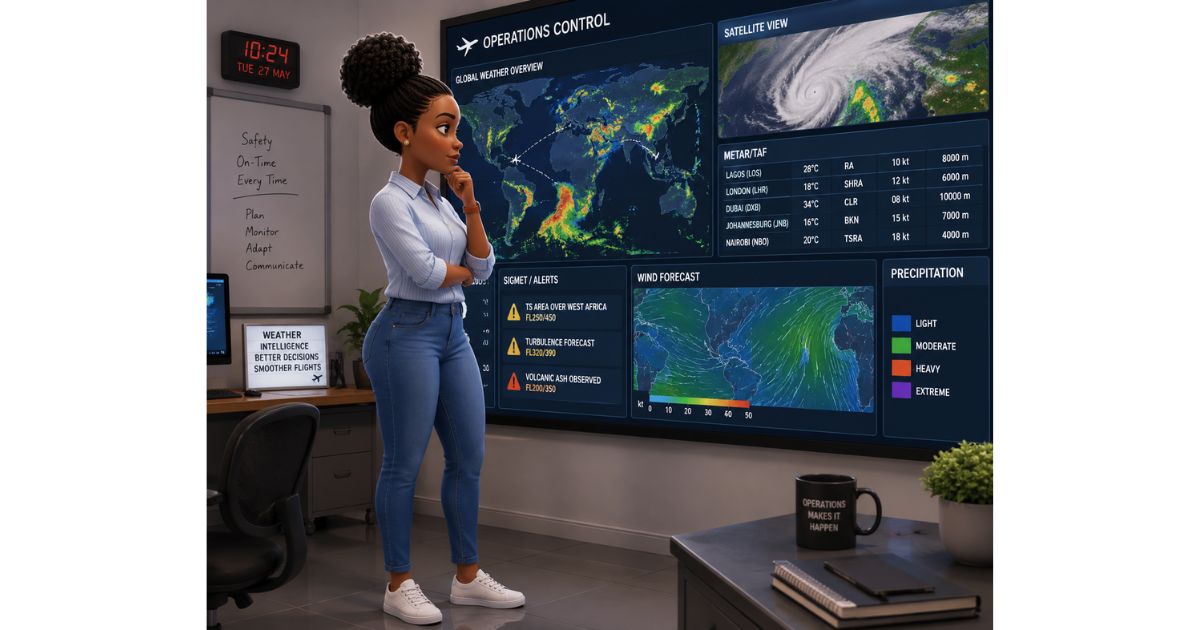
So how does AI predict flight delays before passengers even know there is a problem? The answer lies in the enormous amount of weather, flight, airport and operational data that airlines can analyse. Have you ever checked your flight status and wondered how an airline could possibly know that your flight might be delayed when the weather outside looks perfectly fine? Perhaps you are sitting at home looking at a bright blue sky. Your weather app says everything looks good. Yet somewhere behind the scenes, an airline system may already be warning that your flight could be delayed. How does it know? The answer involves something you interact with every day without necessarily realising it: data. Airlines collect enormous amounts of information about flights, weather, aircraft, airports, routes and previous journeys. Increasingly, artificial intelligence can analyse this information, identify patterns and help predict what might happen next. But there is an important question we need to ask: Can AI actually tell a passenger whether their flight is safe to operate? The answer is more complicated than you might think. How AI Predicts Flight Delays: A Real Flight Experience I have experienced this from the operational side of aviation. On one particular flight, I operated to a certain city. After we landed, the weather changed. We had to wait for some time before we could board for the next route. At that point, the weather conditions was good for taking off. But we were also informed that more weather was approaching. So there was a difficult window. The weather was currently suitable for departure, but more challenging weather was closing in. Eventually, we took off. During the flight, we experienced turbulence. By the time we landed, I heard that other airlines operating to that route had cancelled their flights. Naturally, passengers were upset. From a passenger’s perspective, it is understandable: But aviation safety decisions are rarely that simple. The decision to operate a flight isn’t based simply on whether it is raining or whether an app shows a storm nearby. There are many factors involved. And this is where data becomes incredibly important. So, How Does AI Predict a Flight Delay? Think about AI as a very sophisticated pattern finder. It can examine huge amounts of information much faster than a human could. For example, an airline may have information about: AI can analyse relationships between these different pieces of information. Imagine that an airline’s historical data shows something interesting. Whenever thunderstorms develop around a particular airport during a certain period of the day, flights arriving there tend to experience significant delays. The AI system can recognise that pattern. So when similar weather conditions begin developing again, the system may predict: “There is a high probability that flights arriving here will experience delays.” It is not predicting the future like a crystal ball. It is using data to estimate what is likely to happen. Weather Is One of the Biggest Pieces of the Puzzle Weather can change rapidly. A flight that looks perfectly normal in the morning could face very different conditions a few hours later. Airlines and aviation authorities therefore use multiple sources of weather information. These can include radar observations, forecasts, satellite information, airport weather observations, wind information and reports from aircraft already flying through an area. The FAA explains that aviation weather systems combine observations and forecast models to help pilots, air traffic controllers and operators understand conditions that could affect flights. This is important because a simple weather app might tell you: Thunderstorms: 40% chance. An aviation operation needs much more information. Where exactly is the weather? How quickly is it moving? How severe is it? Is it affecting the departure airport? Is it affecting the destination? What about the route between the two? What will the conditions look like by the time the aircraft reaches that area? Those are very different questions. What About Turbulence? This is another area where data becomes fascinating. Turbulence can occur for many reasons, including thunderstorms, weather fronts, jet streams, mountains and changes in atmospheric conditions. And sometimes it can occur even when the sky appears clear. Modern aviation systems can use information from different sources to improve turbulence awareness. For example, aircraft can provide information about turbulence encountered during flight. Pilot reports can also provide valuable information about what is actually happening in the atmosphere. The FAA explains that newer turbulence detection methods can use aircraft and radar data to estimate turbulence conditions, while turbulence forecasts combine weather model information with observations. This creates something very important: Real world data can improve future predictions. If several aircraft report turbulence in the same area, that information can help other crews and aviation systems understand what may be happening ahead. But Here is the Interesting Part Remember my flight? The weather was good enough for takeoff at that particular moment. But we were also told that more weather was approaching. That distinction matters. Weather is not simply: Good or Bad It is constantly changing. An aircraft may be able to depart safely through a particular window while another flight later faces significantly different conditions. That means two airlines can make different operational decisions without one necessarily being careless and the other being cautious. Conditions can change. Routes can be different. Aircraft can encounter different weather. Air traffic restrictions can change. And the information available to the crew can change. The FAA emphasises that pilots should continuously reassess weather and use multiple sources of information rather than relying on a single forecast. Could AI Have Predicted What Happened on My Flight? Possibly. But we need to be careful with that statement. AI could potentially identify patterns suggesting that weather conditions were becoming more likely to disrupt flights on a particular route. It could analyse historical weather patterns, current observations and forecast information. It could even help identify a developing risk before a traditional delay becomes obvious to passengers. But predicting a potential delay is very different from determining whether an aircraft should
Can Airlines Trust AI With Safety Decisions? 5 Questions AI Governance Must Answer
Imagine an airline is preparing for a busy day. Hundreds of flights are scheduled. Thousands of passengers are travelling. Weather conditions are changing. Aircraft are moving between airports. Crew schedules are being coordinated. Behind all of this, artificial intelligence is quietly analysing information and identifying patterns. An AI system produces a recommendation. It looks convincing. The data looks convincing. The system has processed far more information than a human could reasonably analyse in the same amount of time. So someone asks a very simple question: Can we trust it? That question may become one of the most important questions aviation has to answer as Artificial Intelligence becomes more deeply integrated into airline operations. The issue is not whether AI can be useful. It clearly can. The bigger question is: How do airlines make sure AI is being used safely, responsibly and with the right human oversight? That is where AI Governance in aviation comes in. AI Is Already Becoming Part of Aviation’s Future Artificial Intelligence is no longer just something we hear about in technology conferences. It is becoming part of the aviation industry. Airlines and aviation organisations are exploring how AI can be used for areas such as flight operations, safety, air traffic management, aircraft maintenance and other parts of aviation. The International Civil Aviation Organization (ICAO) recognises both the benefits and risks of using AI in aviation. It says AI needs to be developed and used in a way that is safe, transparent, secure and accountable, with humans still playing an important role. In Europe, the European Union Aviation Safety Agency (EASA) is also working on how AI can be used safely in aviation. In June 2026, EASA released an updated AI Concept Paper that looks at newer AI technologies and more advanced forms of automation. Its approach focuses on making AI trustworthy while keeping aviation safety and human involvement at the centre. So this conversation is not simply about whether airlines might use AI one day. It is about how aviation can responsibly integrate increasingly capable AI systems. And that brings us to five questions. 1. Is the AI Using Accurate Data? This might sound like a technical question. It is actually one of the most important governance questions. AI is only as reliable as the information it is working with. Imagine an AI system is helping an airline analyse operational information. The system receives information from several different sources. But what if some of that information is incomplete? What if records are outdated? What if information has been entered incorrectly? What if two systems contain conflicting information? The AI may still produce an answer. And the answer may even sound extremely confident. But confidence does not equal accuracy. This is why Data Governance becomes such an important part of AI Governance. Organisations need to understand where data comes from, whether it is fit for purpose, how it is managed and who is responsible for it. ICAO has specifically highlighted the importance of information and data management for AI applications, noting that datasets used to train and validate AI need to be complete, representative and of high quality. This is a lesson I find particularly interesting as I learn more about AI Governance. Before asking: What can the AI do? we should also ask: What information is the AI learning from? 2. Can a Human Challenge the AI? Now imagine the AI has analysed the data and produced a recommendation. Should the airline simply follow it? Not necessarily. Aviation has always relied heavily on human expertise, procedures and professional judgement. AI does not change that overnight. Instead, the challenge is finding the right relationship between humans and AI. EASA’s work on Level 2 AI specifically addresses human AI teaming, where AI systems can perform certain decision making functions while remaining under human oversight. EASA also emphasises the importance of safe human AI interaction. In simple terms: The AI can make a recommendation, but the human needs to understand it, evaluate it and have the ability to intervene when appropriate. Think of the AI as an extremely sophisticated alarm clock. It can wake you up. It can tell you something needs attention. But it should not automatically decide what you do next. That distinction matters enormously when AI is used in aviation. 3. Can We Understand Why the AI Made Its Recommendation? Imagine an AI system tells an airline: There is a high risk associated with this situation. A natural question follows: Why? If nobody can explain what information influenced the recommendation, it becomes difficult to properly assess the result. This does not mean every AI system needs to reveal every mathematical calculation behind its output to every user. It means organisations need appropriate levels of explainability and transparency for the context in which the AI is being used. This becomes particularly important when AI is involved in safety related applications. EASA’s aviation AI work includes concepts such as AI explainability and learning assurance as part of developing trustworthy AI systems. The question therefore becomes: Can the people responsible for the decision understand enough about the AI’s output to use it safely? If the answer is no, that itself becomes a governance concern. 4. Who Is Accountable When AI Gets It Wrong? This may be one of the most uncomfortable questions. Imagine an AI system makes a recommendation. A human follows the recommendation. Later, the decision turns out to have been wrong. Who is responsible? The AI? The person who approved the recommendation? The airline? The team that developed the system? The organisation that supplied the technology? This is why AI Governance cannot simply be about whether the technology works. It must also establish accountability. People need to understand their responsibilities. There should be appropriate processes for monitoring the system. There should be mechanisms for reporting problems. And there should be clarity around who has authority to intervene. ICAO has identified accountability, fairness, human control and technical robustness among principles relevant to trustworthy AI in aviation. This

What Can a Flight Attendant Do With AI and Cybersecurity? 4 Career Paths to Explore
For years, I thought of my career as something that existed entirely inside an aircraft. Safety demonstrations. Passenger service. Emergency procedures. Crew coordination. Long flights. Different countries. Different cultures. Different passengers. Then I started learning about cybersecurity. And later, Artificial Intelligence, Data Governance and AI Governance. Something unexpected happened. I began looking at my aviation career differently. I started asking myself: Could the skills I developed as a flight attendant actually be useful in technology? The answer surprised me. They can. A flight attendant does not need to become a software engineer to enter the technology industry. There are technology careers where understanding risk, procedures, people, data, compliance and decision making can be just as important as knowing how to write complex software. And this is particularly interesting as Artificial Intelligence becomes increasingly important across industries, including aviation. If you are a flight attendant thinking about changing careers, you may have more transferable skills than you realise. Here are four career paths worth exploring. 1. AI Governance This is the area that interests me the most. AI Governance is about creating the policies, processes, controls and accountability structures that help organisations use Artificial Intelligence responsibly. Think about an airline introducing an AI system. It might use AI for customer service. It might use AI to support operational planning. It might use AI to analyse data. It might use AI to identify potential risks. The technology may be impressive. But someone still needs to ask: What could go wrong? What data is the AI using? Is the data accurate? Is passenger information being protected? Who is responsible for the system? Can a human override the AI? How is the AI being monitored? These are governance questions. And this is where a flight attendant’s experience can become relevant. What Does a Flight Attendant Already Know About Risk? Aviation is built around risk management. You are trained to recognise hazards. You follow established procedures. You understand escalation. You know that not every situation should be handled independently. You document and report incidents. You work within clearly defined responsibilities. And you understand that procedures exist for a reason. These principles are not exclusive to aviation. They are also important in governance, risk and compliance. A flight attendant moving into AI Governance therefore is not starting from zero. They may need to learn the technology, governance frameworks, privacy principles and regulatory environment. But they already understand something extremely valuable: how to work within a safety and risk conscious environment. 2. Cybersecurity GRC Another possible pathway is Cybersecurity Governance, Risk and Compliance, commonly known as GRC. This is different from the image many people have of cybersecurity. When people hear cybersecurity, they often imagine someone sitting behind multiple screens, writing code or investigating sophisticated cyberattacks. That is one part of cybersecurity. But it is not the whole industry. Cybersecurity GRC focuses heavily on areas such as: This can be an interesting pathway for professionals coming from highly regulated industries. And aviation is certainly one of them. The Aviation Connection Flight attendants work within an environment where procedures and compliance matter every day. You cannot simply decide: ‘I don’t feel like following this procedure today.’ There are established requirements around safety, security, emergency procedures and passenger handling. That procedural mindset can transfer into cybersecurity GRC. For example, a cybersecurity GRC professional may need to assess whether an organisation has appropriate controls for protecting information. A flight attendant may be accustomed to checking whether required procedures have been followed. The subject matter is different. The underlying mindset can be surprisingly similar. 3. Data Governance This is another area that I believe deserves more attention. Artificial Intelligence needs data. But organisations cannot simply collect information and assume that the AI will automatically make good decisions. The data needs to be managed. Who owns the data? Where did it come from? Is it accurate? Is it complete? Who can access it? How should it be protected? How long should it be retained? These are Data Governance questions. And they are becoming increasingly important as organisations adopt AI. Why Could This Matter in Aviation? Think about the amount of information involved in air travel. Passenger information. Booking information. Operational information. Crew information. Aircraft information. Airport information. Customer service information. Loyalty programme information. The aviation industry is highly data driven. As airlines increasingly use AI, the quality and management of that data becomes even more important. A flight attendant may not have worked as a data analyst before. But they have experience working around information, procedures, passenger records and operational processes. That experience can become part of a broader career transition into Data Governance. Of course, additional technical and governance knowledge is still necessary. Transferable skills are an advantage. They are not a substitute for learning. 4. AI Privacy and Data Privacy This is another area I am currently learning about, and I think it presents an interesting opportunity for people coming from customer facing industries. Imagine an airline chatbot. A passenger wants to change a flight. The chatbot asks for a booking reference. The passenger provides their information. The AI accesses information connected to the booking. The passenger receives an answer. The process may seem simple. But behind the interaction are important privacy questions. What personal data is the AI processing? Why does it need that information? Who can access it? Where is the information stored? How long is it retained? Is the passenger informed about how their information is being used? These questions sit at the intersection of AI, privacy and governance. Someone working in AI Privacy or Data Privacy does not necessarily need to build the AI system. They need to understand the risks surrounding the information the system uses. Your Flight Attendant Experience Can Actually Be an Advantage There is something I want to make clear. I am not saying that being a flight attendant automatically qualifies someone for an AI or cybersecurity role. It doesn’t. You still need to learn. You may need certifications. You may
Can AI Be Trusted With Passenger Data? What Travelers Should Know About AI Privacy
Sarah had done what millions of travelers do every day. She booked a flight. She entered her name, date of birth, contact information and travel details. She selected her seat, provided her passport information and chose her preferred meal. A few minutes later, her booking confirmation arrived. Everything seemed normal. But a thought crossed her mind. ‘How much does the airline actually know about me?’ Then she opened the airline’s app. It remembered her previous journey. It knew her preferred seat. It could recommend flights based on her travel history. She began wondering something else. ‘What happens when Artificial Intelligence starts using all this information?’ This is a question that travelers will increasingly need to ask as airlines adopt more Artificial Intelligence across customer service, personalization, operations and other areas of aviation. AI can help airlines process enormous amounts of information and create more personalized and efficient experiences. But there is another side to this transformation. Passenger privacy. What Passenger Data Do Airlines Collect? When you travel, you may provide much more information than you realize. Depending on the airline, booking process and service you use, passenger information can include things such as: Some of this information is necessary to provide the service. Other information may be used to improve customer experiences, support loyalty programmes, personalise services or understand travel patterns. The important question is not simply: Does the airline have my data?’ It is: ‘How is that data being used?’ And that question becomes even more important when AI enters the picture. How Does AI Use Passenger Data? Artificial Intelligence can analyse large amounts of information much faster than a human could. Imagine an airline has millions of passenger records. An AI system could analyse patterns in that information to help the airline understand things such as travel preferences, customer interactions or operational trends. AI could also support airline customer service through chatbots and virtual assistants. A passenger might enter a booking reference into an airline chatbot to ask about a flight. The system may then access information connected to that booking to provide an answer. From the passenger’s perspective, this can feel convenient. But behind that convenience is an important question: What happens to the information being processed by the AI system? AI Privacy Is Becoming an Aviation Issue When we talk about AI privacy, we are essentially asking how personal information is handled when AI systems collect, process, analyse or generate information. For aviation, this becomes particularly interesting because airlines already operate within a highly data driven environment. There are passengers. There are bookings. There are loyalty programmes. There are customer service interactions. There are airports. There are operational systems. There are multiple organisations involved in getting a passenger from one destination to another. As AI becomes integrated into these systems, organisations need to think carefully about how personal information flows through them. Can You Trust AI With Your Passenger Data? The answer should not simply be yes or no. The better question is: What controls are in place to make AI trustworthy? This is where AI Governance becomes important. A responsible organisation should be asking questions such as: Why does the AI need this information? Not every AI system needs access to every piece of passenger information. The organisation should understand the purpose for collecting and processing the data. Is the data being protected? Passenger information should be handled with appropriate security and privacy controls. Who can access the information? Access should not automatically be available to everyone simply because the information exists within an organisation. How long should the information be retained? Keeping information indefinitely creates its own privacy and security risks. Is the passenger properly informed? People should have appropriate information about how their personal data is being collected and used. Is a third party involved? Many organisations use technology supplied by external providers. That raises another important question: What happens to passenger information when it is processed by an external AI provider? These are governance questions, not simply technology questions. What Does Data Governance Have to Do With AI Privacy? This is where Data Governance becomes extremely important. AI needs data. But organisations cannot simply collect enormous amounts of information and assume that more data automatically means better AI. Data needs to be properly managed. Organisations need to understand where their data comes from, who owns it, how it is used, how it is protected and whether it is fit for its intended purpose. Imagine an airline’s AI system is using passenger information from several different systems. If the information is duplicated, outdated or incorrectly recorded, the AI may produce unreliable results. That is a Data Governance problem. If the information contains personal data and is being processed inappropriately, that becomes a privacy problem. And if an organisation does not have clear accountability for how the AI system uses that information, it becomes an AI Governance problem. These areas are connected. AI Governance. Data Governance. Data Privacy. AI Privacy. They all become increasingly important as aviation becomes more dependent on AI. What About AI Chatbots? Let’s go back to Sarah. Imagine she has a problem with her flight. She opens the airline’s chatbot and types: “My flight has been cancelled. Can you help me find another flight?” The chatbot asks for her booking reference. She provides it. The AI retrieves information about her booking and gives her options. That sounds helpful. But Sarah may never stop to consider what happened to her information during that interaction. Was the conversation stored? Was it reviewed by humans? Was the information used to improve the AI system? Was the chatbot operated by the airline or an external technology provider? How long was the conversation retained? These are exactly the types of questions that become important when AI interacts directly with passengers. And the more AI becomes part of the passenger experience, the more important transparency becomes. AI Should Not Mean “Collect Everything” There is a temptation in the AI era to believe that organisations need

Who Owns Your Travel Data? What Happens to Your Information When You Book a Flight?
You book a flight online in just a few minutes. You enter your name, date of birth, passport details, email address, phone number, and payment information. You choose your seat, order a special meal, and complete your booking. Then you receive your boarding pass and start looking forward to your trip. But have you ever stopped to wonder what happens to all that information once you click Book Now? Where does it go? Who can see it? And who actually owns your travel data? The answer is more interesting than you might think. What Is Travel Data? Travel data is simply the information you share before, during, and after your journey. This includes: Every time you travel, you create what experts often call a digital travel footprint. Just as footprints in the sand show where you have walked, your travel data tells the story of your journey. Who Collects Your Travel Data? Many people assume only the airline sees their information. In reality, several organizations may need access to different parts of your travel data. These can include: Each organization only uses the information necessary to perform its role. For example, the baggage handling system doesn’t need your payment details, but it does need information that helps ensure your suitcase reaches the correct destination. What Happens After You Book a Flight? Let’s follow Sarah, who books a flight from Lagos to London. When Sarah completes her booking, several things happen almost instantly. Her payment is verified. The airline reserves her seat. Her booking is added to the airline’s reservation system. If she is travelling internationally, some of her information may be shared with border authorities before her flight, depending on the country’s travel requirements. When she checks in online, more information is added to her travel record. At the airport, every step creates new data. When she checks her luggage, the baggage tag links her suitcase to her flight. When security scans her boarding pass, another record is created. When she boards the aircraft, the airline confirms she is safely on board. Although these actions only take seconds, they help airlines and airports manage thousands of passengers safely every day. How AI Uses Travel Data Artificial intelligence is becoming an important part of modern aviation. It doesn’t just collect information. It looks for patterns that help airlines improve the passenger experience. For example, AI can help airlines: Imagine you always choose an aisle seat. Over time, AI may learn your preference and automatically suggest one during your next booking. Or imagine your flight is delayed. Instead of waiting in a long queue, AI could help find another available flight and notify you before you even reach the customer service desk. Does AI Read Everything About You? Not exactly. AI works with the information it has permission to use. Airlines also have legal responsibilities to protect passenger information and comply with privacy laws in many countries. Responsible AI systems should only access the data they need to complete a task. For example, an AI system helping you choose a seat doesn’t need access to your payment card details. Using only the necessary information helps reduce privacy risks. So, Who Owns Your Travel Data? This is one of the most common questions people ask. The answer isn’t always straightforward. Although your personal information belongs to you, the data created during your journey may be stored by different organizations that are responsible for providing travel services and meeting legal requirements. For example: These organizations don’t “own” your identity, but they may legally store and process certain information to deliver their services and meet regulatory obligations. How Is Your Travel Data Protected? Airlines invest heavily in cybersecurity because they manage millions of passenger records every year. To help protect your information, they use measures such as: Even with these protections, no system is completely immune to cyber threats. That is why cybersecurity has become one of the aviation industry’s highest priorities. How You Can Protect Your Own Travel Data While airlines play a major role in protecting passenger information, travelers can also take simple steps to stay safer online. You can: A few small habits can go a long way toward protecting your personal information. Why Data Governance Matters Behind every smooth journey is a huge amount of data. Data governance is simply the process of making sure that information is accurate, secure, used responsibly, and only accessed by the right people. Good data governance helps ensure that: Without good data governance, even the smartest AI systems cannot operate responsibly. On A Final Note Booking a flight is about much more than choosing a destination. Behind every reservation is a complex network of systems working together to move information securely between airlines, airports, payment providers, and government agencies. Artificial intelligence is making travel more efficient by helping airlines predict delays, improve customer service, detect fraud, and personalize the travel experience. However, these benefits depend on something just as important as AI itself: responsible data management. The next time you book a flight, remember that your travel data is helping your journey run smoothly. Understanding how that information is collected, protected, and used can help you make informed decisions and travel with greater confidence. Continue Reading Where Does AI Get Your Data? Understanding AI Training Data and Why It Matters Discover how AI systems learn from data, where that information comes from, and why high quality data is essential for building reliable and trustworthy AI. Read More → Where Does AI Get Your Data? Understanding AI Training Data and Why It Matters The Hidden Cost of Free AI Tools: What Happens to Your Data? Free AI tools can be incredibly useful, but have you ever wondered what you’re giving away in return? Learn how your data may be collected and what you can do to protect your privacy. Read More → The Hidden Cost of Free AI Tools: What Happens to Your Data?
What Happens When AI Gets an Aviation Decision Wrong? Understanding Human Oversight in Aviation AI
Imagine you are sitting on an aircraft waiting for the doors to close. The crew are preparing the cabin. The pilots are completing their checks. Passengers are settling into their seats. Behind the scenes, however, there may already be several systems processing enormous amounts of information. Weather data. Aircraft information. Operational data. Crew information. Flight schedules. Maintenance records. Airport conditions. AI can increasingly help aviation organisations analyse some of this information and identify patterns that humans might otherwise take longer to detect. But there is a question I keep coming back to as I learn more about Artificial Intelligence and AI Governance: What happens when the AI gets it wrong? That question becomes particularly important in aviation because aviation is not an environment where an incorrect AI recommendation can simply be ignored without consequences. AI can provide an insight. AI can identify a pattern. AI can raise an alert. AI can make a recommendation. But should AI make the final decision? This is where human oversight in aviation AI becomes so important. AI Can Be Powerful Without Being Perfect One of the things I have learned while studying AI is that artificial intelligence is not the same thing as artificial certainty. AI systems depend heavily on data. If the data is incomplete, outdated, inconsistent or incorrectly interpreted, the resulting recommendation can also be problematic. This is particularly important in aviation. An AI system might analyse operational information and identify what appears to be a potential disruption. Another system might flag a possible maintenance issue. An AI powered customer service system might provide an incorrect answer to a passenger. A scheduling system might recommend a particular crew arrangement. The fact that an AI system produces a recommendation does not automatically mean that recommendation is correct. And this brings us to one of the most important concepts in responsible AI: ‘Human in the loop’ What Does Human in the Loop Mean? Human in the loop means that a human remains involved in the AI decision making process. The AI may analyse information and provide a recommendation, but a qualified person has the authority to review that recommendation and make the appropriate decision. Think of AI as an extremely fast assistant. It can process information. It can identify patterns. It can raise an alert. It can say: ‘Something here requires attention.’ But the human still needs to ask: ‘Is this recommendation correct?’ ‘What information did the system use?’ ‘Is there something the AI has missed?’ ‘What are the consequences if we act on this recommendation?’ That distinction matters enormously in aviation. Imagine an AI System Flags a Maintenance Issue Let’s take a simple example. An AI system is monitoring aircraft data and identifies a pattern that could indicate a potential maintenance issue. The system raises an alert. At first glance, this sounds incredibly useful. The AI has potentially helped the airline identify something that deserves attention before it becomes a bigger operational problem. But the AI should not simply announce: ‘This aircraft cannot fly.’ Instead, the alert can trigger a process involving the appropriate aviation professionals. A qualified maintenance professional can examine the available information. They can investigate the aircraft. They can review the relevant records. They can consider the operational circumstances. Then they make the appropriate decision based on their professional judgement, procedures and applicable safety requirements. The AI becomes an early warning system rather than the person making the final decision. That distinction is important. The AI can be the alarm clock. The human decides whether it is time to get out of bed. What If the AI Uses Bad Data? This is where AI Governance becomes even more interesting. Suppose an AI system gives an aviation recommendation. Someone asks: ‘Is the AI using accurate data?’ It sounds like a simple question. But it may not be. Where did the data come from? Was it collected correctly? Is it complete? Is it current? Has it been transferred between different systems? Could there be duplicate records? Could some historical information have been entered differently? Who is responsible for validating the data? These are not merely technical questions. They are also Data Governance questions. And this is something I am increasingly interested in as I learn about the relationship between AI Governance and Data Governance. Because an AI governance framework cannot simply say: ‘Humans must oversee the AI.’ It also needs to consider whether those humans have reliable information with which to perform that oversight. AI Governance Is More Than Making Sure AI Works When people hear the term AI Governance, they might think it simply means creating rules for artificial intelligence. But governance goes deeper. It involves questions around accountability, transparency, fairness, risk, data quality, privacy and human oversight. For aviation, those questions could include: Is the AI being used for an appropriate purpose? An airline should understand what an AI system is actually being used to do and what risks could arise from that use. Is the data reliable? An AI system is only as useful as the information it receives and processes. Can humans understand the recommendation? People responsible for reviewing AI outputs need enough information to assess whether the recommendation makes sense. Can a human override the AI? There should be appropriate mechanisms for human intervention, particularly where decisions could have significant consequences. Who is accountable? If an AI system makes a recommendation that turns out to be wrong, someone needs to understand who is responsible for reviewing the system, managing the risk and making the final decision. What About AI Customer Service? Human oversight does not only apply to aircraft operations. Think about an airline chatbot. A passenger asks: Can I change my flight? The AI chatbot provides an answer. But what happens if the answer is wrong? Perhaps the passenger has a special ticket condition. Perhaps the airline’s policy has changed. Perhaps the AI misunderstood the passenger’s question. Perhaps the system is working with outdated information. This is where governance matters. The airline needs appropriate controls
How AI Agents Are Transforming Airline Ticketing Departments: Your Future Travel Assistant Is Almost Here
Have you ever called an airline to change your flight, only to spend what feels like forever on hold? Or perhaps you have arrived at the airport to discover your flight has been delayed, leaving you scrambling to find another option. These situations can be frustrating, but they may not stay that way for much longer. A new type of artificial intelligence called an AI agent is beginning to change how airlines assist passengers. Unlike the chatbots many of us have used before, AI agents are designed to do much more than answer questions. They can take action, solve problems, and help travelers from the moment they book a ticket until they reach their destination. Let’s explore how this technology could transform airline ticketing departments and make air travel smoother for everyone. First, What Is an AI Agent? Think of an AI chatbot as a helpful receptionist. You ask, Can I change my flight? The chatbot replies, Yes, you can change your flight by visiting the Manage Booking page. That’s useful, but the work is still left to you. Now imagine speaking to an AI agent. You say, I need to travel a day earlier. The AI agent searches available flights, compares prices, checks your ticket rules, calculates any fare difference, suggests the best options, processes your payment if needed, updates your booking, and emails your new itinerary. Instead of simply answering your question, it completes the task. That’s the biggest difference. Booking a Flight Could Become Much Easier Imagine you are planning a family holiday to Seychelles. Today, you might have to: An AI agent could simplify the entire experience. You simply say, Find the cheapest morning flight from Lagos to Seychelles next month for two adults and one child. We prefer extra legroom and one checked bag each. Within seconds, it presents the best options, explains why it recommends them, books your seats once you approve, and sends your confirmation. It’s like having a personal travel consultant available 24 hours a day. Changing Flights Without the Stress Life doesn’t always go according to plan. Maybe your meeting has been postponed. Perhaps a family emergency means you need to travel sooner. Instead of calling customer service and waiting for an available agent, an AI agent could handle everything. It checks your ticket conditions, searches for alternative flights, explains any additional costs, processes the change, and updates your itinerary. What once took thirty minutes could take just a few minutes. Helping During Flight Disruptions Weather, technical issues, and air traffic congestion can all lead to delays and cancellations. Traditionally, passengers join long queues at the airport while airline staff work as quickly as possible to help everyone. An AI agent could reduce much of that stress. Imagine receiving this message on your phone: “Your flight has been cancelled because of severe weather. We have already reserved a seat for you on the next available flight departing tomorrow morning. Your checked baggage will be transferred automatically, and your new boarding pass is ready.” Instead of standing in line wondering what happens next, your solution arrives before you even reach the customer service desk. Making Travel More Personal Everyone travels differently. Some passengers always request an aisle seat. Others prefer vegetarian meals or travel with extra luggage. An AI agent can learn these preferences over time. The next time you book a flight, it could automatically suggest your preferred seat, remind you about visa requirements, recommend travel insurance, and even alert you if your passport is close to expiring. The experience becomes more personal without requiring you to repeat the same information every time. Breaking Language Barriers Airlines serve passengers from all over the world. Not everyone speaks the same language. An AI agent could communicate naturally in multiple languages, helping travelers book flights, understand ticket rules, or receive important updates in their preferred language. This makes travel more accessible and less stressful, especially for international passengers. Will Human Ticketing Staff Still Be Needed? Yes, and for good reason. Technology is excellent at handling routine tasks, but some situations require human understanding and judgment. Imagine you have missed your flight because you were attending a loved one’s funeral. Or perhaps your child has become seriously ill while travelling. These are situations where compassion matters just as much as efficiency. Human agents can listen, understand unique circumstances, and make decisions that go beyond what technology can do. Rather than replacing people, AI agents are more likely to handle repetitive tasks so airline staff can focus on helping passengers who need personal attention. Are There Any Challenges? Like any new technology, AI agents are not perfect. Airlines will need to ensure these systems protect passenger data and operate securely. They must also make sure AI decisions are fair, transparent, and easy to correct if something goes wrong. Passengers should always have the option of speaking with a real person when necessary. The goal is not to remove the human touch from travel. It is to make everyday travel tasks faster and more convenient. What This Means for Your Next Trip The next time you book a flight, you may still interact with a traditional chatbot. But in the near future, you could be assisted by an AI agent that can: Instead of simply answering your questions, it could actively help you throughout your journey. On A Final Note For years, airline ticketing departments have relied on people and simple chatbots to assist passengers. AI agents represent the next step in that evolution. They won’t replace the warmth, empathy, and experience of human airline staff, but they can take care of many of the repetitive tasks that often make travel stressful. For travelers, that could mean shorter waiting times, quicker solutions, and a smoother journey from booking to boarding. The next time you hear the term AI agent, don’t think of it as just another chatbot. Think of it as a digital travel assistant that is always ready to help, making your journey easier

Can AI Predict Bad Weather Before Your Flight? How Airlines Use AI to Reduce Weather Delays
Beatrice glanced through the aircraft window as dark clouds slowly gathered over Lagos. The boarding process had gone smoothly, passengers were comfortably seated, and everyone expected an on time departure. Then the captain’s voice came over the public address system. “Ladies and gentlemen, due to adverse weather conditions, our departure will be delayed. We appreciate your patience as safety remains our highest priority.” A few passengers sighed. Others immediately reached for their phones. One passenger quietly asked, “If technology is so advanced today, why can’t airlines predict bad weather before it happens?” It was a question many travellers have wondered about. The truth is, airlines are already using Artificial Intelligence to analyse weather patterns and prepare for potential disruptions. But AI doesn’t stop storms from forming. Instead, it helps airlines make better decisions before bad weather affects your flight. Why Weather Causes Flight Delays Weather is one of the biggest challenges in aviation. Heavy rain. Thunderstorms. Strong crosswinds. Lightning. Poor visibility. These conditions can affect every stage of a flight, from takeoff and landing to routing and airport operations. In countries like Nigeria, where heavy seasonal rainfall and thunderstorms are common, weather related delays can happen with little warning. Passengers often see only the delay. Behind the scenes, however, airline teams are carefully assessing whether it is safe to continue. Safety always comes before schedule. Can AI Predict Bad Weather? Not exactly. AI cannot control the weather, and it cannot predict every storm with complete certainty. What it can do is analyse enormous amounts of information much faster than humans alone. AI can process: By analysing these data sources together, AI can identify patterns that suggest a higher likelihood of operational disruption. This gives airlines more time to prepare. How Airlines Use AI to Reduce Weather Delays AI is becoming an important decision support tool across airline operations. Rather than making decisions itself, it helps operations teams understand what may happen next. Here are some of the ways airlines use AI. Identifying Potential Disruptions Earlier AI continuously monitors weather information from multiple trusted sources. If severe weather is expected near a departure airport, destination airport, or along the planned route, the system can alert airline operations teams before the situation becomes critical. Early awareness gives airlines valuable time to prepare. Supporting Better Flight Planning Sometimes the safest option is not to cancel a flight. It may simply involve adjusting the departure time or selecting an alternative route. AI can quickly analyse different scenarios while considering weather forecasts, fuel requirements, airspace restrictions, and airport congestion. Pilots and dispatchers then evaluate these recommendations before deciding on the safest course of action. Helping Airports Manage Congestion Bad weather doesn’t only affect aircraft in the sky. It also impacts airports on the ground. Heavy rainfall or thunderstorms can create congestion at gates, taxiways, and runways. AI helps airports and airline operations teams anticipate these challenges so they can manage aircraft movements more efficiently. AI Is Only as Good as the Data It Receives One of the biggest lessons I have learned while studying AI Governance is that Artificial Intelligence depends entirely on data. If the weather information is inaccurate… AI may produce poor predictions. If weather reports arrive too late… The recommendations may no longer be useful. If different systems contain conflicting information… Decision making becomes more difficult. This is why Data Governance is so important. Data Governance helps ensure that the information flowing into AI systems is: Without high quality data, even the smartest AI cannot produce reliable insights. Where AI Governance Comes In As airlines increasingly rely on AI, another important question arises. How can airlines trust the AI making these recommendations? This is where AI Governance plays a critical role. AI Governance helps ensure that AI systems are: For example, if an AI system recommends delaying a flight because of approaching thunderstorms, airline professionals still ask important questions. AI provides valuable insights. Humans remain responsible for every operational decision. Why Human Judgement Still Matters As a flight attendant, I have experienced flights delayed because of weather. Passengers often look outside and say, “The weather doesn’t seem that bad.” What many don’t realise is that pilots and airline operations teams are evaluating much more than the conditions visible from the terminal. They consider: These decisions require professional judgement. AI supports that judgement. It does not replace it. The Future of Weather Decisions in Aviation As Artificial Intelligence continues to evolve, airlines will become even better at analysing complex weather information. That could lead to: However, no technology can eliminate severe weather. Sometimes the safest decision is still to wait. And that is exactly how aviation works. Why This Matters to Every Passenger The next time your flight is delayed because of weather, remember that the delay is rarely the result of one person making one decision. Behind the scenes, experienced professionals are reviewing forecasts, operational data, safety procedures, and increasingly, AI generated insights. Their goal is not simply to keep the schedule. Their goal is to ensure every flight departs safely. Artificial Intelligence helps them analyse information faster. AI Governance ensures those systems remain trustworthy. Data Governance ensures the information behind every prediction is reliable. Together, they help airlines make smarter decisions while keeping human expertise at the centre of aviation safety. On A Final Note Weather has always been one of aviation’s greatest challenges, and no amount of technology can stop a thunderstorm from forming. What Artificial Intelligence can do is help airlines prepare for it. By analysing vast amounts of weather and operational data, AI gives airlines earlier warnings, better insights, and more time to respond. But technology alone is never enough. Without accurate data, AI cannot make reliable predictions. Without AI Governance, there would be no framework to ensure those predictions are transparent, accountable, and subject to human oversight. The future of aviation is not about AI replacing experienced professionals. It is about AI helping them make better informed decisions, so that when weather changes unexpectedly, passengers can

Will AI Replace Flight Attendants? The Future of Cabin Crew in the Age of AI
Beatrice had just finished serving coffee when a passenger smiled and asked a question she had started hearing more often. With all this Artificial Intelligence, do you think airlines will still need flight attendants in the future? She smiled. It was not the first time someone had asked. In fact, since AI became part of everyday conversations, many people have imagined a future where robots welcome passengers, serve meals, answer questions, and perhaps even replace cabin crew altogether. As someone who has worked in aviation for years and is now learning AI Governance, I understand why people ask this question. AI is transforming industries around the world. Airlines are adopting AI for customer service, flight scheduling, maintenance planning, baggage handling, and operational efficiency. But does that mean flight attendants will disappear? I don’t believe so. Not because AI isn’t intelligent. But because being a flight attendant is about something AI does not possess. Emotion. AI Is Already Changing Aviation There is no denying that AI is becoming part of airline operations. Today, airlines use AI to: These technologies help airlines become more efficient behind the scenes. Passengers may not even realise AI is involved. But AI’s role is growing. Does That Mean Cabin Crew Are Next? Not necessarily. Many people assume that because AI performs tasks quickly, it can perform every job. That assumption overlooks what the role of a flight attendant truly involves. Serving meals is only a small part of the job. The real responsibility begins when things don’t go according to plan. The Engine of a Flight Attendant Is Emotion After years of flying, one lesson stands out to me. The engine of the flight attendant profession is not technology. It is emotion. Every flight brings together people from different countries, cultures, languages, religions, and personal experiences. Some passengers are excited about a holiday. Others are travelling for work. Some are flying to celebrate a wedding. Others are travelling to say goodbye to a loved one. Some are nervous first time flyers. Others have hidden disabilities or anxieties that no computer can immediately recognise. As cabin crew, we learn to read emotions that are never spoken aloud. Sometimes a smile hides fear. Sometimes silence hides grief. Sometimes frustration has nothing to do with the flight itself. No amount of data can fully capture those human moments. Can AI Understand Every Culture? One of aviation’s greatest strengths is diversity. Every destination has its own culture. Its own customs. Its own expectations. Passengers board aircraft carrying different beliefs, traditions, and ways of communicating. AI relies on data. It learns from patterns. But human interaction is rarely predictable. A passenger from one culture may appreciate direct communication. Another may value patience and subtlety. Some cultures expect eye contact. Others may interpret it differently. Some passengers appreciate humour. Others may find the same joke inappropriate. These situations require emotional intelligence, cultural awareness, and empathy. They require human judgement. When Safety Depends on Human Decisions Imagine unexpected severe turbulence. Or a medical emergency. Or smoke in the cabin. Would passengers feel reassured by a robotic voice repeating instructions? Or by calm, confident professionals moving quickly, making eye contact, providing reassurance, and adapting to an evolving situation? Flight attendants are trained to make decisions under pressure. They communicate. Lead. Comfort. Protect. These are deeply human skills. AI can provide information. But it cannot genuinely comfort a frightened child or reassure a passenger during an emergency. AI Will Become a Powerful Assistant This doesn’t mean AI has no place in the cabin. Quite the opposite. I believe AI will become one of the most valuable tools available to flight attendants. Imagine AI helping cabin crew by: In this future, AI supports cabin crew. It does not replace them. The Role of AI Governance As airlines continue adopting AI, another question becomes important. How do we ensure AI is used responsibly? This is where AI Governance enters the conversation. AI Governance helps airlines establish rules that ensure AI systems are: For example, if an AI system recommends personalised services based on passenger data, airlines must ensure that information is collected and used responsibly. If an AI assistant provides travel information, there should always be a process for human intervention if the information is incomplete or incorrect. AI Governance ensures technology serves people, not the other way around. The Future of Cabin Crew The future of cabin crew is unlikely to be humans competing against AI. Instead, it will be humans working alongside AI. Technology will automate repetitive tasks. It will process data faster than any person. It will provide valuable insights. But it will never replace empathy. It will never replace compassion. It will never replace genuine human connection. Those qualities cannot simply be downloaded into an algorithm. My Perspective as a Flight Attendant Having spent years working in aviation, I have learned something that every experienced cabin crew member understands. Passengers rarely remember the meal they were served. But they remember how they were treated. They remember the crew member who reassured them during turbulence. The smile that eased their anxiety. The kindness shown during a difficult journey. The calm voice during an emergency. Those moments are not created by technology. They are created by people. Artificial Intelligence can analyse data. It cannot genuinely care. On A Final Note Artificial Intelligence will continue transforming aviation in remarkable ways. It will make airline operations smarter, faster, and more efficient. It will help airlines analyse information, improve planning, and support better decision making. But the role of a flight attendant has never been defined by efficiency alone. It is defined by humanity. Being cabin crew is about understanding emotions that cannot be measured, responding to situations that cannot always be predicted, and connecting with people whose stories, cultures, and experiences are wonderfully different. AI relies on data. Flight attendants rely on empathy. And that is why I believe the future of aviation is not about replacing cabin crew with Artificial Intelligence. It is about empowering