
Beatrice noticed the cameras immediately. As she walked through the airport terminal during a layover, she realised something had changed. The security process felt faster. Smoother. More automated. Passengers moved through checkpoints with minimal interaction. Some gates opened automatically after facial scans. Screens tracked movement quietly in the background. Most travelers barely noticed. But Beatrice did. As a flight attendant, airports were familiar environments. Yet this time, it felt different. Less human. More intelligent. Later that evening, she began wondering: How much is AI actually watching inside airports? The answer was more complex than she expected. How AI Is Used in Modern Airports Today, airports across the UK and Europe increasingly use AI-powered systems to improve security and operational efficiency. These systems can help: AI is now integrated into technologies like: Facial Recognition Systems Used to compare passenger faces with identification documents or watchlists. Behaviour Analysis Systems Designed to identify unusual movement patterns or suspicious activity. Smart Security Screening AI-assisted scanning systems that help identify prohibited items more efficiently. For airports handling millions of passengers yearly, automation helps process people faster and more consistently. The Security Advantage From an aviation safety perspective, the benefits are clear. Airports face enormous pressure to maintain security while managing large passenger volumes. AI systems can help by: For example, AI may identify: All within seconds. This creates a safer and more responsive environment. But Here is the Hidden Question As Beatrice continued thinking about it, another question appeared. What happens if the system gets it wrong? Because AI systems don’t think like humans. They rely on: And human behaviour is not always predictable. A nervous passenger may simply fear flying. Someone moving quickly through the terminal may just be late for boarding. But to an AI system, unusual behaviour can sometimes appear suspicious. When Passenger Data Becomes Part of the System To function effectively, many AI airport systems rely on large amounts of passenger data. This may include: Over time, these systems build detailed profiles and behavioural models. And this is where privacy concerns begin to grow. The Privacy Risk Most Passengers Don’t See Most travelers focus on catching flights, checking luggage, and getting through security. Few think about what happens to their data behind the scenes. But AI surveillance systems raise important questions: This is no longer just an aviation issue. It becomes a governance and data privacy issue. Where GDPR and Data Protection Come In In the UK and Europe, passenger data protection is guided by laws like the General Data Protection Regulation. These regulations require organisations to: In theory, these rules help balance: But AI introduces new complexity. Because AI systems can process and analyse data at a scale humans cannot. The Governance Challenge This is where Governance, Risk, and Compliance becomes critical. Airports and airlines must ensure: Governance Clear policies exist around how AI surveillance systems are used. Risk Management Potential risks such as: are properly assessed. Compliance Systems comply with: Because if AI systems make mistakes, accountability still matters. Aviation Has Always Balanced Safety and Trust Aviation depends on trust. Passengers trust: AI may improve efficiency and strengthen security. But trust cannot rely on automation alone. Passengers still need transparency. They need to know: The Bigger Picture As Beatrice boarded her next flight, she realised something important. AI is quietly reshaping modern aviation. Not only through security systems. But through: The technology is becoming more intelligent every year. But intelligence without oversight creates risk. On A Final Note AI may help airports identify suspicious activity faster. But airports are not just processing passengers. They are processing people’s data, behaviour, and identities. And as aviation becomes more automated, the real challenge will not simply be improving security. It will be protecting privacy, maintaining accountability, and ensuring humans remain visible within the system.

Can AI Predict Crew Fatigue?
How Airlines Use AI, Data, and Aviation Safety Systems to Reduce Fatigue Risk in the UK and Europe Beatrice checked her flight roster again before leaving for the airport. Three early morning flights.A late arrival the night before.Barely enough time to recover before reporting again. As a flight attendant, she understood something many passengers never see: Fatigue in aviation is real. Not just feeling tired. But the kind of exhaustion that affects focus, decision-making, and reaction time all things that matter in aviation safety. A few weeks later during a crew briefing, Beatrice heard something new. The airline had started using AI-powered fatigue management systems to help predict crew exhaustion risks. At first, it sounded impossible. How can AI tell when someone is tired? But the answer was already hidden inside the data airlines collect every day. How Airlines Use AI to Predict Fatigue Risk Modern airlines in the UK and Europe increasingly use AI and data analytics to improve operational safety and crew scheduling. AI systems analyse patterns such as: The goal is simple: identify fatigue risks before they become safety issues. For example, if a crew member repeatedly works disruptive schedules with limited recovery time, AI systems may flag that pattern as high risk. This allows airlines to adjust schedules and reduce fatigue-related operational concerns. Why Fatigue Matters in Aviation Safety Fatigue is one of the most important human factors in aviation. Research across the aviation industry shows that fatigue can affect: In safety-critical environments like aviation, even small lapses in attention can create operational risks. This is why airlines are increasingly investing in: Especially in regions with strict aviation safety oversight like the UK and Europe. The Hidden Risk of AI Fatigue Prediction Systems As Beatrice listened, another question crossed her mind. What happens if the system gets it wrong? Because fatigue is not always visible in data. An AI system may detect: But it may not fully understand: AI can recognise patterns. But human wellbeing is more complex than numbers alone. The Risk of Over-Reliance on AI in Aviation This is where aviation, cybersecurity, and GRC begin to connect. AI systems are designed to support operational decisions. But over-reliance on automation creates its own risks. If organisations trust AI systems without proper oversight: In aviation, this matters because safety depends on human awareness, not just system efficiency. Where Governance, Risk, and Compliance (GRC) Comes In This is why Governance, Risk, and Compliance is critical in AI systems used by airlines. Governance Ensures airlines have clear policies around how AI systems influence crew scheduling and operational decisions. Risk Management Identifies risks such as inaccurate fatigue prediction, system failure, or over-dependence on automation. Compliance Ensures airlines follow: Because AI systems handling operational and employee data must still remain accountable and transparent. How AI Is Changing Aviation Operations AI is already transforming aviation operations across the UK and Europe through: These systems improve efficiency and support decision-making. But they also introduce new governance and cybersecurity challenges. Especially when decisions begin affecting real people behind the scenes. The Bigger Question As Beatrice prepared for another flight, she realised something important. Passengers often see aviation as highly automated. But behind every system is still a human being responsible for safety. AI may help airlines predict fatigue. But prediction is not the same as understanding. And in aviation, human judgement can never fully disappear. On A Final Note AI is becoming a powerful part of modern aviation safety systems. But as airlines continue using AI to optimise operations, organisations must ensure that: Because in aviation, safety has never depended on technology alone. It depends on people, oversight, and the ability to question systems when necessary.
How I Built an AI Powered ISO 27001 Risk Assessment Automation System Using Python
Introduction ISO 27001 risk assessments are often time consuming, repetitive, and difficult for small and medium sized businesses to manage efficiently. Many organisations still rely on: To explore a more practical approach, I built an AI powered ISO 27001 risk assessment automation system using Python, Excel, and Jupyter Notebook. The goal of the project was simple: Create a lightweight governance, risk, and compliance workflow that automates core ISO 27001 assessment activities without requiring a large enterprise GRC platform. This project focuses on: The project was built specifically with SMEs in mind because many smaller organisations need compliance support but cannot afford complex governance platforms. What Problem Does This AI ISO 27001 Automation System Solve? One of the biggest challenges in ISO 27001 implementation is operational overhead. Risk assessments often involve: This process becomes difficult to scale. Many organisations also struggle with fragmented workflows where: This AI powered ISO 27001 automation project explores how Python based workflows can simplify these activities. How the AI Powered ISO 27001 Risk Assessment System Works The workflow begins with ISO 27001 controls extracted directly from Word document. The system then: This creates a more connected and scalable compliance workflow. Technologies Used in the Project The system was built using: These tools helped automate compliance workflows while keeping the project lightweight and accessible. Extracting ISO 27001 Controls Using Python The first step involved extracting ISO 27001 controls from Microsoft Word document. Using Python and python-docx, the controls were converted into structured data that could be processed programmatically. This allowed the project to: Instead of manually copying controls into spreadsheets, the workflow automates the process. Generating ISO 27001 Risk Assessment Questions One of the most repetitive parts of compliance assessments is questionnaire creation. To simplify this, the project automatically generated structured risk assessment questions for each ISO 27001 control. Examples include: This creates a more standardised and scalable assessment process. Building an Automated ISO 27001 Risk Register After generating assessment questions, the workflow simulates stakeholder responses and calculates: Risks are then categorised as: The final output is a structured ISO 27001 risk register that can be filtered, reviewed, and visualised. Dashboard Metrics and Risk Visualisation The project also generates dashboard metrics to provide visibility into organisational risk posture. Using Python and matplotlib, the system creates visual summaries showing: This improves reporting and simplifies management reviews. Why SMEs Need Lightweight GRC Automation Many governance, risk, and compliance platforms are designed for large enterprises. For smaller organisations, this creates challenges such as: This project explores an alternative approach: Lightweight compliance automation using Python. The idea is not to replace enterprise GRC tools entirely, but to demonstrate how smaller organisations can automate repetitive compliance activities with simpler workflows. Future Improvements for the Project Several enhancements are planned for future versions of the system. These include: The long term goal is to create a practical AI assisted compliance workflow for SMEs. Lessons Learned from Building the Project One important insight from building this project is that governance and compliance are increasingly becoming data and workflow problems. Many compliance processes still rely heavily on: Automation can help reduce operational overhead while improving consistency and visibility. This project also reinforced how useful Python can be for cybersecurity governance, risk management, and compliance engineering. On A Final Note AI powered governance, risk, and compliance workflows are becoming increasingly relevant as organisations look for ways to simplify security and compliance operations. This project demonstrates how Python based automation can help streamline ISO 27001 risk assessment activities while improving structure, scalability, and reporting. The project is still evolving, but it already highlights how lightweight compliance automation can support organisations that want practical alternatives to large enterprise GRC platforms. View the Project GitHub Repository: https://github.com/Iyetunde/AI-ISO27001-risk-assessment-automation
How Airlines Use Your Data: AI, Passenger Privacy, and What You Don’t See
Beatrice booked her flight in less than five minutes. Departure city. Destination. Dates. Within seconds, the options appeared. Different prices. Different times. Different recommendations. It felt simple. But behind that simplicity… something much more complex was happening. A few hours later, she checked the same flight again. The price had changed. Not dramatically. Just enough to make her pause. “Was it always like this?” The Journey Before the Journey Before Beatrice even boarded the plane, her data had already started moving. When she booked her ticket, she shared: But that was just the beginning. Airlines don’t just collect data. They analyse it. Where AI Comes In Modern airlines use AI in ways most passengers never see. From the moment Beatrice searches for a flight, AI systems begin working: Even before she confirms her booking, the system is already learning. Beyond Ticket Sales It doesn’t stop there. AI is also used in: Crew Rostering Matching schedules based on availability, regulations, and fatigue management Passenger Experience Personalising offers, seat suggestions, and in-flight services Predictive Maintenance Identifying potential aircraft issues before they happen All of this depends on one thing: Data The Hidden Layer Most Passengers Don’t See To Beatrice, it looked like a smooth booking experience. But behind the scenes: This doesn’t mean something is wrong. But it does raise an important question: How is this data being used and who controls it? Where Privacy Comes In Passenger data is sensitive. It includes: In regions like Europe and the UK, laws like the General Data Protection Regulation are designed to protect this data. They require airlines to: But here is the challenge. The Gap Between Use and Understanding Beatrice agreed to the terms when she booked her flight. Like most people, she didn’t read everything. So while the system followed legal requirements… She didn’t fully understand what she had agreed to. And this is where risk begins. Not always from misuse. But from lack of awareness. A GRC Perspective From a Governance, Risk, and Compliance point of view, this is critical. Because airlines must ensure: Because when AI is involved, the risk is not just technical. It’s about: trust accountability transparency The Real Question Beatrice boarded her flight without thinking about any of this. To her, everything worked perfectly. But that’s the point. The system is designed to feel invisible. On A Final Note Airlines are becoming smarter, faster, and more efficient because of AI. But behind every smooth experience is a flow of data most passengers never see. And understanding that flow is becoming more important than ever. Because sometimes, the journey isn’t just about where you are going. It’s about what happens to your data along the way.

Is Your Data Safe with AI in the UK? What GDPR Really Protects
(Beginner Guide) Beatrice didn’t think twice about it. She had just downloaded a new app. It promised smarter recommendations, faster results, and a more personalised experience powered by AI. She signed up, entered her details, and clicked: Accept All. A few days later, something felt different. The app seemed to know her preferences almost too well.It suggested things she hadn’t explicitly searched for.Even the timing of the recommendations felt… accurate. She paused for a moment. How much of my data is this app actually using? The Question Most People Don’t Ask In the UK today, AI is part of everyday life. From: These systems rely on data to function. Your data. But here’s the question many beginners don’t ask: Is your data actually safe? What Happens to Your Data When You Use AI When Beatrice signed up, she shared more than she realised. Not just her name and email. But also: AI systems use this data to: Over time, this builds a detailed profile. Not just of who she is. But how she behaves. This Is Where GDPR Comes In In the UK, data protection is guided by laws based on the General Data Protection Regulation. These rules exist to protect people like Beatrice. In simple terms, GDPR says: What GDPR Actually Protects Beatrice has rights, even if she doesn’t always realise it. She has the right to: This means her data is not supposed to be used freely without limits. There are rules. But Here’s What Most People Don’t Realise GDPR doesn’t stop companies from using your data. It regulates how they use it. So when Beatrice clicked “Accept All,” she gave consent. And that changes things. Because once consent is given: As long as it follows legal guidelines. The Gap Between Protection and Reality This is where things become more complex. Even with GDPR in place: So while the law provides protection… Many people don’t fully understand how their data is being used. A Cybersecurity and GRC Perspective From a cybersecurity and governance point of view, this raises important questions: Because protecting data is not just about security. It’s about: The Real Question Beatrice’s data wasn’t stolen. It wasn’t hacked. It was used… exactly as she had allowed. But she didn’t fully understand what she had agreed to. And that’s where the real risk lies. On A Final Note AI is powerful because it learns from data. And in the UK, GDPR exists to make sure that learning happens responsibly. But protection doesn’t replace awareness. Because at the end of the day: your data may be protected by lawbut your choices still shape how it’s used If you are starting your journey in cybersecurity, this is something worth remembering: Data privacy is not just about laws It’s about understanding how your information flows and who controls it
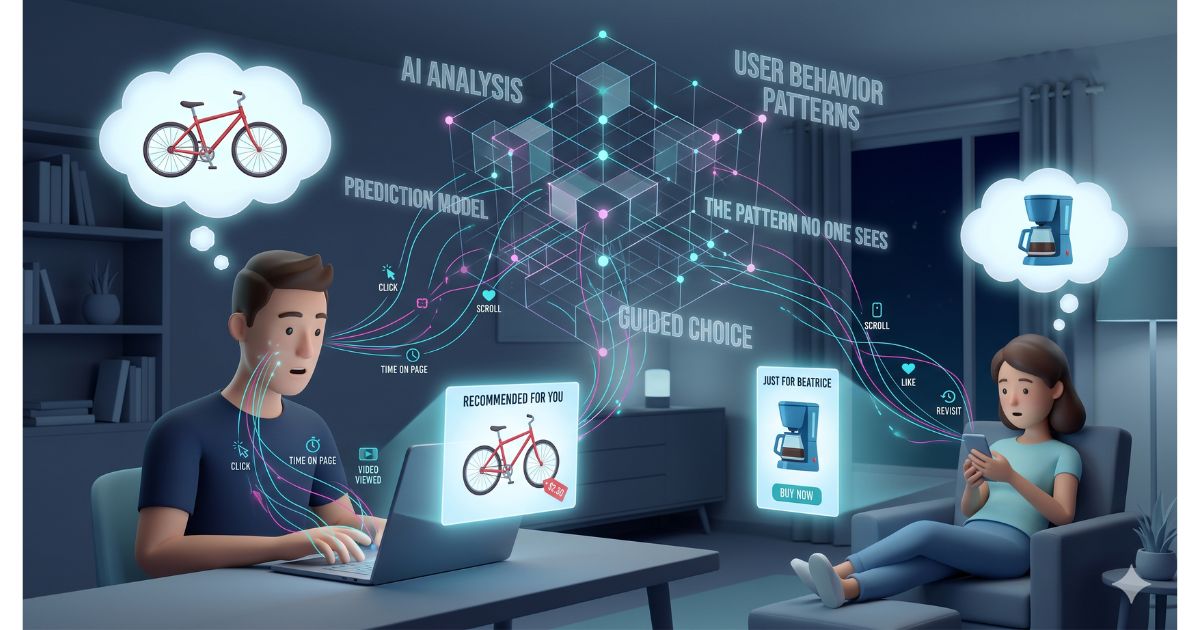
How Your Online Behaviour Is Used to Predict Your Decisions (AI Explained for Beginners)
Beatrice didn’t search for it. She didn’t type it.She didn’t say it out loud. But there it was. An ad appeared on her screen. Exactly what she had been thinking about the night before. Same product. Same style. Even the same color. She paused. How did it know? The Pattern No One Sees Beatrice hadn’t searched for the item directly. But over the past few days, she had: Individually, these actions felt meaningless. But together, they told a story. Not to her. But to the system. What Online Behaviour Really Means Every time you use the internet, you leave small signals behind. Things like: These signals may seem random. But to AI systems, they are patterns. And patterns can be learned. When Data Becomes Prediction AI doesn’t just collect information. It studies behaviour. Over time, it begins to understand: In Beatrice’s case, the system didn’t need her to search. It already had enough data to predict her interest. The Quiet Shift At first, this feels helpful. Better recommendations.More relevant content.Less time searching. But something changes. Instead of you deciding what to explore… The system starts deciding what to show you. And slowly, your choices begin to narrow. The Hidden Risk Beatrice didn’t realise it, but her online experience was being shaped. Not forced. Just guided. The more she interacted, the more the system learned. And the more it learned, the more it influenced. This creates a subtle shift:From user controlTo system influence Why This Matters This isn’t just about ads. It affects: AI systems are designed to predict behaviour. But prediction can become influence. And influence can affect outcomes. A Question of Control Beatrice wasn’t being watched in the way she imagined. But her behaviour was being observed, analysed, and used. Not to harm her. But to understand her. The question is: How much of your decisions are truly yours… and how much are being shaped for you? A Cybersecurity and GRC Perspective This is where things connect to cybersecurity and governance. Because it’s not just about data collection. It’s about: In GRC, this raises important concerns: On A Final Note Beatrice eventually clicked on the ad. It was exactly what she wanted. Or at least… what she thought she wanted. AI didn’t force her decision. It simply understood her well enough to guide it. If you’re starting your journey in cybersecurity, this is something to remember: Data is not just collectedIt is used to predict, influence, and shape behaviour Because sometimes, the most powerful systems don’t control what you do. They simply make sure you see exactly what they want you to choose.

Why ‘Accept All Cookies’ Is a Bigger Risk Than You Think (AI & Data Privacy Explained)
Beatrice didn’t even pause. The pop-up appeared at the bottom of the screen: “We use cookies to improve your experience.” Two options. Accept AllManage Preferences She clicked Accept All without thinking and continued scrolling. It was quick. Easy. Harmless… or so it seemed. A few days later, something felt different. The ads she saw were unusually specific.The content recommendations felt almost too accurate.Even the products suggested matched things she had only thought about briefly. It was as if the internet was watching her. In a way, it was. The Click That Feels Too Small to Matter Most people think cybersecurity risks come from big actions: But sometimes, the risk begins with something much smaller. Something we barely notice. Like clicking “Accept All Cookies.” What Cookies Actually Do (Simple Explanation) Cookies are small pieces of data stored on your device when you visit a website. They help websites remember things like: On their own, cookies are not always harmful. But when combined and shared across platforms, they begin to tell a story. Your story. What “Accept All” Really Means When Beatrice clicked “Accept All,” she didn’t just accept one thing. She gave permission for: And most importantly… She allowed this data to be used in ways she didn’t fully understand. Where AI Comes In This is where things become more complex. Cookies don’t just store data. They feed AI systems. AI uses this data to: Over time, these systems begin to understand patterns: And slowly, a digital version of you is created. Not who you are. But who the system thinks you are. The Hidden Risk Beatrice never saw this happening. There was no alert. No warning. Just a better “user experience.” But behind the scenes: The risk isn’t just that data is collected. It is that control is quietly given away. What Most People Don’t Realise When people click “Accept All,” they assume: It is just for this website. But in reality, the data can travel. It can be: This creates a much bigger picture than most people expect. Where Data Privacy Comes In This is why data protection laws like the General Data Protection Regulation (GDPR) exist. They are designed to ensure that: In theory, Beatrice had a choice. She could have: But like many people, she chose convenience. A Familiar Pattern Beatrice’s story is not unusual. It happens every day. A small decision.A quick click.A moment of convenience. And over time, those small actions build something much bigger. On A Final Note…. Clicking “Accept All Cookies” doesn’t feel like a cybersecurity decision. But in today’s world, it is. Because data is no longer just information. It’s influence.It’s prediction.It’s power. And understanding how it’s used is one of the most important steps in protecting yourself. If you’re starting your journey in cybersecurity, remember this: Not all risks look dangerousSome look like convenience
What Happens to Your Data When AI Uses It? (GDPR Explained for Beginners)
Beatrice didn’t think much about it at first. She signed up for a new app. It promised convenience. Personalised recommendations. Smarter features powered by AI. She clicked “Accept All Cookies” and moved on. A few days later, something felt… strange. The app seemed to know too much. It suggested things she had only searched once.It recommended content that felt unusually personal. And then it hit her. How much of her data was this system actually using? The Invisible Exchange Most digital services today run on data. When you: You are often sharing personal information. This may include: AI systems use this data to: But here’s the important question: Do you really know how your data is being used? This Is Where GDPR Comes In The General Data Protection Regulation (GDPR) was created to protect people like Beatrice. It gives individuals more control over their personal data. In simple terms, GDPR says: Your Rights (Explained Simply) Under GDPR, Beatrice has rights even if she does not always realise it. She has the right to: These rights are especially important in the age of AI. The AI Problem: It is Not Always Transparent AI systems don’t just store data. They learn from it. They analyse patterns. Predict behaviour. Make decisions. But here’s the challenge: So even if Beatrice agreed to share her data… She may not fully understand what happens next. When Privacy Meets Automation Imagine this: An AI system uses Beatrice’s data to: But she doesn’t know: This creates a gap between: what users expectand what actually happens Why This Matters for Cybersecurity and GRC Data privacy is not just about protecting information. It’s about: In cybersecurity and GRC, this means: Because when data is misused… the impact is not just technical it is personal The Real Lesson Beatrice didn’t realise she had a choice. She clicked “accept” and moved on. But in today’s world, data is one of the most valuable things we have. And understanding how it is used is no longer optional. On a Final note… AI is powerful because of data. But with that power comes responsibility. That is why GDPR exists. Not to stop innovation… But to make sure that as technology evolves, people don’t lose control of their own information. If you’re starting your journey in cybersecurity, this is something worth remembering: It is not just about securing systemsIt is about protecting people

How I Built a Policy Compliance Framework for an Aviation Company (Step-by-Step)
Most organizations have policies. Very few actually enforce them. That gap between writing policies and actually making sure they are followed is where risk lives. And that’s exactly the problem I set out to solve by building a Policy Compliance Framework for Gobuy Aviation. This wasn’t just an academic exercise. I approached it like a real-world GRC project, focusing on structure, accountability, and continuous monitoring. Let me walk you through how I built it. The Problem: Policies Without Enforcement Gobuy Aviation, like many organizations, lacked a structured and enforceable compliance framework. That means: So the goal was simple: Build a framework that ensures policies are not just written, but actively enforced The Objective The framework was designed to: Step 1: Define the Scope Before building anything, I clearly defined what the framework would cover. It applies to: This ensures the framework is not limited to IT alone, but covers the entire organization. Step 2: Develop Core Policies A total of 10 policies were developed to support the framework: These policies form the foundation of the compliance structure. Step 3: Align Policies with ISO 27002 To ensure the framework follows global best practices, each policy was mapped to ISO 27002 control themes: This alignment ensures the framework is structured, standardized, and audit-ready. Step 4: Build the Compliance Framework (The Core) This is where the real work happens. Each policy is tied to: Here is a simplified example: Policy Activity Owner Frequency Evidence IAM Policy User access review IAM Specialist Monthly Access reports Incident Management Incident monitoring Security Team Daily Incident logs Data Protection Data compliance review Compliance Officer Quarterly Audit records This structure ensures: Step 5: Introduce AI Governance (A Key Differentiator) One of the most important additions was the Artificial Intelligence Policy. AI introduces new risks: Instead of treating AI like a normal policy, I built a dedicated compliance framework for it, including: This aligns with emerging AI governance practices and positions the framework for future risks. Step 6: Establish Policy Governance Each policy includes a document control structure, defining: This ensures: Without this, policies quickly become outdated and ineffective. Step 7: Define Monitoring vs Review One critical distinction in the framework is: This ensures policies stay relevant while compliance is continuously tracked. Step 8: Provide Implementation Recommendations To make the framework practical, I included key recommendations: What Makes This Framework Effective This framework works because it: On A Final Note Building a Policy Compliance Framework is not about writing documents. It’s about creating a system where: If organizations get this right, they don’t just improve compliance. They build resilience. If you are getting into GRC, this is the mindset you need: Don’t just ask, Do we have policies? Ask, Are we actually following them? That is where the real work begins. Here is the link to my Policy Compliance framework https://drive.google.com/file/d/15t66ot2sdqyk60lsPSY221y14L6JgnX5/view?usp=sharing

Why AI Decisions Are Hard to Challenge (And Why It is a Risk)
Beatrice did not give up immediately. After her loan application was rejected, she decided to challenge the decision. There had to be a mistake. She had a stable income. No debt issues. Nothing that should raise concern. So she reached out. The response came quickly. “Your application was assessed using our automated decision system. Unfortunately, we are unable to provide further details.” Beatrice read the message again. No explanation.No breakdown.No human review. Just a decision… with no clear reason behind it. When There Is No One to Question In the past, decisions like this involved people. You could ask: There was always someone accountable. But with AI systems, things are different. The decision is made instantly.The process is hidden.And often, there is no clear path to challenge it. The Problem With “Black Box” Decisions Many AI systems operate in what experts call a black box. That doesn’t mean they are broken. It means: The system produces an outcome, but the reasoning behind it isn’t easily understood Even the organisations using these systems may not fully understand: So when someone like Beatrice asks for answers… There may not be a clear one to give. Why This Becomes a Risk At first, this might not seem like a cybersecurity issue. But it is a governance and risk problem. Because when decisions cannot be explained: In Beatrice’s case, the risk wasn’t just the rejection. It was the lack of transparency behind it. When AI Gets It Wrong AI systems are trained on data. And that data may contain: This means AI can make decisions that are: And without the ability to challenge those decisions, the impact becomes even more serious. The Governance Gap This is where governance becomes critical. Organisations cannot rely on AI systems without oversight. They need to ensure: Because if no one can challenge a decision… Then no one is truly responsible for it. A Familiar Pattern in a New Form This problem may feel new, but the underlying issue isn’t. In many industries, systems have always failed when: AI is simply amplifying that problem. Faster decisions.Less visibility.Higher impact. The Human Side of the Problem Beatrice wasn’t trying to break a system. She was trying to understand it. She wanted clarity.A reason.A chance to respond. What she faced instead was a system that had already decided and moved on. On A Final Note AI is becoming a powerful part of how decisions are made. But power without transparency creates risk. Because when people cannot question decisions… They cannot trust them. And in cybersecurity, governance, and risk management, trust is everything. If you are beginning your journey in cybersecurity or GRC, this is something worth thinking about: It’s not just about building smarter systemsIt’s about making sure those systems can be understood, challenged, and trusted