Could AI Have Prevented 9/11? What AI Might Have Detected Before the Attacks is a question that forces us to look at one of the darkest days in aviation history through the lens of technology we have today.
On September 11, 2001, four commercial aircraft were hijacked in the United States. The attacks killed thousands of people and fundamentally changed aviation security, intelligence gathering and the way the world thinks about terrorism.
Twenty five years later, artificial intelligence can analyse enormous amounts of information, identify patterns and detect relationships that might be difficult for humans to see.
So it is reasonable to ask:
Could AI have prevented 9/11?
The honest answer is that we will never know.
AI cannot be placed into the events of 2001 and tested against what happened. There is also no evidence that an AI system would definitely have stopped the attacks.
But the question is still worth exploring.
Because the official investigations into 9/11 revealed something particularly important: warning signs existed, but information was not always connected, shared or acted upon effectively.
That creates a fascinating question for the age of artificial intelligence.
What if technology capable of connecting those pieces of information had existed at the time?
What Happened on September 11, 2001?
The morning of September 11 began like an ordinary working day.
The 9/11 Commission Report records that the weather across the eastern United States was clear and suitable for flying. Passengers boarded four commercial flights that would ultimately be hijacked.
American Airlines Flight 11 and United Airlines Flight 175 departed from Boston.
American Airlines Flight 77 departed from Washington.
United Airlines Flight 93 departed from Newark.
Within hours, the United States had experienced an unprecedented terrorist attack involving commercial aircraft.
The consequences changed aviation permanently.
Cockpit security changed.
Passenger screening changed.
Intelligence sharing changed.
Emergency procedures changed.
And the relationship between aviation and national security changed forever.
But one question has remained particularly difficult:
Could AI have prevented 9/11?
To explore that question properly, we need to look at what happened before the aircraft were hijacked.
The Warning Signs Were Not Completely Invisible
One of the most important lessons from the 9/11 Commission is that the United States did receive information about the growing threat from al Qaeda before September 11.
The problem was not simply that there was no information.
There was a problem with connecting information.
The Commission found that intelligence agencies had information concerning terrorist activity, including information related to flight training.
For example, an FBI communication known as the Phoenix Memo warned in July 2001 about radical Middle Eastern individuals attending flight schools. The Commission also noted earlier FBI efforts to assess whether terrorists might use flight training.
That is where the question could AI have prevented 9/11 becomes much more interesting.
Imagine having a system capable of examining information from different agencies and asking:
‘Are these apparently unrelated pieces of information actually connected?’
That is one of the things modern AI and advanced data analytics can potentially help humans investigate.
But there is an important distinction.
Finding a connection does not automatically mean finding a terrorist.
What Could AI Have Looked For?
If we imagine today’s AI capabilities being available in 2001, we can identify several categories of information that might have been useful for investigation.
This does not mean AI would have identified the attackers with certainty.
It means an AI system could potentially have helped humans notice patterns that deserved closer attention.
1. Flight Training Patterns
The 9/11 Commission identified flight training as an important missed indicator.
The Commission’s report specifically said that the intelligence community did not develop indicators for this method of attack. One potential indicator would have been terrorists pursuing flight training to operate large aircraft.
So could AI have prevented 9/11 by identifying unusual flight training patterns?
Potentially, it could have helped investigators identify patterns requiring further investigation.
For example, an analytical system could potentially have examined information about individuals receiving particular types of aviation training and compared it with other available intelligence.
But that would not mean:
‘This person is a terrorist.’
It would mean:
‘There is an unusual pattern here. Someone should investigate.’
That difference is critical.
2. Connecting Intelligence From Different Agencies
This may be the most important part of the entire discussion.
The 9/11 Commission found that information was not always effectively shared between agencies.
The Commission noted that information about the Phoenix Memo was not passed to FAA headquarters and described the domestic terrorist threat picture as a serious blind spot.
So when we ask could AI have prevented 9/11, we should not imagine an AI sitting at an airport security checkpoint.
We should imagine a system operating much more broadly.
It could potentially help analysts compare information from multiple sources.
For example:
Intelligence information
Travel information
Flight training information
Known associates
Previous investigations
Other relevant records
Individually, these pieces might not mean much.
Together, they could potentially create a pattern worth investigating.
This is one of the reasons data integration is so important in modern cybersecurity and national security.
3. Could AI Have Connected the Dots?
This is where artificial intelligence becomes particularly fascinating.
Humans are very good at understanding context.
But humans can also become overwhelmed when information is scattered across thousands of records.
AI can process enormous amounts of information quickly.
Imagine an investigator has 10,000 records.
Reading all of them manually could take an enormous amount of time.
An AI system could potentially analyse those records and identify relationships such as:
Person A appears in one database.
Person B is connected to Person A.
Both have connections to a particular location.
One has aviation training.
Another appears in an intelligence report.
None of these facts individually proves anything.
But the relationship between them might deserve human attention.
This is why could AI have prevented 9/11 is ultimately a question about more than artificial intelligence.
It is a question about information sharing and human decision making.
But There Was Already Technology Before 9/11
Another important point is that the United States did not enter September 11 with no technology.
There was already a computer assisted passenger prescreening system called CAPPS, or Computer Assisted Passenger Prescreening System.
CAPPS was designed to identify passengers who required additional security measures.
The 9/11 Commission found that Mohamed Atta was selected by CAPPS when he checked in for his flight from Portland to Boston.
This is one of the most surprising details about the story.
The technology did identify some of the hijackers.
So why didn’t it stop the attack?
Because the system was designed around the threats that aviation security officials were expecting at the time.
CAPPS primarily focused on identifying passengers whose checked baggage required additional screening for explosives.
The consequences of being selected did not include the kind of passenger and carry on screening we might expect today.
That means the problem wasn’t simply:
‘There was no technology.’
The problem was also:
‘What was the technology designed to detect?’
And that is a powerful lesson for today’s AI systems.
Could AI Have Prevented 9/11 If It Had Better Data?
This is where could AI have prevented 9/11 becomes a question about data quality.
AI depends on information.
If the relevant information is not available to the system, the system cannot analyse it.
If information exists in separate databases that cannot communicate with each other, the AI may not have access to the complete picture.
If information is incomplete, the result can also be incomplete.
This is why simply saying ‘AI can analyse everything’ is misleading.
AI can only analyse the information it can access and process.
The quality of the result depends heavily on the quality, relevance and availability of the underlying data.
That lesson remains extremely relevant today.
What About Passenger Screening?
Passenger screening is another area where the discussion becomes complicated.
Before 9/11, aviation security was based on a different understanding of the threat.
The 9/11 Commission found that the security system was designed around assumptions that did not match the type of attack that occurred.
For example, the prevailing approach to hijacking assumed that hijackers generally wanted to negotiate and eventually land safely. Suicide hijacking was not treated as the central scenario.
So could AI have prevented 9/11 through passenger screening?
Possibly it could have provided another analytical layer.
But again, we must be careful.
An AI system might identify an unusual pattern.
That does not mean the person is guilty.
A person could have unusual travel patterns for completely innocent reasons.
Someone could attend flight school because they genuinely want to become a pilot.
Someone could travel frequently because of work.
Someone could know another person who appears in a database without knowing anything about that person’s activities.
This is where false positives become a serious issue.
The Danger of Letting AI Decide Who Is a Threat
Imagine an AI system that gives someone a high risk score.
Does that mean the person should automatically be stopped?
No.
This is where human oversight becomes essential.
An AI system should be able to say:
‘This pattern requires further investigation.’
It should not automatically become:
‘This person is a terrorist.’
That distinction is fundamental.
If we ask could AI have prevented 9/11, we also have to ask:
What happens if AI gets it wrong?
Because the consequences of getting it wrong could be enormous.
An innocent person could be flagged.
A legitimate activity could be misunderstood.
A statistical correlation could be mistaken for evidence.
And a security system could become discriminatory or unreliable if it is poorly designed.
AI does not remove the need for human judgement.
It makes responsible human judgement even more important.
Could AI Have Detected the Threat Inside the United States?
This is perhaps the most compelling hypothetical.
The 9/11 Commission concluded that the United States had significant intelligence about al Qaeda and its intentions, but domestic agencies were not effectively mobilised around the emerging threat.
The Commission also found that the FBI had information about flight training and that the FAA’s intelligence unit did not receive all relevant information.
So could AI have prevented 9/11 by bringing those pieces together?
It is possible that advanced analytical technology could have helped.
But technology would still have required people to:
- See the alert.
- Understand what it meant.
- Investigate it.
- Share the information.
- Decide that the threat was credible.
- Take action.
And that is the part that technology cannot solve by itself.
AI Could Find a Pattern. Humans Still Have to Act.
This is the most important lesson I would take from the hypothetical.
Suppose an AI system had identified an unusual relationship between several people.
What happens next?
Someone has to investigate.
Someone has to assess the intelligence.
Someone has to determine whether the pattern is meaningful.
Someone has to decide whether action is justified.
Someone has to accept responsibility for that decision.
This is why could AI have prevented 9/11 should never be treated as a simple technology question.
It is also a question about:
Governance.
Human oversight.
Intelligence sharing.
Data quality.
Accountability.
Decision making.
The 9/11 Commission Actually Raised a Similar Possibility
Interestingly, this isn’t entirely speculative.
In testimony before the 9/11 Commission, information technology and data mining were discussed as potential ways information could have been connected.
One witness suggested that if intelligence from different agencies had been fused and analysed using sophisticated data mining, investigators might have identified relationships involving some of the hijackers.
That is remarkably relevant to our modern AI conversation.
It suggests that the problem was recognised even before today’s generative AI boom.
The challenge was not simply collecting information.
It was making sense of information across organisational boundaries.
So could AI have prevented 9/11?
Perhaps AI could have helped expose some warning signs earlier.
But identifying those signs would still not guarantee that the attacks would have been stopped.
What AI Might Have Detected
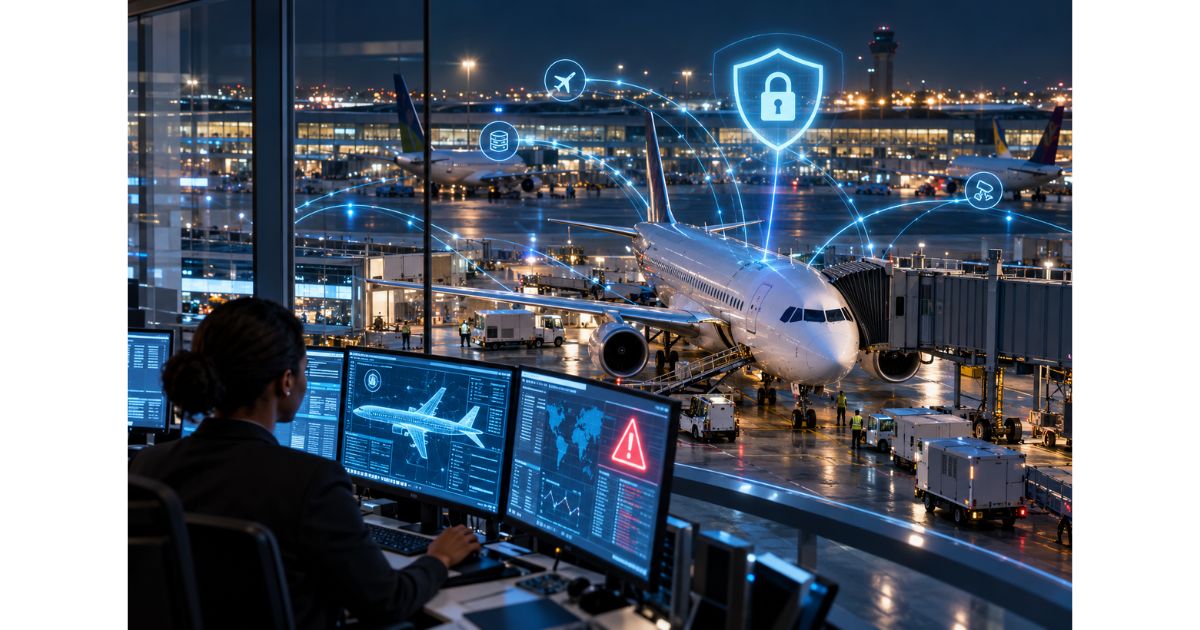
If we imagine a modern AI system operating with appropriate access to historical information, it could potentially have looked for combinations of signals such as:
Unusual flight training
People receiving specific aviation training that might warrant additional investigation when combined with other intelligence.
Connections between individuals
Relationships between people appearing across different intelligence or investigative records.
Unusual travel patterns
Patterns that become meaningful only when combined with other information.
Repeated links to people already under investigation
An AI system could potentially identify relationships that are difficult to spot manually.
Suspicious combinations of information
The important word here is combinations.
One signal rarely tells the whole story.
Several signals together can create a picture that deserves investigation.
This is one of the strongest arguments for using AI as an analytical assistant rather than an autonomous decision maker.
But Would AI Definitely Have Stopped the Attacks?
No.
And this is where responsible technology journalism matters.
Anyone who says:
‘AI would have definitely stopped 9/11’
is making a claim that cannot be proven.
There are too many unknowns.
We don’t know exactly how a hypothetical AI system would have been designed.
We don’t know what information it would have had access to.
We don’t know whether analysts would have trusted its warnings.
We don’t know whether decision makers would have acted.
We don’t know whether attackers would have changed their behaviour.
And we don’t know whether the technology might itself have generated too many false alarms.
The 9/11 Commission itself emphasised that there was no single silver bullet that could have guaranteed prevention.
So the more accurate question is:
Could AI have helped humans identify some warning signs earlier?
That is a question we can reasonably explore.
September 11 Changed Aviation Security Forever
One reason this discussion matters is because aviation security did not remain the same after 9/11.
The security model changed dramatically.
The Transportation Security Administration was created.
Cockpit doors were strengthened.
Passenger and baggage screening changed.
Security procedures were redesigned.
Federal air marshals were deployed more extensively.
Crew training changed.
And the industry adopted a more layered approach to security.
The 9/11 Commission later emphasised that no single security measure is foolproof and that aviation needs multiple coordinated layers of defence.
That principle is incredibly relevant to AI.
AI should not be viewed as one magical security solution.
It should be another layer.
What Does 9/11 Teach Us About AI Today?
There is a much bigger lesson here.
Technology does not automatically prevent disasters.
Technology is only one part of a larger system.
We can build an incredibly sophisticated AI system, but if:
- the data is incomplete,
- organisations do not share information,
- humans ignore warnings,
- nobody understands the system’s limitations,
- there is no accountability,
then the technology may not deliver the protection we expect.
That is why could AI have prevented 9/11 is ultimately a question about the relationship between technology and people.
AI can analyse.
Humans must interpret.
AI can identify patterns.
Humans must investigate.
AI can raise an alert.
Humans must decide what happens next.
Could AI Today Prevent Another 9/11?
This is where the conversation becomes uncomfortable.
Technology has improved enormously since 2001.
AI can now analyse information at a scale that was unimaginable to most people at the beginning of the century.
But attackers have technology too.
That means aviation security cannot simply depend on having better AI.
Security systems themselves need protection.
Their data needs protection.
Their models need testing.
Their access controls need to be strong.
Their decisions need monitoring.
And humans need to remain responsible.
This is where AI governance becomes critical.
The question is no longer simply:
‘Can we build an AI system that detects threats?’
It becomes:
Can we build one that detects threats responsibly, protects people’s rights and gives humans enough information to make good decisions?’
That is a much harder question.
The Biggest Lesson: Data Is Powerful, But Context Matters
One of the most important lessons from September 11 is that having information is not the same as understanding information.
There were warnings.
There were intelligence reports.
There were people under investigation.
There were concerns about flight training.
There were existing passenger screening systems.
There were aviation security procedures.
Yet the pieces did not come together in time.
That is why could AI have prevented 9/11 is ultimately less about whether AI is “smart enough.”
It is about whether the right information could have reached the right people at the right time.
AI might have helped connect some dots.
But humans still needed to recognise what those dots meant.
So, Could AI Have Prevented 9/11?
After looking at the evidence, my answer is:
We cannot say that AI would have prevented 9/11.
But it is reasonable to argue that advanced data analysis, if properly designed and given access to relevant information, might have helped identify some warning signs earlier.
The 9/11 Commission’s findings about intelligence sharing, flight training, passenger screening and the limitations of the security system make this possibility worth examining.
And that distinction matters.
We should not rewrite history to make modern technology appear more powerful than it really is.
Instead, we should learn from history.
Because the next threat may not look exactly like the previous one.
And the technology available to detect it may be far more sophisticated.
The Future of AI and Aviation Security
The future of aviation will almost certainly involve more artificial intelligence.
AI may analyse passenger flows.
It may support airport security.
It may help identify cyber threats.
It may analyse enormous quantities of intelligence.
It may identify unusual patterns.
It may help aviation organisations respond to emerging risks.
But could AI have prevented 9/11 should not become a question that encourages us to put blind faith in machines.
The lesson of September 11 is almost the opposite.
We need layers.
We need technology.
We need intelligence.
We need trained professionals.
We need information sharing.
We need cybersecurity.
We need privacy protections.
And we need humans who are willing to investigate when something doesn’t look right.
The strongest security system is not necessarily the one with the most advanced AI.
It is the one where technology, information and human judgement work together.
On A Final Note
Could AI have prevented 9/11?
We will never know.
But perhaps that is not the most important question.
The more important question is what we do with the lessons September 11 left behind.
The attacks showed the devastating consequences of fragmented information, missed warning signs, outdated assumptions and security systems designed around yesterday’s threats.
Today, AI gives us unprecedented analytical capabilities.
But with that power comes responsibility.
AI can help us see patterns.
It can help us connect information.
It can help us identify anomalies.
But it cannot decide what matters without context, and it cannot replace responsible human judgement.
Twenty five years after September 11, perhaps the greatest lesson is this:
The future of aviation security will not be protected by technology alone. It will be protected by people who know how to use technology wisely.
And if AI ever raises an alarm about a threat, the most important question may not be whether the machine was right.
It may be:
Did we listen?
Continue Reading on TechTakeoff
Can Hackers Trick AI in Aviation? The Cybersecurity Risks Passengers Should Know
As aviation becomes increasingly dependent on AI, cybersecurity becomes just as important as the technology itself. Explore how attackers could potentially manipulate AI systems, their data or the environment around them, and why human oversight matters.
Key Sources
The 9/11 Commission Report is the primary source for the historical claims in this article;
Read https://9-11commission.gov/report/
Read https://en.wikipedia.org/wiki/9/11_Commission_Report
Read, https://www.ojp.gov/ncjrs/virtual-library/abstracts/911-commission-report-executive-summary